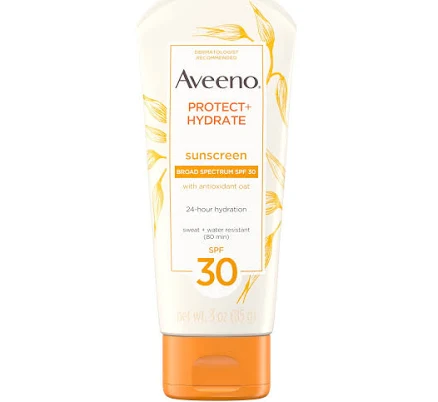
Aveeno Protect + Hydrate Lotion Sunscreen SPF
Sunscreen with no fluorinated ingredient on record, and no PFAS statement from the brand.
Aveeno has no PFAS statement on record for this sunscreen. Our record does not include an ingredient-level check, so look for fluorinated ingredients such as Teflon-type coating on the label.
We flunk more products than we pass. This one earned its grade. How we grade
Material
water-resistant lotion base with mineral sunscreen actives (likely zinc oxide/titanium dioxide)
Brand disclosure
Brand is silent on PFAS
Lab data
No public lab test
You may also be interested in
Top-graded picks in the categories readers replace first, every one scored on the same rubric.

- polypropylene filter housing, carbon/sediment cartridge
- We found no PFAS statement from the brand
- Bacterial growth in spent cartridges
3 hazards checked on this product, all on its full breakdown.

Aquasure
Premier Series 75 GPD Under Sink Reverse Osmosis Water Filtration System
- RO membrane, carbon filters, stainless steel housing
- We found no PFAS statement from the brand
- Bacterial and microbial growth in housing and filters
4 hazards checked on this product, all on its full breakdown.

Avocado
Vegan Mattress
- organic cotton, natural latex, coconut coir, recycled steel coils
- The brand calls it PFAS-free, which we have not verified
- Heavy metals
2 hazards checked on this product, all on its full breakdown.
What Aveeno Protect + Hydrate Sunscreen SPF is made of, ingredients and materials
Aveeno Protect + Hydrate uses mineral sunscreen actives, most likely zinc oxide and/or titanium dioxide, which sit on skin rather than absorb into it. The lotion base is water-resistant, meaning it contains wax or silicone polymers to reduce wash-off during swimming or sweat. No fluorinated PFAS compounds appear in the ingredient list or public disclosures for this product. The 'Hydrate' part of the formula typically includes glycerin, ceramides, or dimethicone for moisture retention.
What’s concerning
Category baseline
The starting point for this type of product, before anything specific to this product is counted.
No PFAS disclosure
No public statement from the brand about PFAS in this product.
Fragrance allergens
Aveeno Protect + Hydrate is a scented formulation. Fragrance compounds in sunscreens can trigger contact dermatitis or photoallergy in sensitive individuals, particularly when combined with UV exposure. Specific allergens in this blend are not itemized on the label.
Photostability of UV filters
Mineral sunscreens containing zinc oxide can degrade under intense UV and heat when left in direct sunlight over weeks or months, reducing efficacy. While not a direct health hazard, degraded filters may fail to protect as stated; proper storage is important.
Skin irritation from mineral particles
Zinc oxide and titanium dioxide in lotion form are generally well-tolerated, but individuals with very sensitive or damaged skin barrier may experience mild irritation, redness, or stinging. This is not unique to Aveeno but inherent to mineral sunscreen texture.
What’s reassuring
Base material not linked to PFAS
The main material recorded for this product is not one associated with PFAS.
1,4-dioxane (processing contaminant)
1,4-dioxane can occur as a byproduct in surfactants and emulsifiers used in lotion bases. No specific test results or recalls for this product indicate its presence, and Aveeno has not publicly disclosed testing data for this sunscreen.
Heavy metals
Zinc oxide and titanium dioxide are regulated mineral sunscreen actives with established purity standards. Aveeno has not reported contamination, and no public recalls suggest heavy metal concern in this line.
Source, FDA ↗How is this PFAS grade calculated?
The brand's record and disclosure
Aveeno (Johnson & Johnson subsidiary) does not publicly state a position on PFAS in sunscreens and has not voluntarily removed any actives or ingredients from this line based on available records. The brand has faced no major recalls tied to sunscreen safety in recent years. J&J does disclose some ingredients and certifications, though transparency on industrial processing chemicals remains limited across the sunscreen category.
How it compares in its category
Mineral sunscreens are generally favored by dermatologists for sensitive skin and have lower systemic absorption than chemical alternatives. This product sits in the mainstream midmarket tier; it offers broad-spectrum UV protection without oxybenzone or avobenzone. Compared to reef-safe or certified organic sunscreens, it carries slightly higher uncertainty around manufacturing additives, but avoids the documented photostability and bioaccumulation concerns of certain organic UV filters.
If you buy it
Apply generously (about 1 ounce for full body) 15 minutes before sun exposure; reapply every 2 hours or after swimming. Store in a cool, dry place away from direct sunlight to preserve UV filter efficacy over time. Do not apply to infants under 6 months; patch-test first if you have a history of fragrance sensitivity, as this product is scented. Check the expiration date, as mineral sunscreens can degrade; discard if the texture becomes chalky or separated.
What is not known about PFAS in this product?
- Basis
- Model estimate, 45% confidence, not a lab result
- Lab test
- None on record for this exact product
- Brand statement
- Aveeno has made none
Formulations change between production runs, so check the current label. How we grade.
What are the PFAS-free alternatives to Aveeno Protect + Hydrate Lotion Sunscreen SPF?
- Mineral sunscreen, zinc oxide base
- A third party reports verifying it as PFAS-free
- 1,4-dioxane (non-intentional contaminant from surfactants/emulsifiers)
2 hazards checked on this product, all on its full breakdown.
- mineral sunscreen (zinc oxide or titanium dioxide base)
- The brand calls it PFAS-free, which we have not verified
- Synthetic fragrance allergens
More sunscreen grades
How we score, every product runs through the same public 0-100 rubric based on materials, coatings, brand disclosure, lab findings, and recalls. See the full methodology → Spotted a mistake? Report an error.