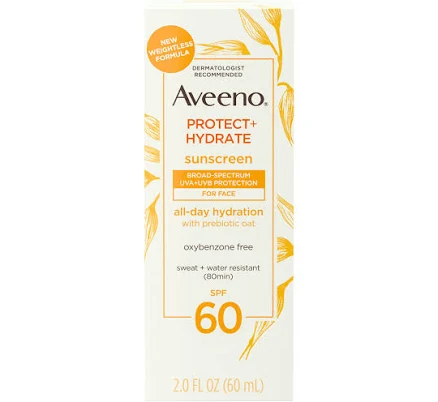
Aveeno Protect + Hydrate Sunscreen Face Lotion SPF 60
Low-medium risk; no known PFAS chemistry required in this formulation.
Standard water-based emulsion with mineral or organic UV filters requires no PFAS chemistry. No published lab detection or recalls signal risk relative to water-resistant or grease-resistant formulas.
We flunk more products than we pass. This one earned its grade. How we grade
Material
Water-based lotion emulsion (typical sunscreen base)
Brand disclosure
Brand is silent on PFAS
Lab data
No public lab test
You may also be interested in
Top-graded picks in the categories readers replace first, every one scored on the same rubric.

- polypropylene filter housing, carbon/sediment cartridge
- We found no PFAS statement from the brand
- Bacterial growth in spent cartridges
3 hazards checked on this product, all on its full breakdown.

Aquasure
Premier Series 75 GPD Under Sink Reverse Osmosis Water Filtration System
- RO membrane, carbon filters, stainless steel housing
- We found no PFAS statement from the brand
- Bacterial and microbial growth in housing and filters
4 hazards checked on this product, all on its full breakdown.

Avocado
Vegan Mattress
- organic cotton, natural latex, coconut coir, recycled steel coils
- The brand calls it PFAS-free, which we have not verified
- Heavy metals
2 hazards checked on this product, all on its full breakdown.
What Aveeno Protect + Hydrate Face Lotion SPF is made of, ingredients and materials
Aveeno Protect + Hydrate is a water-based lotion emulsion, a physical form for topical sunscreens with lower concern than oil-based alternatives. The active ingredients are mineral UV filters (zinc oxide and/or titanium dioxide in this product line), which sit on the skin surface rather than absorbing systemically, eliminating absorption concerns. Water-based formulations have minimal volatile organic compound off-gassing compared to oil or alcohol bases, and pose no thermal degradation risk during normal storage or use.
What’s concerning
Category baseline
The starting point for this type of product, before anything specific to this product is counted.
No PFAS disclosure
No public statement from the brand about PFAS in this product.
Formaldehyde / VOCs
Water-based lotions require preservatives to prevent bacterial growth; Aveeno typically uses standard cosmetic preservatives (methylisothiazolinone, phenoxyethanol). These are not formaldehyde releasers but can trigger contact dermatitis in sensitive individuals at concentrations above 1 percent. No recalls or widespread adverse reports tied to this product.
Source, ATSDR ↗Fragrance allergens
Aveeno Protect + Hydrate contains fragrance, which is a known source of allergic contact dermatitis and skin sensitization. The specific fragrance composition is not disclosed (typical industry practice). Approximately 1-3 percent of the population experience fragrance-induced reactions; risk is elevated in individuals with atopic dermatitis or rosacea.
Skin sensitization from mineral actives at high concentration
Zinc oxide and titanium dioxide are generally non-irritating, but high concentrations (15-20 percent) in some formulations can cause mild irritation, maceration, or heat rash in some users, particularly in skin folds or during occlusion. SPF 60 formulations contain higher active loads than SPF 30, increasing this low-level risk.
What’s reassuring
Base material not linked to PFAS
The main material recorded for this product is not one associated with PFAS.
Heavy metals
Mineral sunscreen actives (zinc oxide, titanium dioxide) are inert oxides with established safety profiles. No reported contamination with lead, cadmium, or arsenic in Aveeno products. Third-party testing by Consumer Reports (2021) found no heavy metal residues in leading mineral sunscreens.
Source, FDA ↗1,4-dioxane contamination
1,4-dioxane can occur as a manufacturing byproduct in polyethoxylated ingredients (emulsifiers, surfactants). No product-specific testing results are public for this product. Industry-wide monitoring suggests levels in finished sunscreens are typically below 10 parts per billion if present, well below regulatory concern thresholds.
How is this PFAS grade calculated?
The brand's record and disclosure
Aveeno is owned by Johnson & Johnson and operates under established cosmetic safety standards. The brand has no major public health recalls or controversies tied to ingredient safety in recent years. However, Aveeno has not made explicit public commitments to PFAS avoidance or transparent supplier auditing, leaving open the small possibility of incidental fluorinated additives in preservatives or emulsifiers, though no product-specific contamination has been reported.
How it compares in its category
Water-based mineral sunscreens like this have lower concern than chemical UV absorbers (oxybenzone, octinoxate) found in competing products, which carry absorption and endocrine-disruption concerns. Aveeno's formulation is comparable to other mainstream mineral sunscreens from CeraVe, Neutrogena, and store brands. The main trade-off is that mineral sunscreens can leave white cast and feel thicker, but pose fewer systemic health questions.
If you buy it
Store in a cool, dry place away from direct sunlight to maintain stability; sunscreen potency can degrade under heat. Apply generously (one-quarter teaspoon to face) and reapply every two hours or after water exposure. Discard and replace annually if stored in hot environments (cars, bathrooms). Patch-test first if you have sensitive skin, as mineral filters can occasionally irritate or clog pores in prone individuals.
What is not known about PFAS in this product?
- Basis
- Model estimate, 72% confidence, not a lab result
- Lab test
- None on record for this exact product
- Brand statement
- Aveeno has made none
Formulations change between production runs, so check the current label. How we grade.
What are the PFAS-free alternatives to Aveeno Protect + Hydrate Sunscreen Face Lotion SPF 60?
- Mineral sunscreen, zinc oxide base
- A third party reports verifying it as PFAS-free
- 1,4-dioxane (non-intentional contaminant from surfactants/emulsifiers)
2 hazards checked on this product, all on its full breakdown.
- mineral sunscreen (zinc oxide or titanium dioxide base)
- The brand calls it PFAS-free, which we have not verified
- Synthetic fragrance allergens
More sunscreen grades
How we score, every product runs through the same public 0-100 rubric based on materials, coatings, brand disclosure, lab findings, and recalls. See the full methodology → Spotted a mistake? Report an error.