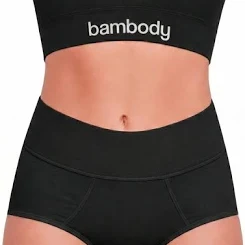
Bambody Absorbent Period Panties Bamboo Rayon Leakproof Period Underwear for Women and Teens
Skip until brand discloses leakproof treatment chemistry.
Bamboo rayon is lower concern, but the leakproof coating is undisclosed. Bambody provides no PFAS transparency or third-party verification.
The better-graded swap
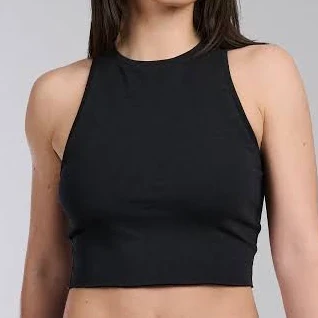
Aisle
Aisle Essential Period Hipster leakproof
90/100 safety
Same rubric that flunked this product. The swap earned Excellent.
Still want this one anyway? Check the price on Amazon. We’d swap it.
Material
bamboo rayon with unspecified waterproof/leakproof coating
Brand disclosure
Brand is silent on PFAS
Lab data
No public lab test
What Bambody Absorbent Period Panties Bamboo is made of, ingredients and materials
Bambody period panties use bamboo rayon as the primary absorbent fabric. Bamboo rayon itself is not chemically complex; the fiber is made from wood pulp processed with sodium hydroxide and carbon disulfide in a closed-loop system (viscose process). The hazard concern shifts entirely to the leakproof coating, which Bambody does not publicly name or describe. A waterproof barrier on absorbent garments typically requires either PFAS-based chemistry (most durable) or polyurethane/polyester laminates, both of which have separate durability and degradation profiles.
What’s concerning
Waterproof / stain-resistant treatment
Water-repellent coating treatments have historically used PFAS.
Category baseline
The starting point for this type of product, before anything specific to this product is counted.
No PFAS disclosure
No public statement from the brand about PFAS in this product.
Waterproof coating chemistry (unknown composition)
The leakproof layer is not named. If PFAS-based, it poses dermal and environmental risk; if polyurethane, degradation over time may release microparticles or volatile components. Manufacturer silence prevents confident classification.
Coating degradation and microparticle shedding
Laminated garment coatings degrade with repeated washing and heat exposure. Microscopic flaking from synthetic coatings entering laundry water and soil is not routinely tested in this product category, but is structurally plausible.
What’s reassuring
Azo dyes in coloring (if present)
Bambody product pages do not specify dye class or restricted azo compounds. Bamboo rayon can accept both non-azo and restricted-azo dyes. No recalls or testing reports indicate a problem, but certification (e.g., OEKO-TEX) would reduce uncertainty.
Formaldehyde / VOCs
Bamboo rayon and elastane blends sometimes receive formaldehyde-based cross-linking resins to improve elasticity and wrinkle resistance. Bambody does not disclose finish chemicals. No documented complaints are on record.
Source, ATSDR ↗Residual processing chemicals from rayon production
Closed-loop viscose processes recycle 99% of chemical solvents, but trace residues of sodium hydroxide or carbon disulfide may remain. Rinsing during manufacturing and consumer washing typically eliminates skin contact risk, and no allergic reactions specific to this brand are reported.
The full breakdown
The brand's record and disclosure
Bambody does not publicly disclose the chemistry of its leakproof treatment on product pages or in readily available sustainability statements. The brand has no published third-party certifications (e.g., STANDARD 100 by OEKO-TEX, GOTS) that would verify absence of restricted chemicals in coatings or dyes. No product recalls or documented safety violations are on record. The silence on leakproof treatment chemistry is the primary transparency gap; similar brands (e.g., Thinx, Knix) have begun disclosing PFAS-free or PFAS-limited formulations in response to consumer pressure, but Bambody has not.
How it compares in its category
Period panty brands vary widely in coating transparency. Competitors like Knix and Thinx have publicly committed to PFAS-free or reduced-PFAS formulations and publish testing results. Bambody's lack of disclosure puts it in a middle-risk zone compared to brands with certified testing, but not at the highest risk if the coating is a standard polyurethane laminate. The bamboo rayon fabric itself is less novel; most modern period products use bamboo viscose or similar plant fibers. Cost and fit may be competitive, but chemical transparency is weaker than leading alternatives.
If you buy it
Wash in cold or warm water (below 40°C / 104°F); hot water may degrade the waterproof coating faster. Line dry or lay flat; machine drying heat accelerates coating breakdown. Inspect seams and coated areas after 10-15 washes for peeling, delamination, or stiffness loss, which signals coating failure. Replace when absorbency noticeably declines or the coating visibly cracks. Contact Bambody to request leakproof treatment documentation before purchase if PFAS exposure is a personal concern.
What we don’t know
- Basis
- Model estimate, 45% confidence, not a lab result
- Lab test
- None on record for this exact product
- Brand statement
- Bambody has made none
Formulations change between production runs, so check the current label. How we grade.
Better-graded alternatives in Period Underwear

Ruby Love
Rubylove First Period Kit +teen Period Underwear
- organic cotton, waterproof backing layer
- A third party reports verifying it as PFAS-free
- Coating degradation and microparticle shedding
2 hazards checked on this product. See all of them.
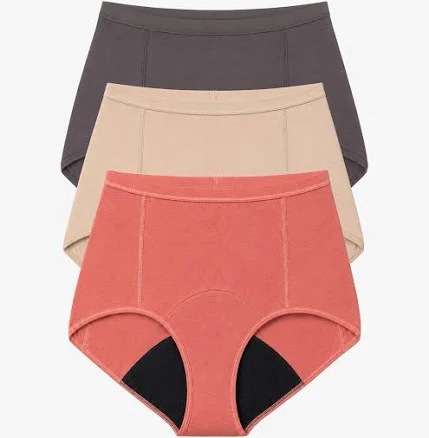
Lunapads
3-Pack BOOST Brief
- organic cotton blend, water-resistant gusset
- The brand calls it PFAS-free, which we have not verified
- Microplastic shedding from water-resistant barrier

Aisle
Super Hipster
- Organic cotton, wood pulp fiber
- The brand calls it PFAS-free, which we have not verified
- Azo dyes and synthetic dyes
2 hazards checked on this product. See all of them.
More period underwear grades
How we score, every product runs through the same public 0-100 rubric based on materials, coatings, brand disclosure, lab findings, and recalls. See the full methodology → Spotted a mistake? Report an error.