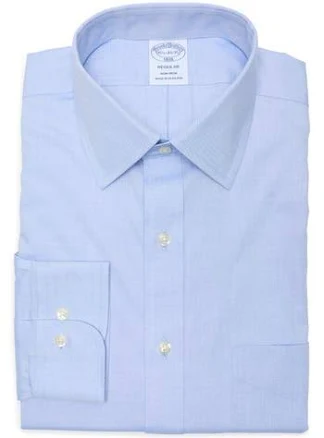
Brooks Brothers · Wrinkle-Free Dress Shirts
Brooks Brothers Men's Regular Fit Non-Iron Dress Shirt
Higher PFAS risk from non-iron finish; Brooks Brothers won't reveal chemistry.
Brooks Brothers non-iron dress shirts use chemical finishes, typically formaldehyde-based resins or Teflon-family coating, to resist wrinkles. The brand will not disclose PFAS use or alternatives.
The better-graded swap
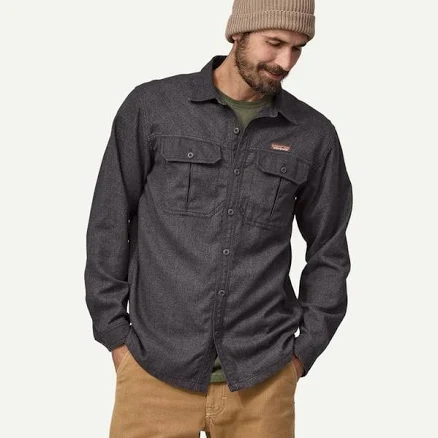
Patagonia
Patagonia Men's Farrier's Work Shirt
90/100 safety
Same rubric that flunked this product. The swap earned Excellent.
Still want this one anyway? Check the price on Amazon. We’d swap it.
Material
Cotton blend with durable press/non-iron finish (likely PFAS-based durable press resin)
Brand disclosure
Brand is silent on PFAS
Lab data
No public lab test
You may also be interested in
Top-graded picks in the categories readers replace first, every one scored on the same rubric.

- polypropylene filter housing, carbon/sediment cartridge
- We found no PFAS statement from the brand
- Bacterial growth in spent cartridges
3 hazards checked on this product, all on its full breakdown.

Aquasure
Premier Series 75 GPD Under Sink Reverse Osmosis Water Filtration System
- RO membrane, carbon filters, stainless steel housing
- We found no PFAS statement from the brand
- Bacterial and microbial growth in housing and filters
4 hazards checked on this product, all on its full breakdown.

Avocado
Vegan Mattress
- organic cotton, natural latex, coconut coir, recycled steel coils
- The brand calls it PFAS-free, which we have not verified
- Heavy metals
2 hazards checked on this product, all on its full breakdown.
What Brooks Brothers Men's Regular Dress Shirt is made of, ingredients and materials
Brooks Brothers non-iron dress shirts use a cotton blend treated with a durable press resin, almost certainly a fluorocarbon-based or PFAS-containing formulation to achieve the wrinkle-free finish. This resin is chemically cross-linked to fiber during manufacturing and remains in the fabric throughout its life. The cotton blend reduces pure cellulose content, which means more synthetic fiber involvement in the construction and finishing chemistry. The non-iron treatment is the primary chemical concern; the base cotton-poly blend itself is standard and carries lower inherent toxicity.
What’s concerning
Category baseline
The starting point for this type of product, before anything specific to this product is counted.
No PFAS disclosure
No public statement from the brand about PFAS in this product.
Waterproof / stain-resistant treatment
Water-repellent coating treatments have historically used PFAS.
PFAS
Non-iron finishes in this product category are predominantly fluorocarbon or PFAS-chain chemistry. Release risk increases with heat, washing, and wear; skin contact and inhalation of volatile compounds are the primary exposure routes during use and laundering.
Source, ATSDR ↗Formaldehyde / VOCs
Traditional durable press resins use urea-formaldehyde or melamine-formaldehyde binders. Brooks Brothers has not disclosed whether its formulation includes formaldehyde releasers. Off-gassing is typically minimal in finished garments but may occur briefly after purchase or with high heat laundering.
Source, ATSDR ↗Synthetic fiber shedding (microfiber release)
Cotton-polyester blends shed synthetic microfibers during washing and wear, especially if the durable press finish degrades. This is not unique to Brooks Brothers but is inherent to non-iron blended construction and increases with washing frequency and garment age.
Allergen or sensitizer risk from finish
Individuals with sensitive skin or chemical sensitivities may experience irritation from residual resin monomers or finishing chemicals. Repeated washing before wearing may reduce initial exposure, but no data specific to Brooks Brothers formulations exists.
What’s reassuring
Heavy metals
No recalls or public complaints have documented azo dye or heavy metal contamination in Brooks Brothers dress shirts. The brand's heritage and price point suggest conventional dyeing practices, though no independent testing data is publicly available.
Source, FDA ↗How is this PFAS grade calculated?
The brand's record and disclosure
Brooks Brothers has not publicly disclosed the specific chemistry of its durable press treatments or committed to PFAS-free alternatives. The brand has not faced major publicized safety recalls related to chemical content in dress shirts. Brooks Brothers does not appear to hold third-party certifications such as Oeko-Tex or GOTS that would limit chemical inputs. Their silence on durable press chemistry is typical for heritage menswear brands, which generally lag behind athletic and outdoor brands in chemical transparency.
How it compares in its category
Non-iron dress shirts from all major brands (including Brooks Brothers, Dockers, Banana Republic, and J.Crew) rely on similar durable press chemistry, making this shirt representative of the category median risk. Wrinkle-resistant alternatives with lower PFAS concern exist (some polyester blends using mechanical finishing, linen-cotton hybrids) but are fewer and often pricier. Brooks Brothers' reputation and fit consistency place it in the premium segment, but chemical safety disclosure does not differentiate it from mid-market competitors. If avoiding durable press chemistry, switching to untreated cotton or linen is the clearer choice than brand-switching within non-iron dress shirts.
If you buy it
Wash in cool or warm water and line-dry or tumble-dry on low heat to minimize resin degradation and any associated chemical release. Avoid high heat and dry cleaning, which can stress the finish and increase fiber shedding. Replace the shirt after visible wear to the collar, cuffs, or seams rather than attempting aggressive stain treatments that might compromise the finish. If you wear these daily, rotate with untreated cotton shirts to reduce cumulative skin contact with the treated fabric.
What is not known about PFAS in this product?
- Basis
- Model estimate, 65% confidence, not a lab result
- Lab test
- None on record for this exact product
- Brand statement
- Brooks Brothers has made none
Formulations change between production runs, so check the current label. How we grade.
What are the PFAS-free alternatives to Brooks Brothers Men's Regular Fit Non-Iron Dress Shirt?
- Organic cotton, standard construction
- The brand calls it PFAS-free, which we have not verified
- Formaldehyde / VOCs
2 hazards checked on this product, all on its full breakdown.
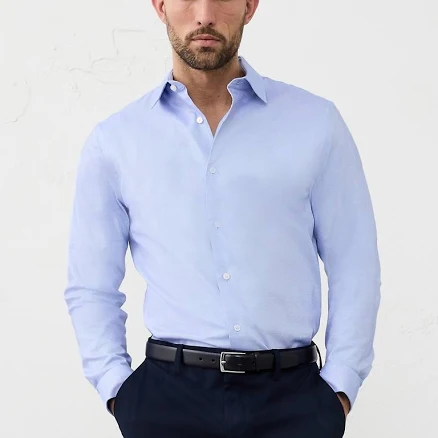
- Cotton/cotton-blend woven fabric
- We found no PFAS statement from the brand
- Formaldehyde / VOCs
3 hazards checked on this product, all on its full breakdown.
Find an alternative on Amazon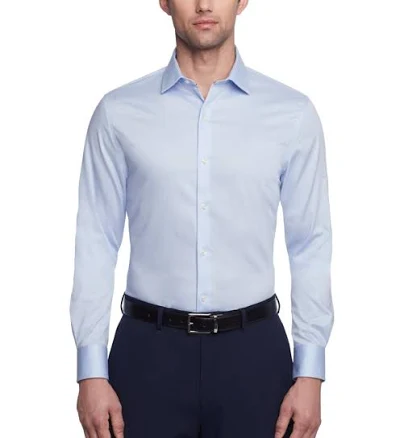
- cotton/polyester blend dress shirt
- We found no PFAS statement from the brand
- Formaldehyde / VOCs
3 hazards checked on this product, all on its full breakdown.
Find an alternative on AmazonMore wrinkle-free dress shirts grades
How we score, every product runs through the same public 0-100 rubric based on materials, coatings, brand disclosure, lab findings, and recalls. See the full methodology → Spotted a mistake? Report an error.