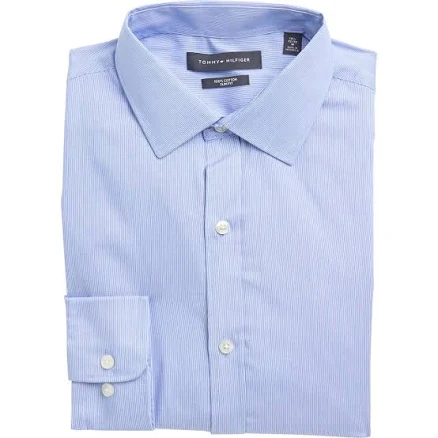
Tommy Hilfiger · Wrinkle-Free Dress Shirts
Tommy Hilfiger Men's Slim Fit Non-Iron Dress Shirt
Skip unless you confirm non-iron treatment is PFAS-free.
Tommy Hilfiger non-iron dress shirts typically receive durable press finishes historically made with PFAS or fluorochemical treatments. The brand makes no public PFAS statement.
The better-graded swap
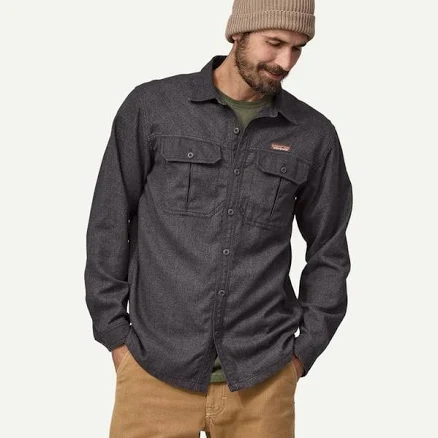
Patagonia
Patagonia Men's Farrier's Work Shirt
90/100 safety
Same rubric that flunked this product. The swap earned Excellent.
Still want this one anyway? Check the price on Amazon. We’d swap it.
Material
Cotton/polyester blend with non-iron finish (likely resin treatment)
Brand disclosure
Brand is silent on PFAS
Lab data
No public lab test
You may also be interested in
Top-graded picks in the categories readers replace first, every one scored on the same rubric.

- polypropylene filter housing, carbon/sediment cartridge
- We found no PFAS statement from the brand
- Bacterial growth in spent cartridges
3 hazards checked on this product, all on its full breakdown.

Aquasure
Premier Series 75 GPD Under Sink Reverse Osmosis Water Filtration System
- RO membrane, carbon filters, stainless steel housing
- We found no PFAS statement from the brand
- Bacterial and microbial growth in housing and filters
4 hazards checked on this product, all on its full breakdown.

Avocado
Vegan Mattress
- organic cotton, natural latex, coconut coir, recycled steel coils
- The brand calls it PFAS-free, which we have not verified
- Heavy metals
2 hazards checked on this product, all on its full breakdown.
What Tommy Hilfiger Men's Slim Fit Dress Shirt is made of, ingredients and materials
This shirt is a cotton/polyester blend (typical ratio 65/35 or similar) treated with a non-iron resin finish. The resin is almost certainly a durable-press or permanent-press formulation applied during manufacturing to lock in wrinkle resistance. These finishes commonly rely on formaldehyde-based resins or, increasingly, fluorocarbon compounds (PFAS) to achieve water and stain repellency alongside wrinkle-free performance. Tommy Hilfiger does not publicly disclose which chemistry they use, making this a key uncertainty.
What’s concerning
Category baseline
The starting point for this type of product, before anything specific to this product is counted.
No PFAS disclosure
No public statement from the brand about PFAS in this product.
Waterproof / stain-resistant treatment
Water-repellent coating treatments have historically used PFAS.
Formaldehyde / VOCs
Non-iron dress shirts often use formaldehyde-based resins for wrinkle-lock. Residual formaldehyde can leach or off-gas, especially when new. Tommy Hilfiger does not specify whether their finish is formaldehyde-free or formaldehyde-low, so risk cannot be ruled out. A cool pre-wash and air-drying reduce exposure.
Source, ATSDR ↗PFAS
The non-iron finish almost certainly includes water and stain resistance; this is typically achieved with PFAS compounds in mass-market apparel. No independent testing or brand disclosure available for this specific shirt. This is the primary concern and the reason for a 'care' rather than 'buy' verdict.
Source, ATSDR ↗Finish degradation and microfiber shedding
As the non-iron coating breaks down with repeated washing and heat exposure, microscopic particles may shed. This is a low-level, long-term concern and not unique to Tommy Hilfiger, but worth noting if the shirt is worn frequently or washed hot.
What’s reassuring
Heavy metals
No specific recalls or reports of lead, cadmium, or antimony contamination in Tommy Hilfiger dress shirts. The brand is subject to standard apparel safety regulations, and cotton/polyester blends in neutral colors (typical for dress shirts) carry lower dye-burden risk than bright synthetics.
Source, FDA ↗Formaldehyde / VOCs
Some Tommy Hilfiger products may use lower-formaldehyde or PFAS-alternative finishes depending on production facility and supply chain, but this is not documented or guaranteed. Contacting the brand for treatment specifics is the only way to confirm.
Source, ATSDR ↗How is this PFAS grade calculated?
The brand's record and disclosure
Tommy Hilfiger (PVH Corp) has not published detailed PFAS phase-out commitments or transparency reports specific to apparel non-iron treatments. The brand meets basic apparel safety standards but does not advertise PFAS-free finishes or provide treatment-level material data to consumers. No major recalls or controversies tied to formaldehyde or coating hazards in their dress shirts are on public record, but absence of disclosure is itself a red flag for this hazard class.
How it compares in its category
Non-iron dress shirts across all mass-market brands (Polo, Calvin Klein, Banana Republic, department store lines) use similar resin treatments; most do not disclose PFAS status. Some premium or sustainability-focused brands (Patagonia, Allbirds) now offer wrinkle-resistant cotton without fluorocarbon finishes, though they cost more and perform slightly less. Tommy Hilfiger sits in the middle of the market on disclosure and environmental practice, neither leading nor lagging notably, but offering no transparency advantage for concerned buyers.
If you buy it
Wash in cool to warm water before first wear to reduce residual formaldehyde or finish chemicals. Do not use high heat (tumble dry low or hang dry) as heat can accelerate off-gassing and may degrade the finish unevenly. If you notice chemical smell after washing, air out the shirt outdoors for several hours; this typically dissipates. Replace when the non-iron finish breaks down (collar and cuffs become wrinkled after repeated washing), typically after 50-100 washes depending on care.
What is not known about PFAS in this product?
- Basis
- Model estimate, 45% confidence, not a lab result
- Lab test
- None on record for this exact product
- Brand statement
- Tommy Hilfiger has made none
Formulations change between production runs, so check the current label. How we grade.
What are the PFAS-free alternatives to Tommy Hilfiger Men's Slim Fit Non-Iron Dress Shirt?
- Organic cotton, standard construction
- The brand calls it PFAS-free, which we have not verified
- Formaldehyde / VOCs
2 hazards checked on this product, all on its full breakdown.
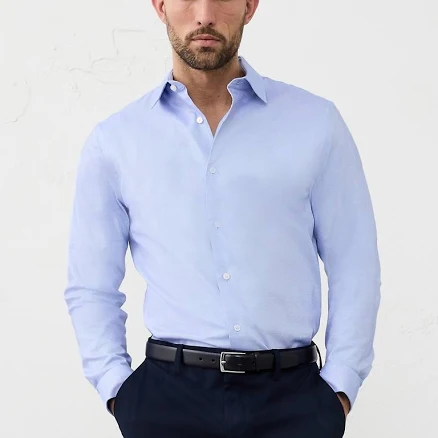
- Cotton/cotton-blend woven fabric
- We found no PFAS statement from the brand
- Formaldehyde / VOCs
3 hazards checked on this product, all on its full breakdown.
Find an alternative on Amazon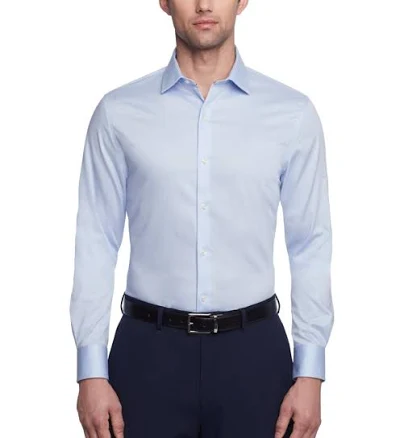
- cotton/polyester blend dress shirt
- We found no PFAS statement from the brand
- Formaldehyde / VOCs
3 hazards checked on this product, all on its full breakdown.
Find an alternative on AmazonMore wrinkle-free dress shirts grades
How we score, every product runs through the same public 0-100 rubric based on materials, coatings, brand disclosure, lab findings, and recalls. See the full methodology → Spotted a mistake? Report an error.