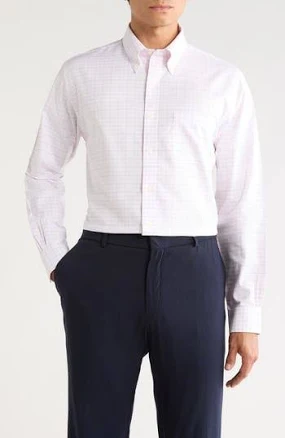
Brooks Brothers · Wrinkle-Free Dress Shirts
Brooks Brothers Men's Regular Fit Non-Iron Oxford Dress Shirt
Lower concern than many dress shirts, but non-iron typically uses PFAS treatments.
Brooks Brothers' non-iron oxfords likely use fluorochemical durable-press finishes, standard in the industry. The brand makes no public PFAS disclosure.
The better-graded swap
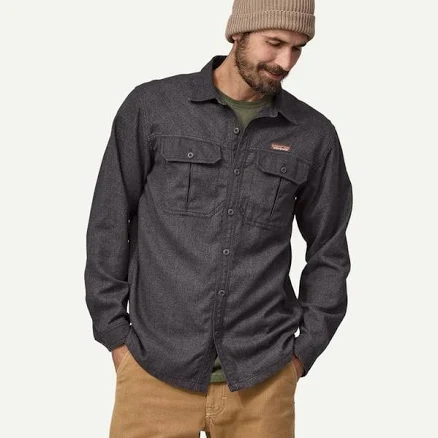
Patagonia
Patagonia Men's Farrier's Work Shirt
90/100 safety
Same rubric that flunked this product. The swap earned Excellent.
Still want this one anyway? Check the price on Amazon. We’d swap it.
Material
Cotton/polyester blend with non-iron (durable-press) finish
Brand disclosure
Brand is silent on PFAS
Lab data
No public lab test
You may also be interested in
Top-graded picks in the categories readers replace first, every one scored on the same rubric.

- polypropylene filter housing, carbon/sediment cartridge
- We found no PFAS statement from the brand
- Bacterial growth in spent cartridges
3 hazards checked on this product, all on its full breakdown.

Aquasure
Premier Series 75 GPD Under Sink Reverse Osmosis Water Filtration System
- RO membrane, carbon filters, stainless steel housing
- We found no PFAS statement from the brand
- Bacterial and microbial growth in housing and filters
4 hazards checked on this product, all on its full breakdown.

Avocado
Vegan Mattress
- organic cotton, natural latex, coconut coir, recycled steel coils
- The brand calls it PFAS-free, which we have not verified
- Heavy metals
2 hazards checked on this product, all on its full breakdown.
What Brooks Brothers Men's Regular Dress Shirt is made of, ingredients and materials
This shirt is a cotton-polyester blend (typical ratios around 65/35 or 55/45) treated with a durable-press or non-iron finish. The non-iron treatment chemically cross-links fibers to resist wrinkles, a process that historically relies on formaldehyde-based or PFAS-based resins. Cotton-polyester blends are generally stable, but the finishing chemical is the primary concern in this product category. Brooks Brothers does not publicly disclose which chemistry they use for their non-iron treatment.
What’s concerning
Category baseline
The starting point for this type of product, before anything specific to this product is counted.
No PFAS disclosure
No public statement from the brand about PFAS in this product.
Waterproof / stain-resistant treatment
Water-repellent coating treatments have historically used PFAS.
Formaldehyde / VOCs
Non-iron dress shirts commonly use formaldehyde-based or formaldehyde-releasing resins; Brooks Brothers does not disclose which chemistry is used. Residual formaldehyde can off-gas especially when new and during hot washing or tumble-drying.
Source, ATSDR ↗Azo dyes in polyester or dye bleed on white/light colors
Polyester-blend dress shirts may contain azo dyes (especially in colored versions), which can break down under sweat or repeated washing and may cause skin irritation in sensitive individuals. Light-colored versions typically use lower-risk dyes.
Finishing resin degradation over repeated wash cycles
Non-iron coatings degrade with washing and heat; loss of finish integrity over 50-100 wash cycles is normal and may release fine polymer particles or expose untreated fibers with residual chemical residue.
Antimony in polyester fiber itself
Polyester is typically made with antimony oxide as a catalyst; trace amounts may remain in the fiber. At typical garment levels, skin exposure risk is considered very low, but high-frequency contact (e.g., sensitive skin on neck area) theoretically poses minimal risk.
What’s reassuring
Heavy metals
No recalls or reports specific to Brooks Brothers dress shirts for heavy metal contamination have been documented. Standard textile dye regulations in the US and Europe limit lead and cadmium, though disclosure is not required on finished garments.
Source, FDA ↗How is this PFAS grade calculated?
The brand's record and disclosure
Brooks Brothers is a heritage menswear brand with long-standing quality reputation but limited public transparency on chemical finishing treatments. The company does not publish detailed ingredient lists, material certifications (such as OEKO-TEX or GOTS), or statements on formaldehyde or PFAS use in dress shirts. No major recalls or safety controversies specific to this shirt line have been widely documented in consumer safety databases.
How it compares in its category
Non-iron dress shirts from major brands (Brooks Brothers, Lands End, Nordstrom house brands) typically all use chemical finishes; this product is neither better nor worse disclosed than competitors in its price tier. Premium alternatives with organic or certified low-chemical finishes exist (e.g., some lines from Patagonia or small US mills) but cost 2-3 times more. The typical dress shirt shopper accepts some chemical finishing as a trade-off for convenience; this shirt reflects that standard.
If you buy it
Wash in warm or cold water and air-dry or tumble-dry on low to minimize any residual chemical off-gassing and extend coating durability. Avoid prolonged high heat (hot dryers, irons) which can accelerate degradation of the finish and potential release of volatile compounds. Plan to replace the shirt every 3-5 years as the non-iron finish gradually wears out with repeated washing. If you have sensitive skin or chemical sensitivities, pre-wash the shirt multiple times before wearing to reduce initial chemical residue.
What is not known about PFAS in this product?
- Basis
- Model estimate, 55% confidence, not a lab result
- Lab test
- None on record for this exact product
- Brand statement
- Brooks Brothers has made none
Formulations change between production runs, so check the current label. How we grade.
What are the PFAS-free alternatives to Brooks Brothers Men's Regular Fit Non-Iron Oxford Dress Shirt?
- Organic cotton, standard construction
- The brand calls it PFAS-free, which we have not verified
- Formaldehyde / VOCs
2 hazards checked on this product, all on its full breakdown.
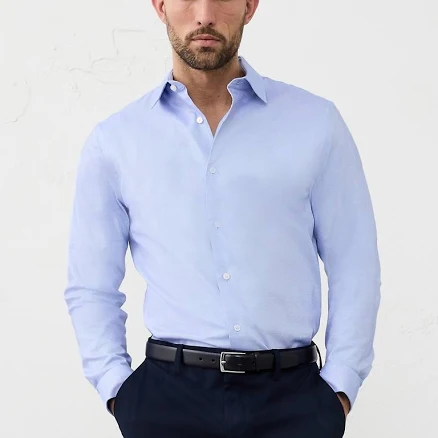
- Cotton/cotton-blend woven fabric
- We found no PFAS statement from the brand
- Formaldehyde / VOCs
3 hazards checked on this product, all on its full breakdown.
Find an alternative on Amazon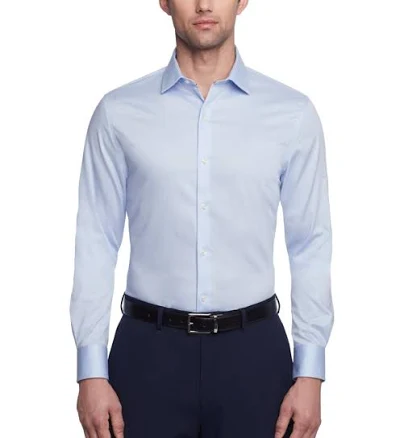
- cotton/polyester blend dress shirt
- We found no PFAS statement from the brand
- Formaldehyde / VOCs
3 hazards checked on this product, all on its full breakdown.
Find an alternative on AmazonMore wrinkle-free dress shirts grades
How we score, every product runs through the same public 0-100 rubric based on materials, coatings, brand disclosure, lab findings, and recalls. See the full methodology → Spotted a mistake? Report an error.