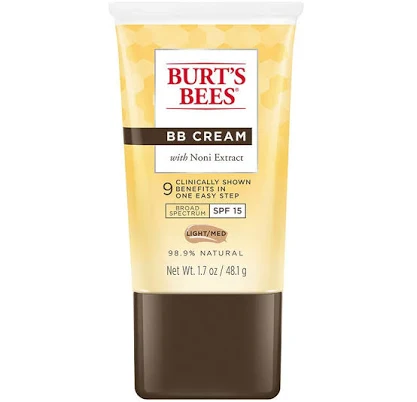
BB Cream SPF 15 Burt's Bees
Lower concern; conventional formula lacks PFAS-prone ingredients, but brand does not publicly commit to PFAS-free sourcing.
Water-based face cream with mineral sunscreen and plant extracts typically avoids PFAS water repellents. Nonwaterproof cosmetics rarely require fluorinated chemistry.
We flunk more products than we pass. This one earned its grade. How we grade
Material
Water-based emulsion with mineral sunscreen (zinc oxide/titanium dioxide) and botanical extracts
Lab data
No public lab test
You may also be interested in
Top-graded picks in the categories readers replace first, every one scored on the same rubric.

- polypropylene filter housing, carbon/sediment cartridge
- We found no PFAS statement from the brand
- Bacterial growth in spent cartridges
3 hazards checked on this product, all on its full breakdown.

Aquasure
Premier Series 75 GPD Under Sink Reverse Osmosis Water Filtration System
- RO membrane, carbon filters, stainless steel housing
- We found no PFAS statement from the brand
- Bacterial and microbial growth in housing and filters
4 hazards checked on this product, all on its full breakdown.

Avocado
Vegan Mattress
- organic cotton, natural latex, coconut coir, recycled steel coils
- The brand calls it PFAS-free, which we have not verified
- Heavy metals
2 hazards checked on this product, all on its full breakdown.
What BB Cream SPF 15 Burt's Bees is made of, ingredients and materials
This BB cream uses zinc oxide and titanium dioxide as physical UV blockers rather than chemical absorbers, which reduces systemic absorption risk. Water-based emulsion with botanical extracts (likely aloe, chamomile) and minimal synthetic preservatives. The mineral sunscreen approach is inherently lower-risk for endocrine or photoallergy concerns, though particle size and dispersion matter for efficacy and potential inhalation if applied as loose powder (this is a cream, so inhalation risk is negligible).
What’s concerning
Category baseline
The starting point for this type of product, before anything specific to this product is counted.
No PFAS disclosure
No public statement from the brand about PFAS in this product.
Formaldehyde / VOCs
While Burt's Bees avoids parabens, the full preservative system is not always disclosed on the public label. Botanical extracts may require weak antimicrobial support; imidazolidinyl urea or DMDM hydantoin (formaldehyde releasers) are not listed but cannot be ruled out in minor ingredients. Most likely absent given the brand's natural positioning, but not independently verified.
Source, ATSDR ↗Fragrance allergens and essential oil irritation
Botanical extracts and fragrance components (likely from natural essential oils) can trigger allergic contact dermatitis or sensitization, especially in individuals with pre-existing fragrance sensitivity. Burt's Bees does not itemize fragrance allergens on the label, only 'fragrance' or botanical names.
What’s reassuring
Base material not linked to PFAS
The main material recorded for this product is not one associated with PFAS.
Heavy metals
Zinc oxide and titanium dioxide as cosmetic-grade sunscreen actives are well-regulated and do not bioaccumulate in typical topical use. No contamination incidents reported for this product. Risk is theoretical and only relevant at extreme dermal absorption, which is minimal for physical blockers.
Source, FDA ↗Talc or silicate contamination
Burt's Bees does not advertise talc in this formula and the ingredient list does not suggest its presence. No recalls or documented talc findings in this BB cream line.
Photocatalytic reactivity of titanium dioxide nanoparticles
Cosmetic-grade titanium dioxide used in sunscreens is not typically in nanoparticle form and is surface-coated to prevent photocatalytic activity. This product is a cream emulsion, not a loose powder, further minimizing inhalation or systemic exposure risk.
How is this PFAS grade calculated?
The brand's record and disclosure
Burt's Bees markets itself as natural and paraben-free, with long-standing transparency on ingredient sourcing. No major recalls or contamination incidents on record for this product line. However, the brand does not publish independent third-party safety testing or explicit commitments to heavy-metal limits, fragrance allergen screening, or talc avoidance. Parent company Clorox acquired Burt's Bees in 2007; safety standards follow conventional cosmetic regulation rather than premium independent certification.
How it compares in its category
BB creams span a wide range; mineral-based sunscreens are not linked to the same concerns as chemical UV absorbers (avobenzone, oxybenzone). Burt's Bees sits in the accessible mainstream tier, not as rigorously tested as prestige dermatological brands but with better disclosure than budget drugstore equivalents. SPF 15 is modest; most dermatologists recommend SPF 30+, so this product is best used as a base tint rather than sole sun protection.
If you buy it
Apply generously and reapply every 2 hours if outdoors (SPF 15 is not sufficient for extended sun exposure without reapplication). Store in a cool, dry place; mineral sunscreen formulas are stable but heat can degrade botanical extracts. No heating required for use, so no inhalation risk. Patch test first if you have sensitive skin or fragrance allergies, as botanical extracts can trigger contact dermatitis in susceptible individuals.
What is not known about PFAS in this product?
- Basis
- Model estimate, 72% confidence, not a lab result
- Lab test
- None on record for this exact product
- Brand statement
- Burt's Bees has made a specific claim
Formulations change between production runs, so check the current label. How we grade.
What are the PFAS-free alternatives to BB Cream SPF 15 Burt's Bees?
- Mineral sunscreen, zinc oxide base
- A third party reports verifying it as PFAS-free
- 1,4-dioxane (non-intentional contaminant from surfactants/emulsifiers)
2 hazards checked on this product, all on its full breakdown.
- mineral sunscreen (zinc oxide or titanium dioxide base)
- The brand calls it PFAS-free, which we have not verified
- Synthetic fragrance allergens
More sunscreen grades
How we score, every product runs through the same public 0-100 rubric based on materials, coatings, brand disclosure, lab findings, and recalls. See the full methodology → Spotted a mistake? Report an error.