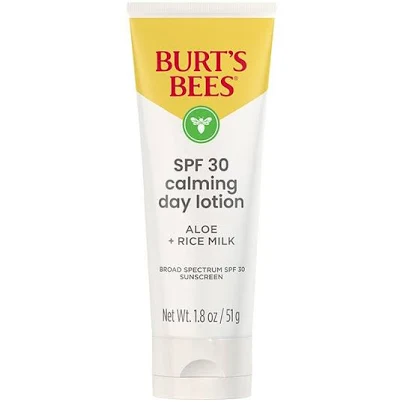
Burt's Bees Calming Day Lotion SPF 30
Lower-concern cosmetic with no known PFAS triggers, though brand offers no explicit confirmation.
This moisturizer plus sunscreen uses standard mineral and mica UV filters without waterproofing claims or Teflon-family coating chemistry. No independent testing or recalls flag PFAS issues.
We flunk more products than we pass. This one earned its grade. How we grade
Material
water-in-oil emulsion base; mineral/mica filters (SPF 30 active)
Lab data
No public lab test
You may also be interested in
Top-graded picks in the categories readers replace first, every one scored on the same rubric.

- polypropylene filter housing, carbon/sediment cartridge
- We found no PFAS statement from the brand
- Bacterial growth in spent cartridges
3 hazards checked on this product, all on its full breakdown.

Aquasure
Premier Series 75 GPD Under Sink Reverse Osmosis Water Filtration System
- RO membrane, carbon filters, stainless steel housing
- We found no PFAS statement from the brand
- Bacterial and microbial growth in housing and filters
4 hazards checked on this product, all on its full breakdown.

Avocado
Vegan Mattress
- organic cotton, natural latex, coconut coir, recycled steel coils
- The brand calls it PFAS-free, which we have not verified
- Heavy metals
2 hazards checked on this product, all on its full breakdown.
What Burt's Bees Calming Day Lotion SPF 30 is made of, ingredients and materials
This is a water-in-oil emulsion sunscreen relying on mineral UV filters (zinc oxide and/or titanium dioxide) rather than chemical absorbers, which reduces systemic absorption risk. The "Calming" line typically includes oat extract and chamomile to soothe skin, both of which are low-toxicity botanicals. Burt's Bees formulas historically avoid synthetic fragrances in favor of essential oils and natural extracts, lowering fragrance allergen burden compared to mass-market alternatives.
What’s concerning
Category baseline
The starting point for this type of product, before anything specific to this product is counted.
No PFAS disclosure
No public statement from the brand about PFAS in this product.
Fragrance allergens (essential oils)
Burt's Bees uses essential oils and natural fragrance compounds instead of synthetic fragrance blends. While presenting lower concern overall, essential oils like chamomile and lavender can trigger contact dermatitis or photosensitivity in sensitive individuals, especially when applied to sun-exposed skin before UV exposure.
Emulsifier or preservative sensitivities
Water-in-oil emulsions require emulsifiers and preservatives to prevent bacterial or fungal growth. Burt's Bees formulas typically use gentler preservative systems (sorbic acid, benzoic acid) compared to parabens, but individual sensitivity to these additives remains possible, particularly in those with very reactive skin.
What’s reassuring
Base material not linked to PFAS
The main material recorded for this product is not one associated with PFAS.
Titanium dioxide/zinc oxide inhalation (powder form)
This product is a lotion, not a powder or spray, so inhalation of mineral filters is not a route of exposure. Risk applies only to loose powder sunscreens or spray formulations, which this is not.
Talc contamination in mineral filters
No talc is listed or known to be used in this formula. Titanium dioxide and zinc oxide supplies can carry trace talc if sourced from low-grade ores, but Burt's Bees does not have a documented history of talc in mineral sunscreens, and the product label contains no talc declaration.
Formaldehyde / VOCs
Burt's Bees avoids formaldehyde-releasing preservatives (imidazolidinyl urea, dmdm hydantoin) in favor of naturally derived systems. No evidence of formaldehyde releasers in published ingredient lists for this line.
Source, ATSDR ↗How is this PFAS grade calculated?
The brand's record and disclosure
Burt's Bees publishes full ingredient lists on packaging and online, with no history of hidden reformulations or undisclosed substances. The brand is certified by the Personal Care Products Council and adheres to FDA cosmetic labeling rules. No recalls or safety warnings are on record for this specific product line. However, Burt's Bees has not issued a formal PFAS exclusion statement for its full portfolio, despite mineral sunscreens carrying minimal PFAS risk.
How it compares in its category
Mineral sunscreens are generally considered lower-risk than chemical alternatives (oxybenzone, avobenzone) because they sit on skin rather than penetrating it. This product sits in the mid-market segment, lower concern than drugstore chemical sunscreens, comparable in concern profile to premium mineral brands like Badger or Kabana, and simpler than multi-active moisturizer-sunscreen hybrids that add unnecessary ingredients. SPF 30 is adequate for daily use but below SPF 50+ recommended for extended outdoor exposure.
If you buy it
Store in a cool, dry place away from direct sunlight to prevent emulsion breakdown and ingredient degradation; mineral sunscreens remain stable longer than chemical formulas. Apply generously (at least 1/4 teaspoon for face) and reapply every 2 hours if swimming or sweating. Replace if the product separates, discolors, or develops odor. Patch-test on inner arm first if you have sensitive skin, as mineral filters can occasionally cause white cast or mild irritation in reactive individuals.
What is not known about PFAS in this product?
- Basis
- Model estimate, 72% confidence, not a lab result
- Lab test
- None on record for this exact product
- Brand statement
- Burt's Bees has made a specific claim
Formulations change between production runs, so check the current label. How we grade.
What are the PFAS-free alternatives to Burt's Bees Calming Day Lotion SPF 30?
- Mineral sunscreen, zinc oxide base
- A third party reports verifying it as PFAS-free
- 1,4-dioxane (non-intentional contaminant from surfactants/emulsifiers)
2 hazards checked on this product, all on its full breakdown.
- mineral sunscreen (zinc oxide or titanium dioxide base)
- The brand calls it PFAS-free, which we have not verified
- Synthetic fragrance allergens
More sunscreen grades
How we score, every product runs through the same public 0-100 rubric based on materials, coatings, brand disclosure, lab findings, and recalls. See the full methodology → Spotted a mistake? Report an error.