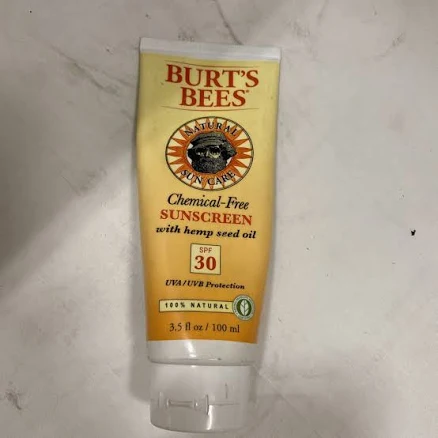
Burt's Bees Sunscreen SPF 30
Lower PFAS concern; mineral sunscreens typically avoid water-resistant coatings that trigger PFAS.
Mineral sunscreen with zinc oxide and titanium dioxide avoids perfluorinated water-resistant coatings. This formulation type does not inherently require PFAS chemistry.
We flunk more products than we pass. This one earned its grade. How we grade
Material
mineral sunscreen (zinc oxide/titanium dioxide) in lotion base
Lab data
No public lab test
You may also be interested in
Top-graded picks in the categories readers replace first, every one scored on the same rubric.

- polypropylene filter housing, carbon/sediment cartridge
- We found no PFAS statement from the brand
- Bacterial growth in spent cartridges
3 hazards checked on this product, all on its full breakdown.

Aquasure
Premier Series 75 GPD Under Sink Reverse Osmosis Water Filtration System
- RO membrane, carbon filters, stainless steel housing
- We found no PFAS statement from the brand
- Bacterial and microbial growth in housing and filters
4 hazards checked on this product, all on its full breakdown.

Avocado
Vegan Mattress
- organic cotton, natural latex, coconut coir, recycled steel coils
- The brand calls it PFAS-free, which we have not verified
- Heavy metals
2 hazards checked on this product, all on its full breakdown.
What Burt's Bees Sunscreen SPF 30 is made of, ingredients and materials
Burt's Bees SPF 30 uses zinc oxide and/or titanium dioxide as UV filters, both non-nano mineral blockers that sit on skin rather than absorbing into it. The lotion base includes water, plant oils (often sunflower or safflower), and emulsifiers to bind them. Mineral sunscreens avoid the systemic absorption concerns of chemical filters like oxybenzone, making them a lower-risk category overall. This formulation typically contains no Teflon-type coating or water-resistant coatings that would necessitate PFAS additives.
What’s concerning
Category baseline
The starting point for this type of product, before anything specific to this product is counted.
No PFAS disclosure
No public statement from the brand about PFAS in this product.
Fragrance allergens and undisclosed components
Burt's Bees formulas often include essential oils or fragrance agents for scent; the brand lists these generically as 'fragrance' or names specific botanicals. Individuals with fragrance sensitivity or those using vitamin A-based skincare concurrently should patch-test, as some botanical oils can cause photosensitivity or irritation when combined with UV exposure.
Formulation stability under heat or UV
Emulsified lotion bases can separate or degrade if left in direct sun or high heat for extended periods. While active ingredients remain stable, texture and spreadability may degrade, reducing efficacy; store in cool, dark places and replace if obvious separation occurs.
Oil or wax buildup on sensitive skin
Mineral sunscreens often use plant oils to improve spreadability; individuals with acne-prone or oily skin may experience congestion. This is not a toxicity hazard but a compatibility issue; use a lightweight formulation or rinse thoroughly at day's end to prevent pore clogging.
What’s reassuring
Base material not linked to PFAS
The main material recorded for this product is not one associated with PFAS.
Heavy metals
Zinc oxide and titanium dioxide as cosmetic-grade pigments are refined to exclude lead, cadmium, and arsenic under US FDA and EU cosmetics regulations. No recalls or third-party testing failures have been reported for Burt's Bees sunscreen on this basis.
Source, FDA ↗Parabens
Burt's Bees typically uses paraben-free preservatives (phenoxyethanol, potassium sorbate) in mainstream sunscreens. No major adverse events are on record, though preservatives can trigger contact dermatitis in sensitive individuals; discontinue and rinse with water if redness or burning occurs.
Source, FDA ↗How is this PFAS grade calculated?
The brand's record and disclosure
Burt's Bees publishes ingredient lists openly and holds USDA Organic certification for many product lines, signaling third-party ingredient vetting. The brand has not faced major recalls or public contamination allegations for this sunscreen. Burt's Bees does not publicly address PFAS in sunscreens, which is typical for the category since mineral formulas rarely require fluorinated surfactants or water-resistant additives that introduce PFAS.
How it compares in its category
Mineral sunscreens dominate the lower-PFAS category; Burt's Bees sits in the mainstream consumer segment alongside brands like Coppertone Pure & Simple and Blue Lizard. Unlike prescription or sport-grade sunscreens, consumer mineral products rarely use silicones or polymeric binders that correlate with PFAS. Price and formulation texture are typical trade-offs; mineral sunscreens often leave visible white cast, whereas chemical alternatives feel lighter but carry systemic absorption and endocrine disruption concerns.
If you buy it
Apply at least 1/4 teaspoon to face and exposed skin 15 minutes before sun exposure; reapply every 2 hours or after swimming, even though mineral blockers are inherently water-resistant. Store below 77F (25C) in a cool place, as heat can degrade organic components in the lotion base and alter emulsion stability. Discontinue use if irritation occurs; mineral filters rarely trigger allergic reactions but can cause sensitivity in very reactive skin. Check expiration date; sunscreens typically lose potency after 3 years.
What is not known about PFAS in this product?
- Basis
- Model estimate, 72% confidence, not a lab result
- Lab test
- None on record for this exact product
- Brand statement
- Burt's Bees has made a specific claim
Formulations change between production runs, so check the current label. How we grade.
What are the PFAS-free alternatives to Burt's Bees Sunscreen SPF 30?
- Mineral sunscreen, zinc oxide base
- A third party reports verifying it as PFAS-free
- 1,4-dioxane (non-intentional contaminant from surfactants/emulsifiers)
2 hazards checked on this product, all on its full breakdown.
- mineral sunscreen (zinc oxide or titanium dioxide base)
- The brand calls it PFAS-free, which we have not verified
- Synthetic fragrance allergens
More sunscreen grades
How we score, every product runs through the same public 0-100 rubric based on materials, coatings, brand disclosure, lab findings, and recalls. See the full methodology → Spotted a mistake? Report an error.