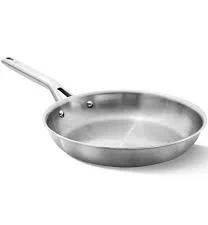
Calphalon Classic Stainless Steel Fry Pan
Lower concern. Bare stainless steel requires no nonstick coating.
Calphalon Classic Stainless Steel uses no Teflon-family coating or nonstick coating. Bare stainless steel cookware carries minimal PFAS risk, though brand does not disclose PFAS stance.
We flunk more products than we pass. This one earned its grade. How we grade
Material
stainless steel, uncoated cookware
Lab data
No public lab test
Is Calphalon Classic Stainless Steel Fry Pan non-toxic? What it is made of
Calphalon Classic Stainless Steel Fry Pan is constructed from uncoated 18/10 stainless steel (18% chromium, 10% nickel), a corrosion-resistant alloy that requires no synthetic nonstick coating. Because there is no polymer surface layer, there is no risk of coating flaking, off-gassing from thermal degradation, or Teflon-type coating-related fume release under high heat. The steel itself is chemically inert under normal cooking conditions, making leaching of the base metal into food a negligible concern at typical cooking temperatures.
What’s concerning
Category baseline
Cookware is a category where PFAS exposure is more common.
No PFAS disclosure
No public statement about PFAS in this product.
Nickel leaching from stainless steel
18/10 stainless steel can release trace nickel into acidic foods during prolonged contact or if the passive chromium oxide layer is damaged by scratching or abrasion. For most users this poses minimal risk, but individuals with nickel sensitivity may develop contact dermatitis with repeated handling or prepare foods in high-nickel conditions (acidic, salty, or high-fat meals stored overnight).
Handle integrity and heat transfer at rivets
User reports in online reviews document rivet or handle loosening after extended use or dishwasher cycling, which can create sharp edges and uneven heat spots. While not a chemical hazard, loose rivets or separating handles present a burn and cut risk; inspect before each use and replace pan if structural integrity is compromised.
What’s reassuring
Bare uncoated material
Bare, uncoated material (cast iron, stainless, carbon steel, or glass) with no surface treatment to contain PFAS.
Aluminum leaching (if cookware is aluminum-core)
Calphalon Classic Stainless Steel Fry Pan is stated as stainless steel construction; no aluminum core or cladding has been documented. Uncoated stainless steel does not present aluminum leaching risk.
Teflon-type coating fume risk or coating flaking
This product carries no nonstick coating, so there is no Teflon-type coating or fluorocarbon polymer present. Coating degradation, flaking into food, or high-heat Teflon-type coating decomposition hazards do not apply.
Lead
Calphalon Classic Stainless Steel is bare metal with no enamel, ceramic, or glaze coating applied to cooking surfaces. Lead or cadmium in surface finishes is not a concern for this product.
Source, ATSDR ↗The full breakdown
The brand's record and disclosure
Calphalon (owned by Groupe SEB) has not published detailed chemical safety documentation or third-party certifications for this specific product line. The brand's public stance on PFAS has been minimal, though their uncoated stainless steel cookware inherently avoids the nonstick chemistry that triggered industry PFAS scrutiny. No significant recalls or safety controversies specific to the Classic Stainless Steel line have been documented in major safety databases.
How it compares in its category
This product sidesteps the main safety concern facing modern cookware, nonstick coating durability and PFAS exposure. Compared to Calphalon's own nonstick lines (which use proprietary coating systems) or competitor products like T-fal or GreenPan, the uncoated stainless steel design eliminates coating-related hazards entirely. Trade-off is higher maintenance (requires oil, food sticks more easily) and slower heat distribution than coated aluminum alternatives, but the safety profile is simpler.
If you buy it
Preheat the pan on medium to medium-high heat and use adequate oil or butter to prevent sticking; stainless steel does not build heat as quickly as aluminum. Hand wash rather than dishwasher when possible to preserve finish. Avoid prolonged exposure to high flame or sustained temperatures above 500F (stainless steel itself is stable, but handles and rivets may suffer). Replace if the bottom warps significantly or rivets loosen, as these affect heat distribution and safety.
What we don’t know
- Basis
- Model estimate, 88% confidence, not a lab result
- Lab test
- None on record for this exact product
- Brand statement
- Calphalon has made a specific claim
Formulations change between production runs, so check the current label. How we grade.
Better-graded alternatives in Cookware
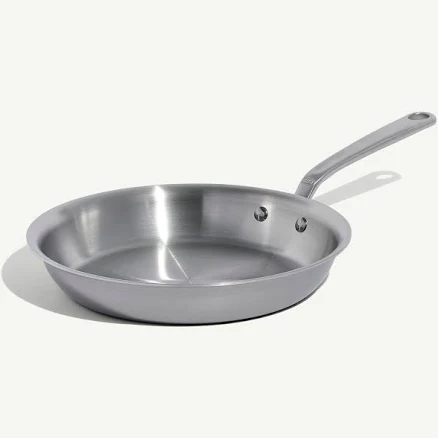
Made In
Stainless Clad Fry Pan
- Stainless steel clad construction, no nonstick coating
- The brand calls it PFAS-free, which we have not verified
- Clad separation or delamination over time
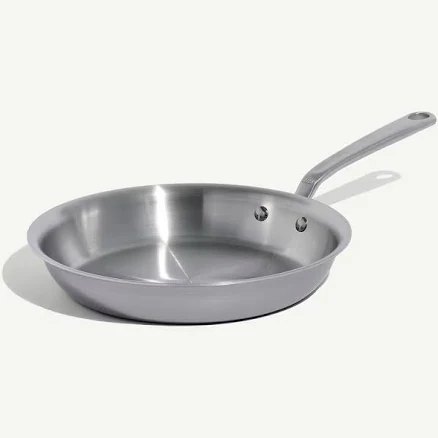
Made In
10' Stainless Clad Frying Pan
- stainless steel clad construction, no nonstick coating
- The brand calls it PFAS-free, which we have not verified
- Nickel leaching from stainless steel
3 hazards checked on this product. See all of them.
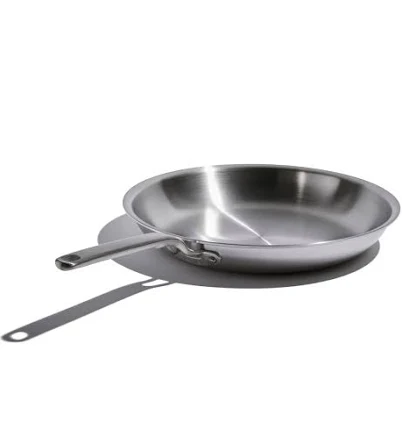
Heritage Steel
Eater Fry Pan
- Clad stainless steel, no coating
- The brand calls it PFAS-free, which we have not verified
- Metal ion release during cooking (iron, nickel, chromium)
More cookware grades
How we score, every product runs through the same public 0-100 rubric based on materials, coatings, brand disclosure, lab findings, and recalls. See the full methodology → Spotted a mistake? Report an error.