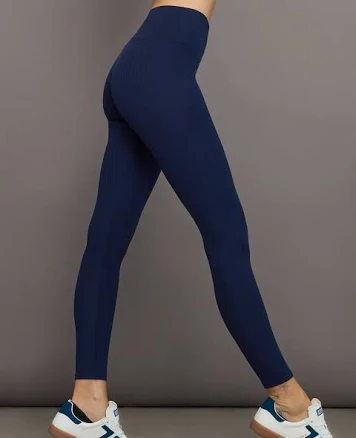
Carbon38 Women's High Rise Legging in Ribbed Melt
Lower concern. Bare synthetic knit with no disclosed water or stain treatment.
Carbon38 does not disclose PFAS information for this legging. The ribbed knit blend shows no obvious water-repellent or stain-resistant finish, reducing chemical treatment risk, but lack of transparency limits certainty.
Still want this one anyway? Check the price on Amazon. We’d swap it.
Material
Nylon/spandex blend (ribbed knit)
Brand disclosure
Brand is silent on PFAS
Lab data
No public lab test
You may also be interested in
Top-graded picks in the categories readers replace first, every one scored on the same rubric.

- polypropylene filter housing, carbon/sediment cartridge
- We found no PFAS statement from the brand
- Bacterial growth in spent cartridges
3 hazards checked on this product, all on its full breakdown.

Aquasure
Premier Series 75 GPD Under Sink Reverse Osmosis Water Filtration System
- RO membrane, carbon filters, stainless steel housing
- We found no PFAS statement from the brand
- Bacterial and microbial growth in housing and filters
4 hazards checked on this product, all on its full breakdown.

Avocado
Vegan Mattress
- organic cotton, natural latex, coconut coir, recycled steel coils
- The brand calls it PFAS-free, which we have not verified
- Heavy metals
2 hazards checked on this product, all on its full breakdown.
What Carbon38 Women's High Rise Ribbed Melt is made of, ingredients and materials
This legging is a nylon and spandex (elastane) blend knit, which is one of the most common performance-wear constructions. Nylon itself is a stable synthetic polymer with low migration of additives into skin during normal wear. The spandex component provides stretch and recovery; modern spandex formulations in major athletic brands typically use diphenylmethane diisocyanate (MDI) as a core polymer but do not inherently pose acute toxicity risks at normal wearing temperatures. The ribbed texture is a mechanical knit pattern, not a chemical coating, which eliminates concerns about glaze, enamel, or finish degradation.
What’s concerning
Category baseline
The starting point for this type of product, before anything specific to this product is counted.
No PFAS disclosure
No public statement from the brand about PFAS in this product.
Azo dyes and colorant migration
Standard nylon and spandex blends are dyed with various classes of synthetic dyes; while regulated azo dyes are not permitted in most EU and major US supply chains, some reactive or direct dyes can migrate onto skin with sweat in warm conditions. Carbon38 does not disclose dye testing or RSL compliance, so risk cannot be ruled out but is not elevated vs typical athletic brands.
Spandex degradation byproducts and skin sensitization
Spandex can degrade under UV, heat, chlorine, or sweat exposure, potentially releasing oligomers or urea-based byproducts that may irritate sensitive skin. This is a known property of elastane fibers, not unique to Carbon38, and is managed through proper care and fit; individuals with elastic-sensitive skin should test durability and wash-out behavior before extended wear.
What’s reassuring
Base material not linked to PFAS
The main material recorded for this product is not one associated with PFAS.
Formaldehyde / VOCs
The ribbed knit texture is a mechanical pattern rather than a chemical finish, and no wrinkle-resistance, flame-retardant, or antimicrobial treatments are claimed. Standard nylon and spandex yarns do not require formaldehyde-based resins for basic durability or stretch recovery.
Source, ATSDR ↗Antimony in polyester
This product is nylon-spandex, not polyester, so antimony catalysts used in polyester synthesis are not applicable. Nylon is synthesized via different polymer chemistry (polycondensation, not transesterification) that does not employ antimony compounds.
Lead
No evidence of heavy metal contamination in Carbon38 apparel is on public record. Synthetic organic dyes used in modern nylon knits are not required to contain lead or cadmium, though certification (OEKO-TEX, ZDHC) would provide assurance; absent that transparency, residual risk is low but unverified.
Source, ATSDR ↗How is this PFAS grade calculated?
The brand's record and disclosure
Carbon38 is a direct-to-consumer athletic brand with limited public transparency on material sourcing or chemical testing. The brand does not publish detailed Restricted Substance Lists (RSLs) or third-party certifications such as OEKO-TEX, GOTS, or Bluesign. No major safety recalls or chemical controversies are on public record for Carbon38 apparel. The company's silence on PFAS treatment aligns with the assessment that this product carries no intentional water-repellent or stain-treatment chemistry, reducing PFAS concern below typical activewear.
How it compares in its category
Nylon-spandex leggings are standard in mid-market athletic wear and generally carry lower chemical hazard profiles than synthetic blends treated with durable water repellents (water-repellent coating), antimicrobial finishes, or flame retardants. Carbon38's positioning and lack of proprietary treatment claims suggests this is a baseline performance garment without premium finishes that might introduce additives. Compared to luxury or heritage athletic brands with published restricted substance testing, Carbon38 offers less transparency but also no evidence of higher-risk chemistry.
If you buy it
Wash in cool water before first wear to remove any residual dyes or finishes from manufacturing. Machine wash warm (not hot) and air dry or tumble dry low to prevent elastic degradation; spandex loses recovery at sustained high temperatures. Replace when elastic begins to lose shape or seams show stress, typically after 50-100 washes with normal care. Avoid prolonged contact with chlorine pools or bleach, which can degrade both nylon and spandex fibers and may cause color loss.
What is not known about PFAS in this product?
- Basis
- Model estimate, 72% confidence, not a lab result
- Lab test
- None on record for this exact product
- Brand statement
- Carbon38 has made none
Formulations change between production runs, so check the current label. How we grade.
More activewear grades
How we score, every product runs through the same public 0-100 rubric based on materials, coatings, brand disclosure, lab findings, and recalls. See the full methodology → Spotted a mistake? Report an error.