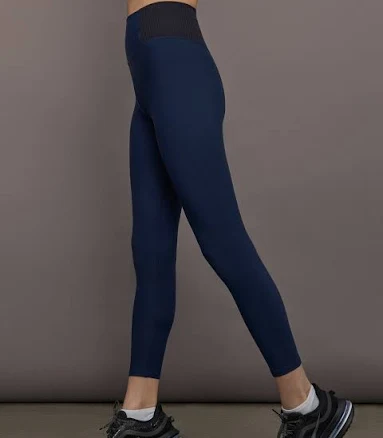
CARBON38 Women's Seamed Legging in Melt
Likely lower concern; standard stretch legging without known PFAS treatment.
Carbon38 does not disclose PFAS or water-repellent coating treatment for this legging. Nylon blend fabrics typically have lower inherent PFAS risk unless specifically water-treated or stain-resistant.
Still want this one anyway? Check the price on Amazon. We’d swap it.
Material
Nylon blend (likely nylon/spandex)
Brand disclosure
Brand is silent on PFAS
Lab data
No public lab test
You may also be interested in
Top-graded picks in the categories readers replace first, every one scored on the same rubric.

- polypropylene filter housing, carbon/sediment cartridge
- We found no PFAS statement from the brand
- Bacterial growth in spent cartridges
3 hazards checked on this product, all on its full breakdown.

Aquasure
Premier Series 75 GPD Under Sink Reverse Osmosis Water Filtration System
- RO membrane, carbon filters, stainless steel housing
- We found no PFAS statement from the brand
- Bacterial and microbial growth in housing and filters
4 hazards checked on this product, all on its full breakdown.

Avocado
Vegan Mattress
- organic cotton, natural latex, coconut coir, recycled steel coils
- The brand calls it PFAS-free, which we have not verified
- Heavy metals
2 hazards checked on this product, all on its full breakdown.
What CARBON38 Women's Seamed Legging in Melt is made of, ingredients and materials
Carbon38's Seamed Legging in Melt is a nylon-spandex blend, the industry standard for high-stretch activewear. Nylon itself is chemically stable and does not leach estrogen-mimicking compounds like BPA; spandex (polyurethane) is similarly non-toxic at normal body temperatures. The 'Melt' colorway suggests a dyed textile, which introduces azo dye risk, though major US retailers typically screen for restricted azo dyes that cleave to carcinogenic amines. No degradation or leaching concerns exist with body-temperature wear.
What’s concerning
Category baseline
The starting point for this type of product, before anything specific to this product is counted.
No PFAS disclosure
No public statement from the brand about PFAS in this product.
Azo dyes
The 'Melt' colorway requires synthetic dyes; while US textile regulations prohibit the most toxic azo dyes that cleave to carcinogens, less-restricted azo compounds may still be used. No specific test data for this product is available, but major retailers typically meet minimum compliance.
Spandex degradation under heat or UV
Spandex (polyurethane) can break down under high heat or prolonged UV exposure, potentially shedding microfibers. This is not a health hazard at normal wear but a durability and microfiber pollution concern with repeated hot-washing or sun-drying.
Allergic contact dermatitis from dyes or finishes
Individuals with sensitive skin or azo dye allergies may experience irritation from synthetic colorants. Performing a patch test or washing new leggings twice before extended wear can mitigate this for susceptible users.
What’s reassuring
Base material not linked to PFAS
The main material recorded for this product is not one associated with PFAS.
Formaldehyde / VOCs
Nylon-spandex leggings rarely receive formaldehyde-based wrinkle-resist or antimicrobial finishes; no reports exist for this product. Standard nylon dyeing does not require formaldehyde.
Source, ATSDR ↗Heavy metals
Synthetic azo dyes do not typically contain cadmium, lead, or mercury. No testing or recalls suggest heavy metal contamination in Carbon38 products.
Source, FDA ↗How is this PFAS grade calculated?
The brand's record and disclosure
Carbon38 does not publicly disclose detailed material sourcing, chemical certifications (e.g., Oeko-Tex, GOTS), or PFAS policy, which is common for contemporary activewear brands but limits independent verification. The brand has no documented product safety recalls or chemical contamination incidents on public record. Without third-party certification claims, you are relying on baseline US textile import regulations rather than voluntary standards.
How it compares in its category
Nylon-spandex leggings show lower concern by toxicology standards; no significant chemical advantage exists between premium brands and mainstream equivalents for this fiber blend. Carbon38 sits mid-to-premium in price, positioning it as comparable in chemical risk to Lululemon, Gymshark, or Alo, which similarly do not broadcast PFAS-free claims. Lower-cost brands often use identical materials; higher-cost brands may add proprietary finishes (moisture-wicking, shape-retention) that are rarely disclosed.
If you buy it
Wash in cool water and dry on low or air-dry to preserve spandex elasticity and avoid thermal stress that could degrade synthetic fibers. Do not bleach, expose to prolonged direct sunlight, or dry-clean, as these can accelerate polymer breakdown. Replace when elastic fails or seams separate, typically 18-24 months of regular wear. No special handling needed beyond standard athletic apparel care.
What is not known about PFAS in this product?
- Basis
- Model estimate, 72% confidence, not a lab result
- Lab test
- None on record for this exact product
- Brand statement
- Carbon38 has made none
Formulations change between production runs, so check the current label. How we grade.
More activewear grades
How we score, every product runs through the same public 0-100 rubric based on materials, coatings, brand disclosure, lab findings, and recalls. See the full methodology → Spotted a mistake? Report an error.