Carbona · Fabric Stain Guard Sprays
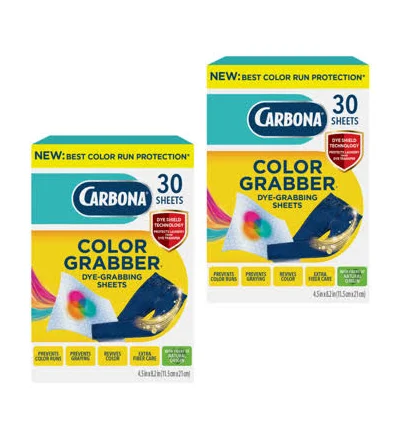
Carbona Color Grabber Dye-grabbing Sheets
Lower concern. No Teflon-family coating or water-repellent coatings present.
These nonwoven polyester sheets grab dyes in laundry without water-resist or stain-guard treatments. Carbona shares no PFAS information.
We flunk more products than we pass. This one earned its grade. How we grade
Material
nonwoven polyester sheets with cationic dyes
Brand disclosure
Brand is silent on PFAS
Lab data
No public lab test
You may also be interested in
Top-graded picks in the categories readers replace first, every one scored on the same rubric.

- polypropylene filter housing, carbon/sediment cartridge
- We found no PFAS statement from the brand
- Bacterial growth in spent cartridges
3 hazards checked on this product, all on its full breakdown.

Aquasure
Premier Series 75 GPD Under Sink Reverse Osmosis Water Filtration System
- RO membrane, carbon filters, stainless steel housing
- We found no PFAS statement from the brand
- Bacterial and microbial growth in housing and filters
4 hazards checked on this product, all on its full breakdown.

Avocado
Vegan Mattress
- organic cotton, natural latex, coconut coir, recycled steel coils
- The brand calls it PFAS-free, which we have not verified
- Heavy metals
2 hazards checked on this product, all on its full breakdown.
What Carbona Color Grabber Dye-grabbing Sheets is made of, ingredients and materials
Carbona Color Grabber sheets are nonwoven polyester fabric saturated with cationic (positively charged) dyes designed to trap loose dyes during machine washing. The cationic dyes bond to fugitive dyes in wash water rather than fabric fibers, then are rinsed away. This chemistry is fundamentally different from reactive dyes used in apparel; cationic dyes are designed to be temporary and water-soluble, minimizing skin contact risk and wash-out potential.
What’s concerning
Category baseline
The starting point for this type of product, before anything specific to this product is counted.
No PFAS disclosure
No public statement from the brand about PFAS in this product.
Azo dyes (cationic)
Cationic dyes used in Color Grabber sheets are not inherently azo-based, but some formulations may contain azo compounds. No specific azo dye content or aromatic amine breakdown products have been disclosed by Carbona. Risk is low because dyes remain in wash water and are rinsed away, not absorbed into skin or fabric.
Skin irritation or allergic contact dermatitis
Cationic dyes can trigger contact sensitization in individuals with reactive skin or dye allergies, particularly if sheets contact skin while wet. This is a known hazard class for dye-saturated textiles; incidence is low but not zero. Testing history is unavailable.
Microfiber shedding
Nonwoven polyester sheets may shed microfibers into wash water during use, contributing to waterborne microplastic pollution. Carbona has not disclosed mitigation measures or fiber-loss data. This is a systemic concern for all synthetic sheet products, not unique to this brand.
What’s reassuring
Base material not linked to PFAS
The main material recorded for this product is not one associated with PFAS.
Heavy metals
No lead, cadmium, or chromium content has been reported or detected in Color Grabber sheets by public testing. Cationic dyes are industrial-grade colorants with lower heavy-metal contamination risk than natural or complex reactive dyes, but Carbona provides no third-party verification.
Source, FDA ↗Formaldehyde / VOCs
No formaldehyde finishing or antimicrobial cross-linking agents have been identified in nonwoven dye-grabber sheet formulations. The nonwoven substrate does not typically require formaldehyde-based bonding, unlike woven or knit textiles.
Source, ATSDR ↗How is this PFAS grade calculated?
The brand's record and disclosure
Carbona is a legacy American laundry-care brand with no public record of safety certifications, third-party testing disclosures, or ingredient transparency statements for this product line. No recalls or regulatory actions specific to Color Grabber sheets are documented in FDA or CPSC databases. The brand's silence on PFAS and detailed material sourcing is typical for consumer laundry products but leaves questions about supply-chain oversight unanswered.
How it compares in its category
Dye-grabber sheets occupy a narrow category with few direct competitors; alternatives include loose powder or liquid dye-catcher additives (e.g., Shout Color Catcher), which pose similar low hazard profiles. Compared to fabric softeners, dryer sheets, or stain removers in the same brand family, Color Grabber sheets have a simpler chemical profile with no documented volatile organic compound off-gassing or flame-retardant coatings. The nonwoven polyester substrate itself is inert once dried and poses no leaching risk during normal use.
If you buy it
Use one sheet per mixed-color load as directed; sheets are designed for single-wash disposal and should not be reused or heated in dryers beyond the warm-air cycle. Store in a cool, dry place away from humidity to prevent dye migration or mold growth on unused sheets. Discontinue use if skin irritation occurs after contact with damp sheets, though this is rare. Dispose of used sheets in regular trash; they are not recyclable and will not persist in landfill as a persistent chemical concern.
What is not known about PFAS in this product?
- Basis
- Model estimate, 78% confidence, not a lab result
- Lab test
- None on record for this exact product
- Brand statement
- Carbona has made none
Formulations change between production runs, so check the current label. How we grade.
More fabric stain guard sprays grades
How we score, every product runs through the same public 0-100 rubric based on materials, coatings, brand disclosure, lab findings, and recalls. See the full methodology → Spotted a mistake? Report an error.