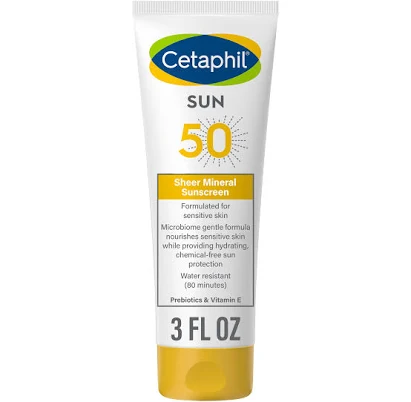
Cetaphil Sheer Mineral Sunscreen Lotion SPF 50
Lower concern; mineral sunscreens typically avoid PFAS without brand transparency.
Zinc oxide and titanium dioxide are non-fluorinated active ingredients carrying lower PFAS risk than chemical sunscreens. Cetaphil has not publicly committed to PFAS avoidance.
We flunk more products than we pass. This one earned its grade. How we grade
Material
mineral sunscreen (zinc oxide, titanium dioxide), water-based lotion
Brand disclosure
Brand is silent on PFAS
Lab data
No public lab test
You may also be interested in
Top-graded picks in the categories readers replace first, every one scored on the same rubric.

- polypropylene filter housing, carbon/sediment cartridge
- We found no PFAS statement from the brand
- Bacterial growth in spent cartridges
3 hazards checked on this product, all on its full breakdown.

Aquasure
Premier Series 75 GPD Under Sink Reverse Osmosis Water Filtration System
- RO membrane, carbon filters, stainless steel housing
- We found no PFAS statement from the brand
- Bacterial and microbial growth in housing and filters
4 hazards checked on this product, all on its full breakdown.

Avocado
Vegan Mattress
- organic cotton, natural latex, coconut coir, recycled steel coils
- The brand calls it PFAS-free, which we have not verified
- Heavy metals
2 hazards checked on this product, all on its full breakdown.
What Cetaphil Sheer Mineral Lotion SPF is made of, ingredients and materials
Cetaphil Sheer Mineral Sunscreen uses zinc oxide and titanium dioxide as UV-blocking agents, which sit on the skin surface rather than absorbing into it, making them a lower-systemic-exposure choice. Water-based lotion formulations like this one typically avoid oily carrier concerns and reduce risk of skin barrier disruption. Mineral UV blockers have a long established safety history and do not metabolize in the body. The 'sheer' claim suggests micronized particle sizing for cosmetic elegance, which does not change toxicological profile in topical use.
What’s concerning
Category baseline
The starting point for this type of product, before anything specific to this product is counted.
No PFAS disclosure
No public statement from the brand about PFAS in this product.
Fragrance allergens and sensitizers
Cetaphil Sheer Mineral is labeled fragrance-free or has minimal fragrance; however, some formulations in this range contain botanical extracts or essential oils that can trigger contact dermatitis in sensitive individuals. Review full ingredient list if history of fragrance sensitivity exists.
Parabens
Water-based lotions require preservatives to prevent microbial growth. Cetaphil formulations typically use paraben or phenoxyethanol systems; both are approved by FDA and EMA at use levels, but individuals with paraben sensitivity should verify the specific product variant. No recalls for preservative contamination are on record.
Source, FDA ↗Micronized particle inhalation risk
Mineral sunscreens in powder or spray form pose inhalation risk; this product is a lotion, eliminating that hazard. If accidentally inhaled during application (e.g., powder variant if purchased), zinc oxide and titanium dioxide are minimally toxic, but chronic inhalation is not recommended.
What’s reassuring
Base material not linked to PFAS
The main material recorded for this product is not one associated with PFAS.
Heavy metals
Zinc oxide and titanium dioxide are pharmaceutical-grade minerals with established purity standards in cosmetics. No recalls or reported contamination with lead, cadmium, or arsenic in Cetaphil sunscreens are on public record. Topical application does not create systemic exposure pathways for inert mineral particles.
Source, FDA ↗Photocatalytic reactivity of titanium dioxide
Titanium dioxide can generate reactive oxygen species under UV exposure in very specific conditions, but this is not established as a skin hazard in topical cosmetic use at recommended application rates. No clinical evidence of harm from this product's formulation exists.
How is this PFAS grade calculated?
The brand's record and disclosure
Cetaphil is owned by Galderma and has a long market presence in dermatology-oriented skincare without major safety recalls specific to this product line. The brand does not publish detailed ingredient sourcing transparency reports or third-party certifications (e.g. No established controversies regarding heavy metal contamination or undisclosed additives are on public record for this brand's sunscreens. Absence of transparency is not evidence of hazard, but represents a lack of proactive disclosure.
How it compares in its category
Mineral sunscreens like this occupy a middle position, lower concern than chemical UV absorbers (oxybenzone, avobenzone) regarding systemic absorption, but with higher risk of white cast and particle-size cosmetic trade-offs than hybrid or chemical-only products. Cetaphil's formulation is comparable to mass-market mineral options from Neutrogena or CeraVe and less expensive than premium mineral brands like Blue Lizard or EltaMD. No major performance or safety differentiation versus peers in the drugstore mineral category.
If you buy it
Apply generously (about 1/4 teaspoon for face) 15 minutes before sun exposure and reapply every 2 hours or after swimming. Store in a cool, dry place away from direct heat; mineral sunscreens are stable and do not degrade significantly with temperature like some chemical formulations. Shake before use, as mineral particles can settle. Discontinue if irritation develops, though allergic reactions to zinc oxide or titanium dioxide are rare.
What is not known about PFAS in this product?
- Basis
- Model estimate, 72% confidence, not a lab result
- Lab test
- None on record for this exact product
- Brand statement
- Cetaphil has made none
Formulations change between production runs, so check the current label. How we grade.
What are the PFAS-free alternatives to Cetaphil Sheer Mineral Sunscreen Lotion SPF 50?
- Mineral sunscreen, zinc oxide base
- A third party reports verifying it as PFAS-free
- 1,4-dioxane (non-intentional contaminant from surfactants/emulsifiers)
2 hazards checked on this product, all on its full breakdown.
- mineral sunscreen (zinc oxide or titanium dioxide base)
- The brand calls it PFAS-free, which we have not verified
- Synthetic fragrance allergens
More sunscreen grades
How we score, every product runs through the same public 0-100 rubric based on materials, coatings, brand disclosure, lab findings, and recalls. See the full methodology → Spotted a mistake? Report an error.