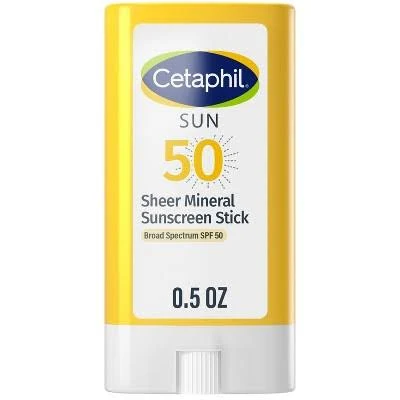
Cetaphil Sheer Mineral Sunscreen Stick SPF 50
Lower concern; mineral sunscreen avoids PFAS-prone chemistry without explicit claims.
Titanium dioxide and zinc oxide mineral blockers don't require water-repellent coatings or PFAS. The stick format lacks waterproofing language and typical PFAS red flags.
We flunk more products than we pass. This one earned its grade. How we grade
Material
mineral sunscreen (titanium dioxide/zinc oxide base)
Brand disclosure
Brand is silent on PFAS
Lab data
No public lab test
You may also be interested in
Top-graded picks in the categories readers replace first, every one scored on the same rubric.

- polypropylene filter housing, carbon/sediment cartridge
- We found no PFAS statement from the brand
- Bacterial growth in spent cartridges
3 hazards checked on this product, all on its full breakdown.

Aquasure
Premier Series 75 GPD Under Sink Reverse Osmosis Water Filtration System
- RO membrane, carbon filters, stainless steel housing
- We found no PFAS statement from the brand
- Bacterial and microbial growth in housing and filters
4 hazards checked on this product, all on its full breakdown.

Avocado
Vegan Mattress
- organic cotton, natural latex, coconut coir, recycled steel coils
- The brand calls it PFAS-free, which we have not verified
- Heavy metals
2 hazards checked on this product, all on its full breakdown.
What Cetaphil Sheer Mineral Sunscreen Stick SPF is made of, ingredients and materials
Cetaphil Sheer Mineral Sunscreen Stick uses titanium dioxide and zinc oxide as UV filters, which sit on the skin surface rather than absorb into it. These minerals have decades of safety data and are non-nano in most stick formulations, meaning particles are large enough not to penetrate skin. The stick format itself carries lower risk of microbead shedding or volatile solvent off-gassing compared to aerosol or liquid sunscreens.
What’s concerning
Category baseline
The starting point for this type of product, before anything specific to this product is counted.
No PFAS disclosure
No public statement from the brand about PFAS in this product.
Titanium dioxide inhalation (pigment/powder form)
Stick formulations shed fine powder particles during application; inhalation risk is minimal during normal use on skin but increases in poorly ventilated spaces or if product is aerosolized. FDA classifies TiO2 as acceptable for topical use but notes respiratory precaution in occupational settings. No established harm from consumer-level stick sunscreen use.
Preservative allergens or biocides
Stick formulations typically contain preservatives (e.g., methylisothiazolinone, phenoxyethanol) to prevent microbial growth. Cetaphil does not disclose full preservative identity on most consumer-facing labels. Sensitization is rare but reported in a small subset of users; patch test if you have known preservative sensitivities.
Coating or occlusive irritation from stick film
Mineral sunscreen sticks leave a visible white or tinted film that can feel occlusive, trapping sweat and bacteria in some individuals. This is not a toxicological hazard but may trigger or worsen acne or folliculitis in prone users. Solubility and removal ease vary by skin type.
What’s reassuring
Base material not linked to PFAS
The main material recorded for this product is not one associated with PFAS.
Fragrance allergens and sensitivizers
Cetaphil Sheer Mineral is marketed as fragrance-free, removing a common irritant source in sunscreens. No documented fragrance-related complaints or recalls on this specific product line.
Lead
Titanium dioxide and zinc oxide as pharmaceutical-grade sunscreen actives are subject to USP/monograph purity standards that limit heavy metal contamination. No recalls or testing failures have been published for Cetaphil mineral sunscreens. Risk is inherent to all mineral sunscreen brands using refined mineral oxides.
Source, ATSDR ↗How is this PFAS grade calculated?
The brand's record and disclosure
Cetaphil (owned by Nestlé) has a reputation for dermatologist-recommended safety but makes no explicit PFAS commitments or third-party certifications on this product. The brand has faced no major recalls or documented safety violations with mineral sunscreen lines. Transparency on full ingredient sourcing and manufacturing standards is minimal compared to premium or independent brands.
How it compares in its category
Mineral sunscreens as a class carry lower chemical hazard burden than chemical (organic) sunscreens, which rely on absorable filters like oxybenzone or avobenzone. Cetaphil's stick format avoids propellant concerns of aerosols and fragrance-free positioning sidesteps allergen risk. Price and availability position it as a mainstream alternative to both budget and luxury mineral lines.
If you buy it
Store in cool, dry conditions away from direct heat; stick sunscreens are stable but excess heat can affect consistency. Reapply every 2 hours during sun exposure and after water contact, per label instructions. Check for visible separation, discoloration, or rancid smell before use; discard after 3 years or if exposed to sustained heat. Use as directed without ingestion; supervise children to prevent accidental oral intake.
What is not known about PFAS in this product?
- Basis
- Model estimate, 72% confidence, not a lab result
- Lab test
- None on record for this exact product
- Brand statement
- Cetaphil has made none
Formulations change between production runs, so check the current label. How we grade.
What are the PFAS-free alternatives to Cetaphil Sheer Mineral Sunscreen Stick SPF 50?
- Mineral sunscreen, zinc oxide base
- A third party reports verifying it as PFAS-free
- 1,4-dioxane (non-intentional contaminant from surfactants/emulsifiers)
2 hazards checked on this product, all on its full breakdown.
- mineral sunscreen (zinc oxide or titanium dioxide base)
- The brand calls it PFAS-free, which we have not verified
- Synthetic fragrance allergens
More sunscreen grades
How we score, every product runs through the same public 0-100 rubric based on materials, coatings, brand disclosure, lab findings, and recalls. See the full methodology → Spotted a mistake? Report an error.