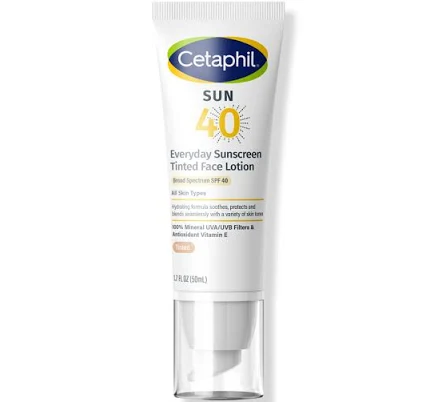
CVS Cetaphil Everyday Sunscreen Tinted Face Lotion SPF 40
Lower PFAS concern for standard sunscreen lotion without waterproof claims.
This basic lotion has no disclosed waterproofing, stain resistance, or fluorinated coatings. Standard sunscreen lotions carry lower PFAS risk than waterproof formulas.
We flunk more products than we pass. This one earned its grade. How we grade
Material
Water-based lotion emulsion; no waterproof or stain-resistant treatment disclosed
Brand disclosure
Brand is silent on PFAS
Lab data
No public lab test
You may also be interested in
Top-graded picks in the categories readers replace first, every one scored on the same rubric.

- polypropylene filter housing, carbon/sediment cartridge
- We found no PFAS statement from the brand
- Bacterial growth in spent cartridges
3 hazards checked on this product, all on its full breakdown.

Aquasure
Premier Series 75 GPD Under Sink Reverse Osmosis Water Filtration System
- RO membrane, carbon filters, stainless steel housing
- We found no PFAS statement from the brand
- Bacterial and microbial growth in housing and filters
4 hazards checked on this product, all on its full breakdown.

Avocado
Vegan Mattress
- organic cotton, natural latex, coconut coir, recycled steel coils
- The brand calls it PFAS-free, which we have not verified
- Heavy metals
2 hazards checked on this product, all on its full breakdown.
What CVS Cetaphil Everyday Face Lotion SPF is made of, ingredients and materials
This is a water-based lotion emulsion designed for facial application, meaning it disperses UV filters and pigments in a water-oil base rather than relying on organic solvents or heavy silicones. Tinted sunscreens typically contain iron oxides or synthetic colorants to provide coverage, plus humectants (glycerin-type ingredients) to prevent moisture loss. The 'everyday' positioning indicates it is formulated to be non-irritating and suitable for frequent use, which typically means lower concentrations of potential irritants like fragrance or preservative boosters.
What’s concerning
Category baseline
The starting point for this type of product, before anything specific to this product is counted.
No PFAS disclosure
No public statement from the brand about PFAS in this product.
Fragrance allergens (undisclosed components)
Cetaphil Everyday Sunscreen is labeled fragrance-free, but some formulations contain masking fragrances or essential oils not always itemized on label; individuals with fragrance sensitivity should verify full ingredient list or patch-test first.
Organic UV filter photoinstability and skin penetration
If this product uses organic filters (avobenzone, octinoxate), these are photodegradable and may penetrate skin barrier slightly under UV exposure; water-based emulsions mitigate but do not eliminate this. No acute toxicity is established, but long-term systemic absorption remains less studied than mineral alternatives.
Parabens
Cetaphil Everyday Sunscreen likely contains preservatives to prevent microbial growth in a water-based formula; common choices (parabens, phenoxyethanol) are approved but may trigger dermatitis in sensitive populations. No recalls linked to this product.
Source, FDA ↗Emulsion separation and bacterial colonization if stored improperly
Water-based lotions can separate if exposed to extreme temperatures or left open; bacteria or mold colonization is theoretically possible if contaminated or left unmaintained. Proper capping and cool storage prevent this.
What’s reassuring
Base material not linked to PFAS
The main material recorded for this product is not one associated with PFAS.
Iron oxide pigment safety in tinted cosmetics
Iron oxides used for tint are approved colorants in cosmetics and no hazard concerns are established at cosmetic-use concentrations; however, some individuals report minor irritation or contact dermatitis. Not a widespread issue for this product.
How is this PFAS grade calculated?
The brand's record and disclosure
Cetaphil is owned by Galderma and has a long-established reputation for dermatologist-recommended, hypoallergenic formulas aimed at sensitive skin. The brand does not publicly disclose full ingredient sourcing or supply chain PFAS testing on this specific product line, which is consistent with most mass-market sunscreen brands. No recalls, formulation controversies, or third-party toxicity alerts are on public record for this specific product. The brand has not sought organic, reef-safe, or independent safety certifications for this line.
How it compares in its category
Among mass-market tinted sunscreens, Cetaphil Everyday sits in the middle tier, more transparent on basic allergen avoidance than budget brands, but less comprehensive on supply-chain transparency than premium or natural alternatives. Mineral sunscreens (zinc oxide/titanium dioxide) typically carry lower chemical residue concerns but are more visible on skin; this product likely contains organic UV filters (avobenzone, octinoxate, or similar), which are FDA-approved but less fully characterized for long-term exposure than mineral options. Price and accessibility favor this product over specialty dermatological lines for daily use.
If you buy it
Apply generously and reapply every two hours or after swimming, as with any sunscreen; do not store in direct sunlight or high heat, as this can degrade UV filter efficacy. Keep the tube sealed and replace after 12 months of opening or if you notice separation, discoloration, or change in texture. If you have very sensitive skin, patch-test on inner arm first, as iron oxide pigments or preservatives may occasionally trigger irritation in prone individuals. Once absorbed into skin, this product does not require special removal beyond normal cleansing.
What is not known about PFAS in this product?
- Basis
- Model estimate, 72% confidence, not a lab result
- Lab test
- None on record for this exact product
- Brand statement
- Cetaphil has made none
Formulations change between production runs, so check the current label. How we grade.
What are the PFAS-free alternatives to CVS Cetaphil Everyday Sunscreen Tinted Face Lotion SPF 40?
- Mineral sunscreen, zinc oxide base
- A third party reports verifying it as PFAS-free
- 1,4-dioxane (non-intentional contaminant from surfactants/emulsifiers)
2 hazards checked on this product, all on its full breakdown.
- mineral sunscreen (zinc oxide or titanium dioxide base)
- The brand calls it PFAS-free, which we have not verified
- Synthetic fragrance allergens
More sunscreen grades
How we score, every product runs through the same public 0-100 rubric based on materials, coatings, brand disclosure, lab findings, and recalls. See the full methodology → Spotted a mistake? Report an error.