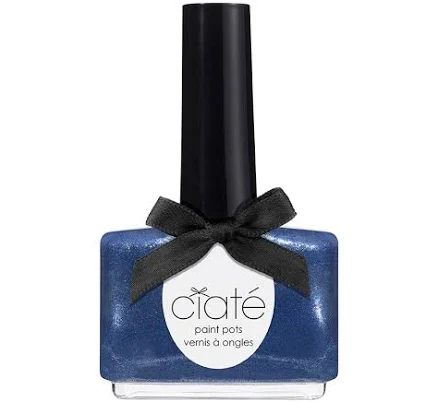
Ciaté London · Nail Polish & Top Coat
Ciaté Regatta
Lower PFAS concern typical for mainstream nail lacquer, but no brand transparency from Ciaté.
Ciaté London's Regatta is a nail polish with no public PFAS disclosures or claims. Standard nail lacquers rarely contain intentional PFAS, but formulae vary by brand.
We flunk more products than we pass. This one earned its grade. How we grade
Material
nail polish lacquer (typical nitrocellulose, plasticizers, resins)
Brand disclosure
Brand is silent on PFAS
Lab data
No public lab test
Is Ciaté Regatta non-toxic? What it is made of
Ciaté Regatta is a conventional nail polish lacquer based on nitrocellulose (cellulose dissolved in organic solvents), with plasticizers, resins, and pigments typical of the category. The formula hardens by solvent evaporation rather than chemical cross-linking, so dried polish on nails poses negligible inhalation risk. Primary exposure occurs during application when volatile organic compounds (toluene, xylene, formaldehyde releasers in some formulas) are airborne; this is the main reason ventilation matters.
What’s concerning
Category baseline
The starting point for this type of product, before anything specific to this product is counted.
No PFAS disclosure
No public statement from the brand about PFAS in this product.
Formaldehyde / VOCs
All conventional nail lacquers release VOCs during application and drying. Ciaté does not disclose solvent type; standard formulations contain toluene and likely formaldehyde donors. Acute exposure (headache, dizziness, respiratory irritation) is well-documented in poorly ventilated settings; chronic low-dose risk is minimal for occasional home use.
Source, ATSDR ↗Dibutyl phthalate (DBP) and plasticizers
Ciaté does not declare DBP absence, and most mainstream polish formulas still contain phthalates as flexibility agents. No confirmed absorption through dried polish on nails; exposure risk is primarily occupational (nail technicians) or during application solvent inhalation, not from wearing the polish.
Formaldehyde / VOCs
Standard lacquer resins (tosylamide-formaldehyde, benzoguanamine-formaldehyde) are common in conventional polish. Ciaté does not advertise formaldehyde-free status. Inhalation during application is the relevant exposure route; no documented dermal absorption through dried film.
Source, ATSDR ↗Fragrance allergens
Some Ciaté polishes include fragrance compounds; if present in Regatta, common allergens include limonene and linalool. No specific fragrance declaration is available, so allergen risk cannot be ruled out, though dermal contact during application is brief and skin exposure is minimal.
What’s reassuring
Base material not linked to PFAS
The main material recorded for this product is not one associated with PFAS.
Lead
Nail polish pigments are regulated for heavy metal content in the US (FDA, California Prop 65). No recalls or test results for Ciaté Regatta specifically are on public record; mainstream brands generally comply with limits. Risk from wearing dried polish on nails is negligible.
Source, ATSDR ↗The full breakdown
The brand's record and disclosure
Ciaté London does not publicly disclose full ingredient lists or publish PFAS statements on this product, consistent with most mainstream nail polish brands. No significant safety recalls or regulatory actions against this brand in nail polish are on record. The brand markets itself as 'premium' but has not pursued 'clean beauty' or third-party certification (such as Puro or Zoya-style transparency), leaving composition opacity as the main transparency gap.
How it compares in its category
Ciaté Regatta sits in the mid-to-premium segment alongside Essie and OPI, not in the 'clean' or 'non-toxic' niche (Zoya, Ella+Mila). Like most conventional lacquers, it likely contains toluene, dibutyl phthalate (DBP), and formaldehyde or releasers, which are regulated but present in most traditional polishes. Brands with explicit '3-free' or '5-free' labeling exclude some of these; Ciaté does not market such restrictions, suggesting a conventional formulation.
If you buy it
Apply in a well-ventilated space or near an open window to minimize inhalation of solvent fumes during the 1-2 minute application window. Allow at least 2-3 minutes drying before touching anything; full hardness occurs within 1-2 hours. Replace polish once consistency becomes thick or grainy (typically after 12-18 months of use) as this indicates solvent evaporation and resin precipitation, making application difficult and fume concentration higher. Remove with non-acetone remover if possible to reduce exposure, though acetone is not a systemic hazard in brief nail use.
What we don’t know
- Basis
- Model estimate, 72% confidence, not a lab result
- Lab test
- None on record for this exact product
- Brand statement
- Ciaté London has made none
Formulations change between production runs, so check the current label. How we grade.
Better-graded alternatives in Nail Polish & Top Coat
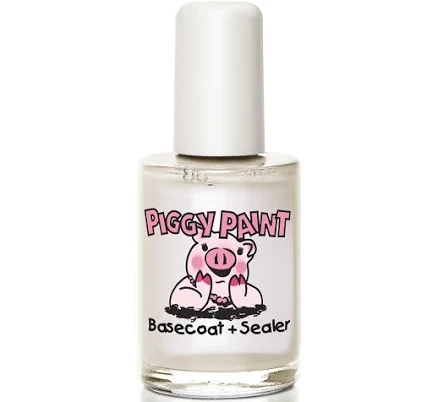
Piggy Paint
Basecoat & Sealer Nail Polish
- Water-based organic pigments and plant-derived resins
- The brand calls it PFAS-free, which we have not verified
- Heavy metals
3 hazards checked on this product. See all of them.
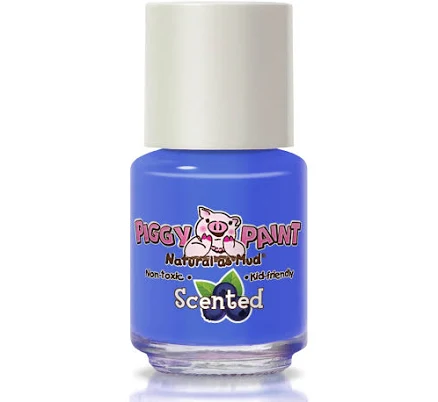
Piggy Paint
Nail Polish Piggy Paint
- water-based pigmented lacquer
- The brand calls it PFAS-free, which we have not verified
- Volatile organic compounds (VOCs) from resins and solvents
3 hazards checked on this product. See all of them.
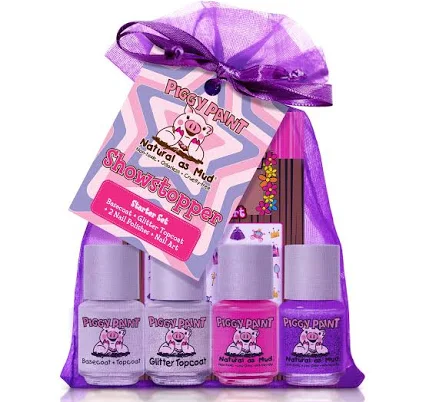
Piggy Paint
Showstopper Nail Polish Set
- organic pigments, plant-based resins, water-based lacquer
- The brand calls it PFAS-free, which we have not verified
- Volatile organic compounds (VOCs)
2 hazards checked on this product. See all of them.
More nail polish & top coat grades
How we score, every product runs through the same public 0-100 rubric based on materials, coatings, brand disclosure, lab findings, and recalls. See the full methodology → Spotted a mistake? Report an error.