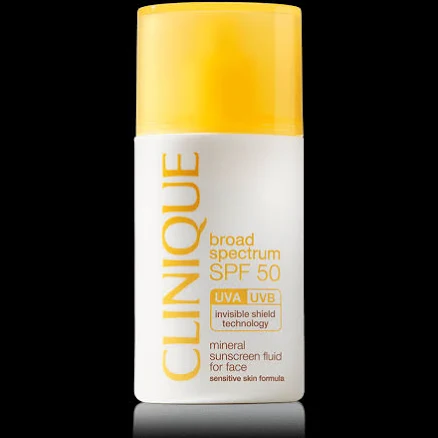
Clinique Mineral Sunscreen Fluid for Face
Lower concern; mineral base without waterproofing claims present.
Titanium dioxide and zinc oxide create inherently lower PFAS risk compared to chemical filters. No waterproof treatment is stated and brand makes no PFAS claims.
We flunk more products than we pass. This one earned its grade. How we grade
Material
Mineral UV filters (titanium dioxide, zinc oxide), emollients
Lab data
No public lab test
You may also be interested in
Top-graded picks in the categories readers replace first, every one scored on the same rubric.

- polypropylene filter housing, carbon/sediment cartridge
- We found no PFAS statement from the brand
- Bacterial growth in spent cartridges
3 hazards checked on this product, all on its full breakdown.

Aquasure
Premier Series 75 GPD Under Sink Reverse Osmosis Water Filtration System
- RO membrane, carbon filters, stainless steel housing
- We found no PFAS statement from the brand
- Bacterial and microbial growth in housing and filters
4 hazards checked on this product, all on its full breakdown.

Avocado
Vegan Mattress
- organic cotton, natural latex, coconut coir, recycled steel coils
- The brand calls it PFAS-free, which we have not verified
- Heavy metals
2 hazards checked on this product, all on its full breakdown.
What Clinique Mineral Sunscreen Fluid for Face is made of, ingredients and materials
Clinique Mineral Sunscreen Fluid uses titanium dioxide and zinc oxide as physical UV blockers, which sit on skin rather than absorbing into it. These are considered lower concern alternatives to chemical UV absorbers like oxybenzone or avobenzone, which carry systemic absorption concerns. The fluid formulation relies on emollients (likely silicones, glycerin, or plant oils) to deliver a lightweight texture; titanium dioxide and zinc oxide are inert minerals with long safety history in cosmetics. Mineral sunscreens generally do not bioaccumulate or show endocrine effects at use levels.
What’s concerning
Category baseline
The starting point for this type of product, before anything specific to this product is counted.
No PFAS disclosure
No public statement from the brand about PFAS in this product.
Fragrance allergens and irritants
Clinique Mineral Sunscreen Fluid does contain fragrance (listed as 'fragrance' without breakdown on label). Fragrance mixtures can trigger contact dermatitis or photosensitivity in sensitive individuals; prevalence is low but real for fragrance-reactive consumers.
What’s reassuring
Base material not linked to PFAS
The main material recorded for this product is not one associated with PFAS.
Titanium dioxide (particulate/inhalation risk)
Titanium dioxide as a sunscreen ingredient has not been shown to pose inhalation risk during normal topical use on face; concern arises mainly with powder formulations or occupational dust exposure, which does not apply here.
Heavy metals
FDA-grade titanium dioxide and zinc oxide used in sunscreens are required to meet purity standards and are not known to leach cadmium, lead, or other heavy metals at cosmetic use levels. No contamination recalls for this product exist on record.
Source, FDA ↗Photocatalytic reactivity and free radical generation
Uncoated titanium dioxide can theoretically generate free radicals under UV when in contact with skin, but commercial sunscreen-grade titanium dioxide is surface-coated (typically with silica or alumina) to prevent this; Clinique product does not disclose coating specifics but standard formulation practice minimizes this risk.
Contamination during storage or application (bacterial growth)
Fluid sunscreens in sealed bottles have lower risk of bacterial contamination than loose powders or open containers, assuming proper storage and lid closure. No product-specific contamination incidents are on record for Clinique sunscreen lines.
How is this PFAS grade calculated?
The brand's record and disclosure
Clinique (Estée Lauder group) does not publicly commit to PFAS avoidance, and ingredient disclosures on their website and packaging are standard-level, not exceptional. No major sunscreen recalls or safety controversies have been established for this specific product line. The brand meets baseline FDA sunscreen ingredient safety rules but does not advertise third-party testing, reef safety, or non-GMO claims that some competitors highlight. Clinique's parent company has faced scrutiny over plastic waste and supply-chain transparency, though not specifically product safety.
How it compares in its category
Mineral sunscreens like this occupy the middle ground, lower concern than many chemical sunscreens in terms of systemic absorption, but typically heavier or whiter on skin than chemical alternatives, which is why Clinique markets a 'fluid' texture to address that complaint. Compared to premium mineral brands (EltaMD, Blue Lizard) or reef-safe/non-nano certified options, Clinique does not highlight nanoparticle size restriction or coral impact claims. Pricing and availability are strong relative to indie or dermatologist-exclusive lines, making this a convenient mainstream choice.
If you buy it
Apply generously (about 1/4 teaspoon for face) 15 minutes before sun exposure and reapply every 2 hours or after swimming or sweating; mineral sunscreens do not degrade faster than chemical ones but benefit from consistent reapplication. Store in a cool, dry place and avoid leaving in direct heat (e.g., car dashboard in summer) as emollients can separate or degrade. Shake before each use if separation is visible. Discontinue if rash, irritation, or sensitivity develops and patch-test on inner arm first if you have sensitive skin, especially to titanium dioxide dust (rare but reported in occupational settings, not typical consumer use).
What is not known about PFAS in this product?
- Basis
- Model estimate, 72% confidence, not a lab result
- Lab test
- None on record for this exact product
- Brand statement
- Clinique has made a specific claim
Formulations change between production runs, so check the current label. How we grade.
What are the PFAS-free alternatives to Clinique Mineral Sunscreen Fluid for Face?
- Mineral sunscreen, zinc oxide base
- A third party reports verifying it as PFAS-free
- 1,4-dioxane (non-intentional contaminant from surfactants/emulsifiers)
2 hazards checked on this product, all on its full breakdown.
- mineral sunscreen (zinc oxide or titanium dioxide base)
- The brand calls it PFAS-free, which we have not verified
- Synthetic fragrance allergens
More sunscreen grades
How we score, every product runs through the same public 0-100 rubric based on materials, coatings, brand disclosure, lab findings, and recalls. See the full methodology → Spotted a mistake? Report an error.