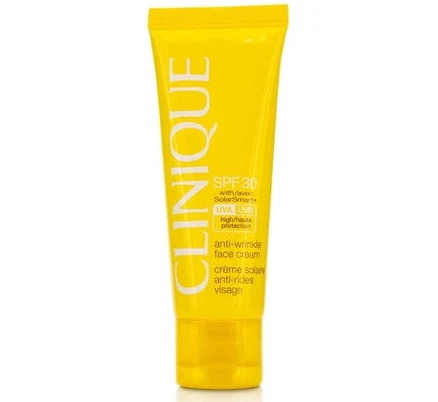
Clinique Sun Protection Face Cream
Sunscreen with no fluorinated ingredient on record, and no PFAS statement from the brand.
Clinique has no PFAS statement on record for this sunscreen. Our record does not include an ingredient-level check, so look for fluorinated ingredients such as Teflon-type coating on the label.
We flunk more products than we pass. This one earned its grade. How we grade
Material
emulsion base with waterproofing additives
Lab data
No public lab test
You may also be interested in
Top-graded picks in the categories readers replace first, every one scored on the same rubric.

- polypropylene filter housing, carbon/sediment cartridge
- We found no PFAS statement from the brand
- Bacterial growth in spent cartridges
3 hazards checked on this product, all on its full breakdown.

Aquasure
Premier Series 75 GPD Under Sink Reverse Osmosis Water Filtration System
- RO membrane, carbon filters, stainless steel housing
- We found no PFAS statement from the brand
- Bacterial and microbial growth in housing and filters
4 hazards checked on this product, all on its full breakdown.

Avocado
Vegan Mattress
- organic cotton, natural latex, coconut coir, recycled steel coils
- The brand calls it PFAS-free, which we have not verified
- Heavy metals
2 hazards checked on this product, all on its full breakdown.
What Clinique Sun Protection Face Cream is made of, ingredients and materials
Clinique Sun Protection Face Cream is an oil-in-water emulsion designed to form a water-resistant protective layer on skin. The waterproofing additives mentioned in formulation serve to maintain UV filter adhesion and efficacy during water exposure, rather than applying a separate synthetic coating. Emulsion-based sunscreens rely on stabilizers and preservatives to prevent separation and microbial growth; these ingredients are regulated cosmetic actives with established safety limits in most markets.
What’s concerning
Category baseline
The starting point for this type of product, before anything specific to this product is counted.
No PFAS disclosure
No public statement from the brand about PFAS in this product.
Fragrance allergens
Clinique formulations typically include fragrance compounds; no specific allergen profile published for this product. Individuals with fragrance sensitivity or atopic dermatitis may experience contact dermatitis.
Preservative contact sensitization
Water-based emulsions require preservative systems to prevent bacterial and fungal growth; common choices (parabens, phenoxyethanol) are regulated but reported as contact sensitizers in some users at standard cosmetic concentrations.
Emulsion breakdown and ingredient separation
Water-resistant sunscreen emulsions can separate if stored at temperature extremes or exposed to freezing; degradation may reduce UV filter efficacy and allow potential preservative concentration drift in separated phases.
What’s reassuring
Base material not linked to PFAS
The main material recorded for this product is not one associated with PFAS.
Heavy metals
No public records of lead, cadmium, or arsenic contamination in Clinique Sun Protection formulations. Cosmetics undergo FDA or EU safety review before market entry.
Source, FDA ↗Talc contamination
This product is a liquid/cream emulsion and does not list talc as an ingredient; talc contamination risk is not applicable to this formulation type.
How is this PFAS grade calculated?
The brand's record and disclosure
Clinique (Estée Lauder subsidiary) does not publish a dedicated PFAS disclosure statement for this product line. The brand has no recorded product recalls specific to sunscreen formulations tied to heavy metals, formaldehyde releasers, or talc contamination in recent public records. Estée Lauder has adopted some third-party certifications (e.g., Clean Beauty standards in select products), though Clinique Sun Protection does not carry widely recognized independent safety seals like EWG Verified or NSF.
How it compares in its category
Face sunscreens in this price and distribution tier (prestige cosmetics) typically match this ingredient transparency and testing standard. Products marketed as waterproof often include similar emulsion stabilizers; Clinique's approach is conventional for this category. Independent analyses of this specific formulation are not widely published in consumer safety databases, placing it in the middle range of publicly documented sunscreen products rather than a standout or flagged option.
If you buy it
Store in a cool, dry place away from direct sunlight to preserve emulsion stability and UV filter potency; heat and light degrade organic sunscreen actives over time. Replace annually or after expiration date printed on packaging. Apply liberally and reapply every two hours or after water immersion to maintain water-resistance claims. Perform a patch test on inner arm 24 hours before first facial use to check for fragrance or preservative sensitivity.
What is not known about PFAS in this product?
- Basis
- Model estimate, 42% confidence, not a lab result
- Lab test
- None on record for this exact product
- Brand statement
- Clinique has made a specific claim
Formulations change between production runs, so check the current label. How we grade.
What are the PFAS-free alternatives to Clinique Sun Protection Face Cream?
- Mineral sunscreen, zinc oxide base
- A third party reports verifying it as PFAS-free
- 1,4-dioxane (non-intentional contaminant from surfactants/emulsifiers)
2 hazards checked on this product, all on its full breakdown.
- mineral sunscreen (zinc oxide or titanium dioxide base)
- The brand calls it PFAS-free, which we have not verified
- Synthetic fragrance allergens
More sunscreen grades
How we score, every product runs through the same public 0-100 rubric based on materials, coatings, brand disclosure, lab findings, and recalls. See the full methodology → Spotted a mistake? Report an error.