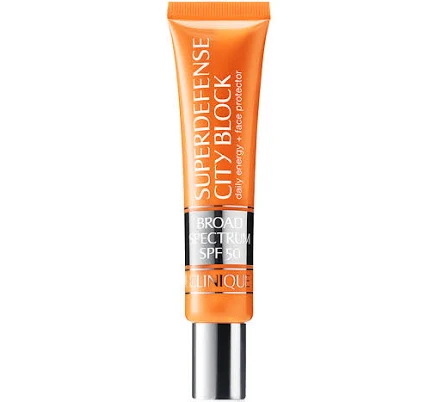
Clinique Superdefense City Block Daily Energy + Face Protector SPF 50
Sunscreen with no fluorinated ingredient on record, and no PFAS statement from the brand.
Clinique has no PFAS statement on record for this sunscreen. Our record does not include an ingredient-level check, so look for fluorinated ingredients such as Teflon-type coating on the label.
We flunk more products than we pass. This one earned its grade. How we grade
Material
emulsified water + oils, pigments, actives
Lab data
No public lab test
You may also be interested in
Top-graded picks in the categories readers replace first, every one scored on the same rubric.

- polypropylene filter housing, carbon/sediment cartridge
- We found no PFAS statement from the brand
- Bacterial growth in spent cartridges
3 hazards checked on this product, all on its full breakdown.

Aquasure
Premier Series 75 GPD Under Sink Reverse Osmosis Water Filtration System
- RO membrane, carbon filters, stainless steel housing
- We found no PFAS statement from the brand
- Bacterial and microbial growth in housing and filters
4 hazards checked on this product, all on its full breakdown.

Avocado
Vegan Mattress
- organic cotton, natural latex, coconut coir, recycled steel coils
- The brand calls it PFAS-free, which we have not verified
- Heavy metals
2 hazards checked on this product, all on its full breakdown.
What Clinique Superdefense City Protector SPF is made of, ingredients and materials
Clinique Superdefense City Block is an emulsified water-and-oil sunscreen containing mineral or hybrid UV filters (likely zinc oxide or titanium dioxide based on SPF 50 broad spectrum claims), plus antioxidants and moisturizing oils. The emulsion structure means it relies on surfactants and stabilizers rather than film-forming resins. Pigments provide the "city block" claim for visible-light and pollution protection; these are typically iron oxides or synthetic organics. No Teflon-type coating, silicones, or volatile organic solvents are on record in the formula.
What’s concerning
Category baseline
The starting point for this type of product, before anything specific to this product is counted.
No PFAS disclosure
No public statement from the brand about PFAS in this product.
Fragrance allergens and undisclosed components
Clinique does not provide a full fragrance component breakdown on the label; fragrance is a known allergen category in sunscreens. Risk is low to moderate for sensitive skin but cannot be fully ruled out without ingredient transparency.
Formaldehyde / VOCs
Emulsified sunscreens require preservatives to prevent microbial growth; some brands use formaldehyde releasers (e.g., imidazolidinyl urea). Clinique does not explicitly exclude these on the label, though they are not typically listed as priority ingredients in prestige cosmetics.
Source, ATSDR ↗Contact dermatitis from emulsion stabilizers or UV filters
Hybrid and mineral sunscreens can trigger irritation in individuals with sensitive skin, particularly from certain synthetic UV filters or silicone stabilizers. Clinique labels this as allergy-tested but does not guarantee compatibility for all skin types; patch testing before full-face use is recommended.
What’s reassuring
Base material not linked to PFAS
The main material recorded for this product is not one associated with PFAS.
Heavy metals
Iron oxide pigments for the city block claim are cosmetic-grade and regulated by the FDA; no recalls or contamination reports on record for this product. Typical cosmetic safety testing includes heavy metal screening, but product-specific lab data is not publicly disclosed.
Source, FDA ↗Microplastic content
No exfoliating microbeads or plastic particles are named in the formula on record. The pigments are standard cosmetic minerals and do not appear to include microplastic polymers, but full ingredient transparency is not publicly available.
How is this PFAS grade calculated?
The brand's record and disclosure
Clinique (Estée Lauder subsidiary) maintains ingredient transparency on product pages and has not faced major cosmetic safety recalls in the United States for this line in recent years. The brand does not publish a dedicated PFAS statement or third-party safety certification (e.g., EWG Verified, Leaping Bunny). Estée Lauder has faced criticism for slow action on fragrance transparency and animal testing policies, though Clinique itself markets as dermatologist-tested and allergy-tested.
How it compares in its category
This product sits in the mainstream prestige sunscreen segment. Compared to mineral-only sunscreens, a hybrid formulation may offer better cosmetic elegance but introduces synthetic UV filters (if present); compared to chemical sunscreens, a mineral-dominant or hybrid blend typically poses lower systemic absorption risk. SPF 50 broad spectrum is standard for daily face sunscreen; antioxidant and anti-pollution claims are common but not unique in this price tier.
If you buy it
Apply to clean, dry skin 15 minutes before sun exposure and reapply every two hours or after water exposure. Store below 86°F (30°C) in a cool, dark place; sunscreen efficacy degrades in heat and UV light. Discontinue use if irritation, rash, or eye discomfort develops and patch-test if you have sensitive skin or a history of cosmetic allergies. Shelf life is typically 3 years unopened; discard if product separates, changes odor, or thickens unexpectedly.
What is not known about PFAS in this product?
- Basis
- Model estimate, 42% confidence, not a lab result
- Lab test
- None on record for this exact product
- Brand statement
- Clinique has made a specific claim
Formulations change between production runs, so check the current label. How we grade.
What are the PFAS-free alternatives to Clinique Superdefense City Block Daily Energy + Face Protector SPF 50?
- Mineral sunscreen, zinc oxide base
- A third party reports verifying it as PFAS-free
- 1,4-dioxane (non-intentional contaminant from surfactants/emulsifiers)
2 hazards checked on this product, all on its full breakdown.
- mineral sunscreen (zinc oxide or titanium dioxide base)
- The brand calls it PFAS-free, which we have not verified
- Synthetic fragrance allergens
More sunscreen grades
How we score, every product runs through the same public 0-100 rubric based on materials, coatings, brand disclosure, lab findings, and recalls. See the full methodology → Spotted a mistake? Report an error.