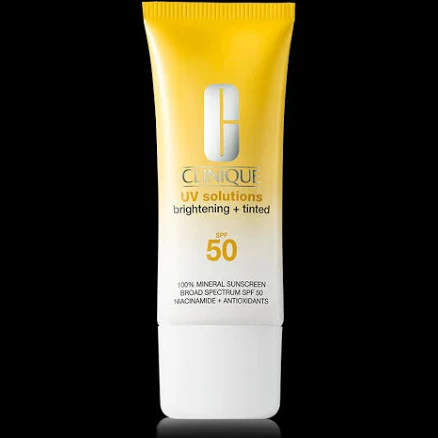
Clinique UV Solutions Brightening + Tinted Sunscreen
Sunscreen with no fluorinated ingredient on record, and no PFAS statement from the brand.
Clinique has no PFAS statement on record for this sunscreen. Our record does not include an ingredient-level check, so look for fluorinated ingredients such as Teflon-type coating on the label.
We flunk more products than we pass. This one earned its grade. How we grade
Material
sunscreen lotion with unspecified waterproof binders
Lab data
No public lab test
You may also be interested in
Top-graded picks in the categories readers replace first, every one scored on the same rubric.

- polypropylene filter housing, carbon/sediment cartridge
- We found no PFAS statement from the brand
- Bacterial growth in spent cartridges
3 hazards checked on this product, all on its full breakdown.

Aquasure
Premier Series 75 GPD Under Sink Reverse Osmosis Water Filtration System
- RO membrane, carbon filters, stainless steel housing
- We found no PFAS statement from the brand
- Bacterial and microbial growth in housing and filters
4 hazards checked on this product, all on its full breakdown.

Avocado
Vegan Mattress
- organic cotton, natural latex, coconut coir, recycled steel coils
- The brand calls it PFAS-free, which we have not verified
- Heavy metals
2 hazards checked on this product, all on its full breakdown.
What Clinique UV Solutions Tinted Sunscreen is made of, ingredients and materials
Clinique UV Solutions Brightening + Tinted Sunscreen is a lotion-based sunscreen with unspecified waterproof binders and pigmentation for tint. The formulation combines UV filters (type not specified in available data) with hydrating and brightening compounds. Waterproof sunscreen binders are often acrylate or silicone polymers that stay on skin; their safety depends on ingredient purity and absence of volatile residues. Tinted sunscreens introduce colorant chemistry, typically iron oxides or synthetic azo dyes, which carry lower concern in topical cosmetics when formulated to avoid sensitizing impurities.
What’s concerning
Category baseline
The starting point for this type of product, before anything specific to this product is counted.
No PFAS disclosure
No public statement from the brand about PFAS in this product.
Fragrance allergens and undisclosed fragrance components
Sunscreen lotions commonly contain fragrance; Clinique does not specify fragrance type (natural, synthetic, or fragrance-free) in accessible product descriptions. Fragrance is a known source of contact dermatitis in sensitive populations and can include unlabeled allergens under 'fragrance' ingredient roll-up.
Azo dyes in tint formulation
Tinted sunscreens may use synthetic azo dyes or iron oxides for color; azo dyes carry theoretical concern for photolysis and skin sensitization under UV exposure, though modern cosmetic-grade azo colorants are tested for photostability. The specific dye or colorant used in this product is not disclosed in available sources.
UV filter photochemical reactivity
The specific UV filter active(s) in this sunscreen are not disclosed. Chemical filters (oxybenzone, octinoxate, etc.) have known photochemical reactivity and environmental persistence; mineral filters (zinc oxide, titanium dioxide) are more photostable but can cause white cast. Without disclosed filter type, reactivity risk cannot be fully assessed.
What’s reassuring
Base material not linked to PFAS
The main material recorded for this product is not one associated with PFAS.
Waterproof binder degradation and skin residue accumulation
Waterproof sunscreen binders (acrylates, silicones) can accumulate on skin if not fully removed by cleansing. No specific skin irritation or residue toxicity is on record for this product, but incomplete removal may trap bacteria or cause folliculitis in prone individuals.
Heavy metals
Tinted sunscreens using iron oxides for pigment may carry trace lead or cadmium depending on mining source and refining. Cosmetic-grade iron oxides are required to meet FDA limits (lead <10 ppm), but compliance is manufacturer-dependent. No specific contamination is on record for Clinique sunscreens.
Source, FDA ↗How is this PFAS grade calculated?
The brand's record and disclosure
Clinique is owned by Estée Lauder Companies and maintains a consumer-facing transparency portal for ingredient lists but does not publish independent third-party safety testing or formulation dossiers. The brand has no recorded PFAS-specific statement or commitment, and no major safety recalls on record for this sunscreen line. Clinique does not claim dermatologist-tested or hypoallergenic certification on the product level; ingredient transparency is standard but limited to label-listed components.
How it compares in its category
Tinted sunscreens occupy the mid-market tier of cosmetic sunscreens. This product sits between drug-store all-mineral options (higher titanium-dioxide paste) and prestige water-resistant formulas with proprietary binder systems. No public testing or third-party certification (EWG, dermatest, etc.) appears on record for this specific product, making direct comparison to certified alternatives difficult. Category risk baseline includes fragrance allergens and rare photosensitizing filter interactions; this product's specific UV filter type is not disclosed, limiting hazard granularity.
If you buy it
Apply to clean, dry skin 15 minutes before sun exposure and reapply every 2 hours or after swimming, even though labeled waterproof. Store in a cool, dry place away from direct heat; high temperatures may degrade UV filter efficacy or cause minor ingredient separation. Discontinue use if redness, itching, or burning occurs; patch-test on a small arm area first if you have sensitive skin or known dye allergies. Replace bottle if it shows discoloration, oil separation, or has been stored in direct sunlight for extended periods.
What is not known about PFAS in this product?
- Basis
- Model estimate, 45% confidence, not a lab result
- Lab test
- None on record for this exact product
- Brand statement
- Clinique has made a specific claim
Formulations change between production runs, so check the current label. How we grade.
What are the PFAS-free alternatives to Clinique UV Solutions Brightening + Tinted Sunscreen?
- Mineral sunscreen, zinc oxide base
- A third party reports verifying it as PFAS-free
- 1,4-dioxane (non-intentional contaminant from surfactants/emulsifiers)
2 hazards checked on this product, all on its full breakdown.
- mineral sunscreen (zinc oxide or titanium dioxide base)
- The brand calls it PFAS-free, which we have not verified
- Synthetic fragrance allergens
More sunscreen grades
How we score, every product runs through the same public 0-100 rubric based on materials, coatings, brand disclosure, lab findings, and recalls. See the full methodology → Spotted a mistake? Report an error.