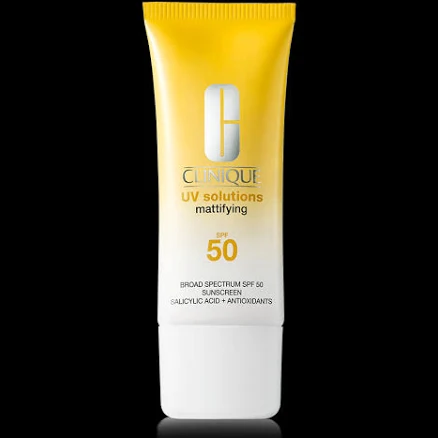
Clinique UV Solutions Mattifying Sunscreen SPF 50
Sunscreen with no fluorinated ingredient on record, and no PFAS statement from the brand.
Clinique has no PFAS statement on record for this sunscreen. Our record does not include an ingredient-level check, so look for fluorinated ingredients such as Teflon-type coating on the label.
We flunk more products than we pass. This one earned its grade. How we grade
Material
Emulsified sunscreen base (oxybenzone/avobenzone active ingredients, water, glycerin, silicones)
Lab data
No public lab test
You may also be interested in
Top-graded picks in the categories readers replace first, every one scored on the same rubric.

- polypropylene filter housing, carbon/sediment cartridge
- We found no PFAS statement from the brand
- Bacterial growth in spent cartridges
3 hazards checked on this product, all on its full breakdown.

Aquasure
Premier Series 75 GPD Under Sink Reverse Osmosis Water Filtration System
- RO membrane, carbon filters, stainless steel housing
- We found no PFAS statement from the brand
- Bacterial and microbial growth in housing and filters
4 hazards checked on this product, all on its full breakdown.

Avocado
Vegan Mattress
- organic cotton, natural latex, coconut coir, recycled steel coils
- The brand calls it PFAS-free, which we have not verified
- Heavy metals
2 hazards checked on this product, all on its full breakdown.
What Clinique UV Solutions Sunscreen SPF is made of, ingredients and materials
Clinique UV Solutions uses oxybenzone and avobenzone as active UV filters in an emulsified base of water, glycerin, and silicones. Oxybenzone is an older chemical absorber that penetrates skin and has been detected in bloodstream studies; avobenzone is also a chemical absorber prone to photodegradation and is often stabilized with other agents. Silicones act as spreading and slip agents, and glycerin is a humectant. The 'mattifying' claim suggests silica or polymer additives to reduce shine, which are low-toxicity but can clog pores in sensitive individuals.
What’s concerning
Category baseline
The starting point for this type of product, before anything specific to this product is counted.
No PFAS disclosure
No public statement from the brand about PFAS in this product.
Endocrine disruptors
Oxybenzone is detected in blood, urine, and breast milk after topical sunscreen application in published FDA and independent studies. It exhibits weak estrogenic and androgenic activity in lab assays, though clinical significance at sunscreen application levels remains debated by regulatory agencies.
Source, NIEHS ↗Avobenzone photodegradation and instability
Avobenzone degrades rapidly under UV light, reducing SPF efficacy and potentially creating photolysis byproducts. Clinique's formula likely includes stabilizers (common ones include octocrylene), but this information is not detailed on the label.
Fragrance and fragrance allergens
Product name and typical Clinique formulations suggest added fragrance. No specific allergen list is published; common culprits include limonene and geraniol. If labeling lists 'fragrance' without component disclosure, patch testing is advisable for sensitive users.
Contact sensitization and irritation from UV filters or silicones
Chemical UV filters and silicone polymers can trigger contact dermatitis or acne in individuals with reactive skin. Incidence is rare but documented; discontinuation typically resolves symptoms within days.
Microplastic or non-biodegradable silicone shedding to aquatic ecosystems
Silicones in sunscreen washes off with sweat and water; they do not readily biodegrade in marine environments. This is a secondary environmental concern, not a direct user hazard, but relevant for swimmers in sensitive ecosystems.
What’s reassuring
Base material not linked to PFAS
The main material recorded for this product is not one associated with PFAS.
How is this PFAS grade calculated?
The brand's record and disclosure
Clinique (owned by Estee Lauder) does not publish detailed PFAS statements or supply chain transparency reports specific to sunscreen formulas. The brand has no recorded major sunscreen recalls in recent years. Clinique offers no third-party certifications (like reef-safe or non-nano mineral claims) for this product, and ingredient labeling follows FDA OTC drug standards but does not highlight chemical UV filter concerns. No formal controversies tied to this specific sunscreen are on record.
How it compares in its category
Chemical sunscreens like this are typical for high-SPF, lightweight, mattifying formulas and compete with mineral (zinc oxide/titanium dioxide) alternatives that are thicker and visible on skin. Oxybenzone in particular has faced consumer pushback in recent years due to systemic absorption data, though the FDA still classifies it as approved for OTC use. Many premium brands now favor avobenzone-only or mineral-only formulations, making this product conventional rather than leading-edge on safety profile. The SPF 50 and mattifying finish target oily, urban-climate users willing to accept chemical filter trade-offs.
If you buy it
Apply liberally and reapply every 2 hours or after water exposure, as avobenzone degrades under UV light. Store in cool, dry conditions away from direct sunlight to minimize photodegradation of the active filters. Sunscreen formulas do not require replacement after opening unless separated or discolored, but chemical UV filters degrade over time; use within 12 months of opening. If you have sensitive skin, oxybenzone absorption has been documented in blood studies; consider a mineral sunscreen alternative if you apply frequently or over large body surface areas.
What is not known about PFAS in this product?
- Basis
- Model estimate, 45% confidence, not a lab result
- Lab test
- None on record for this exact product
- Brand statement
- Clinique has made a specific claim
Formulations change between production runs, so check the current label. How we grade.
What are the PFAS-free alternatives to Clinique UV Solutions Mattifying Sunscreen SPF 50?
- Mineral sunscreen, zinc oxide base
- A third party reports verifying it as PFAS-free
- 1,4-dioxane (non-intentional contaminant from surfactants/emulsifiers)
2 hazards checked on this product, all on its full breakdown.
- mineral sunscreen (zinc oxide or titanium dioxide base)
- The brand calls it PFAS-free, which we have not verified
- Synthetic fragrance allergens
More sunscreen grades
How we score, every product runs through the same public 0-100 rubric based on materials, coatings, brand disclosure, lab findings, and recalls. See the full methodology → Spotted a mistake? Report an error.