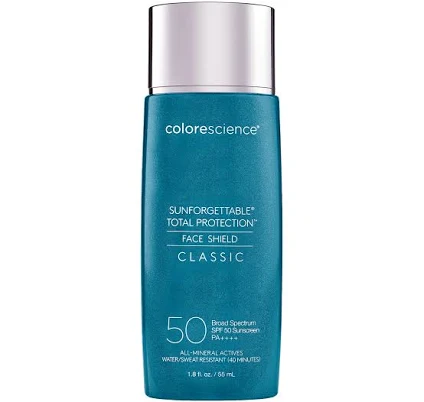
Colorescience Total Protection Face Shield SPF 50 Classic
Sunscreen with no fluorinated ingredient on record, and no PFAS statement from the brand.
Colorescience has no PFAS statement on record for this sunscreen. Our record does not include an ingredient-level check, so look for fluorinated ingredients such as Teflon-type coating on the label.
We flunk more products than we pass. This one earned its grade. How we grade
Material
Mineral powder, pigments, silicones, waterproofing agents (unspecified)
Brand disclosure
Brand is silent on PFAS
Lab data
No public lab test
You may also be interested in
Top-graded picks in the categories readers replace first, every one scored on the same rubric.

- polypropylene filter housing, carbon/sediment cartridge
- We found no PFAS statement from the brand
- Bacterial growth in spent cartridges
3 hazards checked on this product, all on its full breakdown.

Aquasure
Premier Series 75 GPD Under Sink Reverse Osmosis Water Filtration System
- RO membrane, carbon filters, stainless steel housing
- We found no PFAS statement from the brand
- Bacterial and microbial growth in housing and filters
4 hazards checked on this product, all on its full breakdown.

Avocado
Vegan Mattress
- organic cotton, natural latex, coconut coir, recycled steel coils
- The brand calls it PFAS-free, which we have not verified
- Heavy metals
2 hazards checked on this product, all on its full breakdown.
What Colorescience Total Protection Classic is made of, ingredients and materials
This is a powder-form mineral sunscreen, meaning it relies on inorganic UV blockers (typically zinc oxide or titanium dioxide) rather than chemical absorbers. The formulation includes silicones for texture and spreadability, pigments for color, and unspecified waterproofing agents. Powder cosmetics carry different safety considerations than liquids, inhalation risk if aerosolized during application, and potential for pigment impurities, but no volatilization concern typical of liquid sprays.
What’s concerning
Category baseline
The starting point for this type of product, before anything specific to this product is counted.
No PFAS disclosure
No public statement from the brand about PFAS in this product.
Heavy metals
Mineral powders may contain iron oxides, mica, and synthetic colorants; impurities such as lead or cadmium in pigment sources are a known concern across the cosmetics category. No specific testing or recall is on record for this product, but pigment sourcing is not disclosed.
Source, FDA ↗Talc contamination or presence
Mineral powder sunscreens often use talc or talc-free alternatives (silica, kaolin) as the base. The label does not specify which; talc products carry asbestos contamination risk depending on mining source. Colorescience has not published clarity on talc sourcing for this line.
Inhalation risk from aerosolization
Powder-form cosmetics release particles into air during application, especially with brush or puff application. Chronic inhalation of fine mineral powders is associated with respiratory irritation in sensitive individuals, though acute risk from occasional use is low.
What’s reassuring
Base material not linked to PFAS
The main material recorded for this product is not one associated with PFAS.
Fragrance allergens
No fragrance is noted on the label for this sunscreen. Unscented or minimally scented mineral powders carry lower allergen burden than fragranced cosmetics.
Formaldehyde / VOCs
Powder sunscreens typically do not require preservative systems that generate formaldehyde; no preservatives are listed on the label. This is a lower-concern attribute of anhydrous powder formulations.
Source, ATSDR ↗How is this PFAS grade calculated?
The brand's record and disclosure
Colorescience does not appear to have published a public PFAS commitment or detailed ingredient sourcing statement on record. The brand is known for mineral and powder-based formulations marketed toward sensitive skin. No major safety recalls or established controversies are documented for this specific product line. Ingredient transparency beyond the label is not formally disclosed to consumers.
How it compares in its category
Mineral powder sunscreens occupy a lower-concern tier compared to chemical sunscreen sprays (which carry inhalation and volatilization risks) and water-resistant formulas that often require problematic waterproofing agents. This product avoids oxybenzone, avobenzone, and other chemical UV absorbers linked to hormone disruption concerns. Powder application also eliminates risks from liquid emulsifiers and preservatives, though pigment purity remains a category-wide variable.
If you buy it
Apply with a brush or puff to minimize airborne powder inhalation, particularly if you have respiratory sensitivity. Store in a cool, dry place away from humidity to prevent clumping and preserve texture. Replace annually or when the product becomes difficult to blend, as mineral powders can separate over time. Do not use if you are pregnant and concerned about talc; confirm the powder base does not include talc by contacting the brand, as the label does not specify.
What is not known about PFAS in this product?
- Basis
- Model estimate, 35% confidence, not a lab result
- Lab test
- None on record for this exact product
- Brand statement
- Colorescience has made none
Formulations change between production runs, so check the current label. How we grade.
What are the PFAS-free alternatives to Colorescience Total Protection Face Shield SPF 50 Classic?
- Mineral sunscreen, zinc oxide base
- A third party reports verifying it as PFAS-free
- 1,4-dioxane (non-intentional contaminant from surfactants/emulsifiers)
2 hazards checked on this product, all on its full breakdown.
- mineral sunscreen (zinc oxide or titanium dioxide base)
- The brand calls it PFAS-free, which we have not verified
- Synthetic fragrance allergens
More sunscreen grades
How we score, every product runs through the same public 0-100 rubric based on materials, coatings, brand disclosure, lab findings, and recalls. See the full methodology → Spotted a mistake? Report an error.