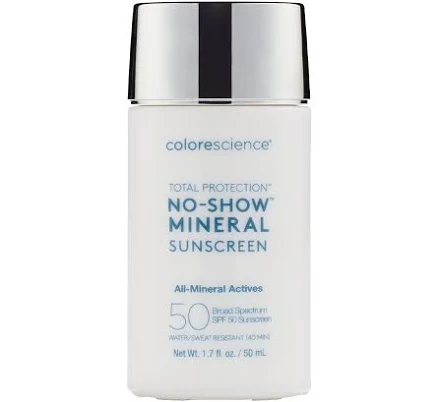
Colorescience Total Protection No-Show Mineral Sunscreen SPF 50
Lower concern, but check if water-repellent additives are hiding in the ingredient list.
This mineral sunscreen uses zinc and titanium oxide, which don't typically need PFAS. The brand hasn't shared any information about PFAS avoidance or testing.
We flunk more products than we pass. This one earned its grade. How we grade
Material
mineral (zinc oxide, titanium dioxide) with silicates
Brand disclosure
Brand is silent on PFAS
Lab data
No public lab test
You may also be interested in
Top-graded picks in the categories readers replace first, every one scored on the same rubric.

- polypropylene filter housing, carbon/sediment cartridge
- We found no PFAS statement from the brand
- Bacterial growth in spent cartridges
3 hazards checked on this product, all on its full breakdown.

Aquasure
Premier Series 75 GPD Under Sink Reverse Osmosis Water Filtration System
- RO membrane, carbon filters, stainless steel housing
- We found no PFAS statement from the brand
- Bacterial and microbial growth in housing and filters
4 hazards checked on this product, all on its full breakdown.

Avocado
Vegan Mattress
- organic cotton, natural latex, coconut coir, recycled steel coils
- The brand calls it PFAS-free, which we have not verified
- Heavy metals
2 hazards checked on this product, all on its full breakdown.
What Colorescience Total Sunscreen SPF is made of, ingredients and materials
This is a mineral (physical) sunscreen using zinc oxide and titanium dioxide as UV blockers, combined with silicates for texture and coverage. Mineral sunscreens sit on skin rather than absorb into it, which is why they carry lower systemic toxicity risk than chemical alternatives. Zinc oxide and titanium dioxide have decades of safety use in cosmetics and are non-toxic at the concentrations found in sunscreen. The silicate base is inert and does not leach into skin.
What’s concerning
Category baseline
The starting point for this type of product, before anything specific to this product is counted.
No PFAS disclosure
No public statement from the brand about PFAS in this product.
Fragrance allergens
The product name does not specify 'fragrance-free,' and mineral sunscreens often contain fragrance masking agents to offset the chalky scent of mineral filters. If fragrance is included, risk depends on sensitization history; common culprits are limonene and linalool. Specific fragrance ingredients are not disclosed in readily available product information.
Skin sensitization from mineral particulates or additives
Fine-particle mineral sunscreens can rarely trigger irritation in sensitive skin or rosacea, though zinc oxide is generally well-tolerated. Risk is individual and not product-specific; if redness, stinging, or rash develops, discontinue immediately.
Formaldehyde / VOCs
Sunscreen creams and lotions require preservatives to prevent bacterial growth. Some brands use formaldehyde-releasing preservatives (e.g., DMDM hydantoin); Colorescience does not publicly disclose its preservative system. Standard industry practice increasingly shifts away from these agents, but documentation is not publicly available for this product.
Source, ATSDR ↗What’s reassuring
Base material not linked to PFAS
The main material recorded for this product is not one associated with PFAS.
Heavy metals
Pharmaceutical-grade zinc oxide and titanium dioxide used in cosmetics are subject to purity limits under cosmetic regulations. No contamination issues have been reported for Colorescience mineral sunscreen products. Risk is theoretical only if sourcing or manufacturing standards are compromised, which is not on record.
Source, FDA ↗Talc contamination
This product is silicate-based, not talc-based, so inherent talc contamination is not a concern. Talc contamination risk applies only if talc is an intentional ingredient, which is not indicated here.
How is this PFAS grade calculated?
The brand's record and disclosure
Colorescience does not publicly disclose PFAS testing or management policies, which is typical across most mainstream sunscreen brands. The company does not carry third-party certifications (e.g., EWG Verified, NSF Organic) that would signal independent safety review. No recalls or safety controversies specific to this product have been reported. Brand transparency on ingredient sourcing and manufacturing standards is minimal but not unusual in the premium sunscreen segment.
How it compares in its category
Mineral sunscreens are generally regarded as lower-risk than chemical sunscreens because zinc oxide and titanium dioxide are not absorbed systemically. This product sits in the mainstream premium tier (not medical-grade like EltaMD or certified organic like Badger). It avoids oxybenzone, avobenzone, and other absorbing UV agents, which removes concerns around hormone-mimicking chemicals. Pricing and 'no-show' claims suggest fine particle size, which improves cosmetic appeal but is not a safety liability.
If you buy it
Apply generously (at least 1/4 teaspoon for face) and reapply every 2 hours if swimming or sweating; mineral filters require adequate thickness to work. Store in a cool, dry place away from direct heat, though mineral sunscreen is stable and does not degrade readily like chemical formulations. Do not rely on this product alone for sun protection; combine with clothing, shade, and timing strategies. Discontinue if you develop skin irritation, though sensitization to zinc oxide or titanium dioxide is rare.
What is not known about PFAS in this product?
- Basis
- Model estimate, 72% confidence, not a lab result
- Lab test
- None on record for this exact product
- Brand statement
- Colorescience has made none
Formulations change between production runs, so check the current label. How we grade.
What are the PFAS-free alternatives to Colorescience Total Protection No-Show Mineral Sunscreen SPF 50?
- Mineral sunscreen, zinc oxide base
- A third party reports verifying it as PFAS-free
- 1,4-dioxane (non-intentional contaminant from surfactants/emulsifiers)
2 hazards checked on this product, all on its full breakdown.
- mineral sunscreen (zinc oxide or titanium dioxide base)
- The brand calls it PFAS-free, which we have not verified
- Synthetic fragrance allergens
More sunscreen grades
How we score, every product runs through the same public 0-100 rubric based on materials, coatings, brand disclosure, lab findings, and recalls. See the full methodology → Spotted a mistake? Report an error.