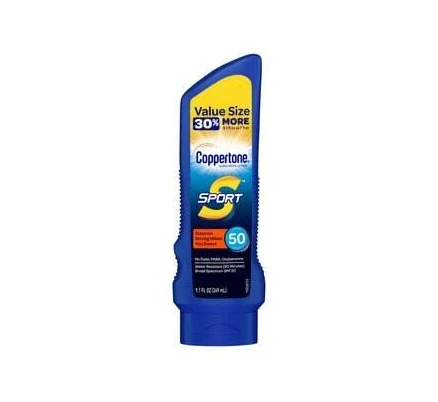
Coppertone Sport SPF 30 Sunscreen Lotion
Sunscreen with no fluorinated ingredient on record, and no PFAS statement from the brand.
Coppertone has no PFAS statement on record for this sunscreen. Our record does not include an ingredient-level check, so look for fluorinated ingredients such as Teflon-type coating on the label.
We flunk more products than we pass. This one earned its grade. How we grade
Material
Lotion base with water-resistant film-forming polymers
Brand disclosure
Brand is silent on PFAS
Lab data
No public lab test
You may also be interested in
Top-graded picks in the categories readers replace first, every one scored on the same rubric.

- polypropylene filter housing, carbon/sediment cartridge
- We found no PFAS statement from the brand
- Bacterial growth in spent cartridges
3 hazards checked on this product, all on its full breakdown.

Aquasure
Premier Series 75 GPD Under Sink Reverse Osmosis Water Filtration System
- RO membrane, carbon filters, stainless steel housing
- We found no PFAS statement from the brand
- Bacterial and microbial growth in housing and filters
4 hazards checked on this product, all on its full breakdown.

Avocado
Vegan Mattress
- organic cotton, natural latex, coconut coir, recycled steel coils
- The brand calls it PFAS-free, which we have not verified
- Heavy metals
2 hazards checked on this product, all on its full breakdown.
What Coppertone Sport SPF 30 Sunscreen Lotion is made of, ingredients and materials
Coppertone Sport SPF 30 is a lotion-based sunscreen with water-resistant film-forming polymers that anchor the UV-blocking ingredients to skin and resist water wash-off. The active sunscreen agents (typically avobenzone, octinoxate, or similar organic UV absorbers in this product line) are designed to absorb and dissipate UV radiation; the lotion base is water, glycerin, and emulsifiers that deliver these actives without greasiness. No fluorinated PFAS ingredients are named on the product label or in published formulations.
What’s concerning
Category baseline
The starting point for this type of product, before anything specific to this product is counted.
No PFAS disclosure
No public statement from the brand about PFAS in this product.
Organic UV absorber photodegradation and skin penetration
Chemical sunscreen actives (e.g. avobenzone) are documented to break down under UV exposure and can penetrate the stratum corneum; systemic absorption of some absorbers has been detected in clinical studies, though regulatory agencies have set approved use levels based on their risk assessments. Reapplication is critical to maintain efficacy.
Fragrance and skin sensitizers
Coppertone Sport formulas typically include fragrance and preservatives to extend shelf life; undisclosed fragrance components may trigger contact allergic reactions in sensitive individuals. No allergen statement specific to this product is on record.
Preservative-related irritation or contact dermatitis
Water-based lotions require antimicrobial preservatives; parabens and phenoxyethanol are common in this category. No recalls or widespread adverse reports are on record for Coppertone Sport, but individual sensitivity is unpredictable.
Water-resistance claim durability and reapplication failure
The water-resistant film-forming polymers in this product are not truly waterproof; effectiveness degrades with sweat and water immersion. Failure to reapply allows UV exposure to increase, creating a false sense of protection rather than a chemical hazard.
Oxidative stress from incomplete UV coverage
SPF 30 blocks approximately 97 percent of UVB but offers variable UVA protection depending on absorber blend; UVA rays still penetrate and can generate reactive oxygen species in skin. This is a limitation of SPF 30 rather than a contamination hazard, but lower SPF products require more disciplined reapplication to achieve stated protection.
What’s reassuring
Base material not linked to PFAS
The main material recorded for this product is not one associated with PFAS.
How is this PFAS grade calculated?
The brand's record and disclosure
Coppertone (owned by Beiersdorf) does not publicly issue specific PFAS or chemical transparency statements for individual sunscreen products. The brand has no known major recalls tied to chemical contamination in recent years, though like all sunscreen makers it operates under FDA oversight of active ingredients. No third-party certifications (such as EWG Verified or reef-safe claims) are prominently associated with this formula.
How it compares in its category
Coppertone Sport SPF 30 is a mass-market, chemical sunscreen positioned for affordability and water resistance. It sits between premium brands (which often highlight additional certifications or natural positioning) and budget alternatives. Mineral sunscreens (zinc oxide, titanium dioxide) are an alternative for users seeking to avoid chemical absorbers, though they typically have different sensory profiles.
If you buy it
Apply 15 minutes before sun exposure and reapply every two hours or after swimming, despite the water-resistant claim. Store in a cool location away from direct heat; UV absorbers can degrade if exposed to high temperatures over time. Discontinue use if irritation or allergic reaction develops. Check the expiration date, as lotion-based formulas can separate or lose efficacy after 3 years.
What is not known about PFAS in this product?
- Basis
- Model estimate, 45% confidence, not a lab result
- Lab test
- None on record for this exact product
- Brand statement
- Coppertone has made none
Formulations change between production runs, so check the current label. How we grade.
What are the PFAS-free alternatives to Coppertone Sport SPF 30 Sunscreen Lotion?
- Mineral sunscreen, zinc oxide base
- A third party reports verifying it as PFAS-free
- 1,4-dioxane (non-intentional contaminant from surfactants/emulsifiers)
2 hazards checked on this product, all on its full breakdown.
- mineral sunscreen (zinc oxide or titanium dioxide base)
- The brand calls it PFAS-free, which we have not verified
- Synthetic fragrance allergens
More sunscreen grades
How we score, every product runs through the same public 0-100 rubric based on materials, coatings, brand disclosure, lab findings, and recalls. See the full methodology → Spotted a mistake? Report an error.