Cuisinart · Non-Stick Kitchen Gadgets
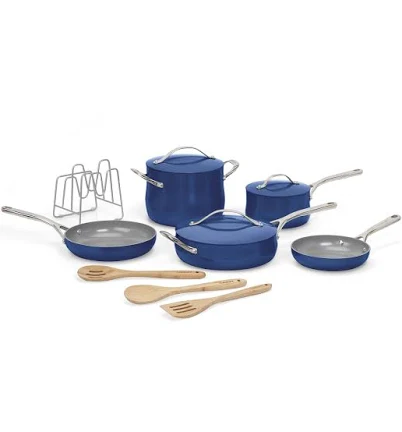
Cuisinart Culinary Collection 12-Piece Cookware Set, Is It Non-Toxic?
Nonstick coating chemistry is not stated on the product record.
This hard-anodized aluminum cookware is marketed as nonstick, but Cuisinart has not disclosed the coating chemistry. The brand has no PFAS statement on record for this product.
The better-graded swap

Our Place
Our Place Essential Utensil Set
90/100 safety
Same rubric that flunked this product. The swap earned Excellent.
Still want this one anyway? Check the price on Amazon. We’d swap it.
Material
Nonstick-coated hard-anodized aluminum
Lab data
No public lab test
You may also be interested in
Top-graded picks in the categories readers replace first, every one scored on the same rubric.

- polypropylene filter housing, carbon/sediment cartridge
- We found no PFAS statement from the brand
- Bacterial growth in spent cartridges
3 hazards checked on this product, all on its full breakdown.

Aquasure
Premier Series 75 GPD Under Sink Reverse Osmosis Water Filtration System
- RO membrane, carbon filters, stainless steel housing
- We found no PFAS statement from the brand
- Bacterial and microbial growth in housing and filters
4 hazards checked on this product, all on its full breakdown.

Avocado
Vegan Mattress
- organic cotton, natural latex, coconut coir, recycled steel coils
- The brand calls it PFAS-free, which we have not verified
- Heavy metals
2 hazards checked on this product, all on its full breakdown.
Is Cuisinart Culinary Collection Cookware Set non-toxic? What it is made of
This set uses hard-anodized aluminum as the base, a electrochemically hardened form of aluminum that resists scratching better than raw aluminum. The cooking surface is coated with a proprietary nonstick layer whose exact fluorinated compound composition Cuisinart does not publicly disclose. Hard-anodized aluminum itself has no hazard of this kind on record, but the concern centers on the nonstick coating's chemistry and its stability at high temperatures.
What’s concerning
Category baseline
The starting point for this type of product, before anything specific to this product is counted.
No PFAS disclosure
No public statement from the brand about PFAS in this product.
Non-stick, chemistry undisclosed
Marketed as non-stick without stating the coating chemistry.
Teflon-type coating fume risk (overheating nonstick coating)
Hard-anodized nonstick cookware releases fumes when exposed to temperatures above 500F (260C), which can be reached on high heat or under preheating. While not inevitable with normal cooking, accidental high-heat exposure carries risk.
Coating degradation and flaking over time
Hard-anodized nonstick coatings are durable but not permanent. Dishwasher use, high heat, and metal utensils accelerate wear; flaking coating can end up in food and necessitates replacement.
PFAS
Nonstick cookware of this type typically contains PFOA or successor PFAS chemicals; Cuisinart's refusal to disclose the exact compound prevents full assessment of exposure risk and persistence profile.
Source, ATSDR ↗What’s reassuring
Aluminum leaching
Hard-anodized aluminum is sealed by the anodization process, which largely prevents direct aluminum contact with food. Leaching risk is substantially lower than with raw aluminum, and no specific issues have been reported for this Cuisinart line.
Lead
Hard-anodized aluminum does not rely on enamel or ceramic glazes, so lead and cadmium contamination associated with those coatings is not applicable to this cookware type.
Source, ATSDR ↗How is this PFAS grade calculated?
The brand's record and disclosure
Cuisinart has not published detailed information about the specific PFAS chemistry in this cookware line, nor has the brand committed to phasing out PFAS-based coatings. The company offers no third-party certifications (such as GREENGUARD or similar) for this product. Cuisinart has not faced major recalls for this particular cookware set related to coating degradation or leaching, though nonstick cookware in general has faced scrutiny over PFAS content across the industry.
How it compares in its category
Hard-anodized nonstick cookware sits in the middle tier of the market, more durable than basic nonstick and cheaper than premium ceramic or stainless steel alternatives. Many mainstream brands (T-fal, Calphalon, All-Clad) use similar hard-anodized bases with undisclosed PFAS coatings. Some newer brands now offer PFAS-free ceramic nonstick or ceramic-hybrid options at comparable prices, making this set a conventional but not cutting-edge choice.
If you buy it
Never exceed medium-high heat; use the lowest effective temperature to avoid coating degradation and potential fume release. Hand wash rather than dishwasher, as high-heat cycles degrade the anodized layer. Replace pans if the nonstick coating visibly flakes, peels, or develops large scratches. Avoid metal utensils and abrasive scrubbers; use wooden or silicone tools to extend coating life.
What is not known about PFAS in this product?
- Basis
- Model estimate, 42% confidence, not a lab result
- Lab test
- None on record for this exact product
- Brand statement
- Cuisinart has made a specific claim
Formulations change between production runs, so check the current label. How we grade.
What are the PFAS-free alternatives to Cuisinart Culinary Collection 12-Piece Cookware Set?
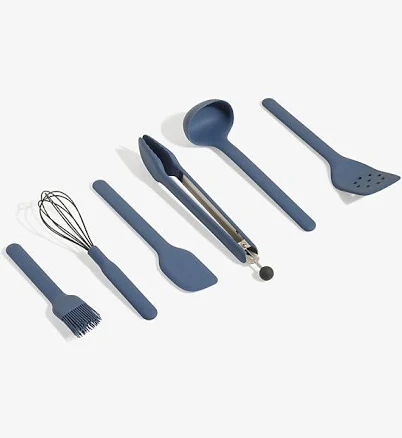
- Silicone utensils, no coating
- The brand calls it PFAS-free, which we have not verified
- Microplastic generation
2 hazards checked on this product, all on its full breakdown.
- Stainless steel utensils
- The brand calls it PFAS-free, which we have not verified
- Nickel leaching from stainless steel
2 hazards checked on this product, all on its full breakdown.
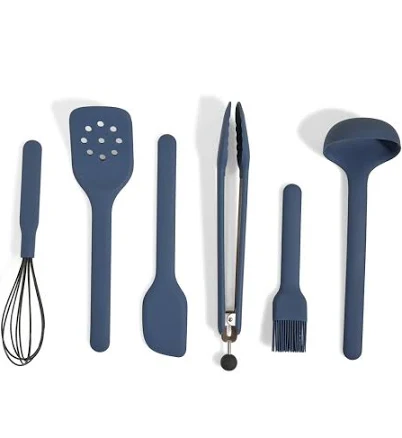
- Stainless steel utensils, material unclear
- The brand calls it PFAS-free, which we have not verified
- Handle material degradation (if present)
2 hazards checked on this product, all on its full breakdown.
More non-stick kitchen gadgets grades
How we score, every product runs through the same public 0-100 rubric based on materials, coatings, brand disclosure, lab findings, and recalls. See the full methodology → Spotted a mistake? Report an error.