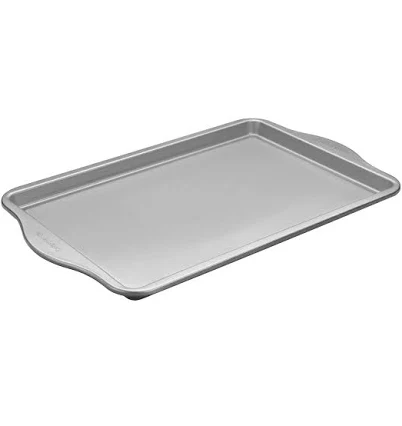
Cuisinart · Non-Stick Kitchen Gadgets
Cuisinart Easy-Grip Nonstick Baking Sheet, Is It Non-Toxic?
Skip until coating type is disclosed by Cuisinart.
Cuisinart doesn't disclose the nonstick coating type on this baking sheet. Most commercial nonstick surfaces still use Teflon-type coating or Teflon-family coating without PFAS-free confirmation.
The better-graded swap
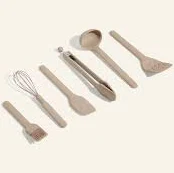
Our Place
Our Place Essential Utensil Set
90/100 safety
Same rubric that flunked this product. The swap earned Excellent.
Still want this one anyway? Check the price on Amazon. We’d swap it.
Material
nonstick coating, type unspecified
Lab data
No public lab test
You may also be interested in
Top-graded picks in the categories readers replace first, every one scored on the same rubric.

- polypropylene filter housing, carbon/sediment cartridge
- We found no PFAS statement from the brand
- Bacterial growth in spent cartridges
3 hazards checked on this product, all on its full breakdown.

Aquasure
Premier Series 75 GPD Under Sink Reverse Osmosis Water Filtration System
- RO membrane, carbon filters, stainless steel housing
- We found no PFAS statement from the brand
- Bacterial and microbial growth in housing and filters
4 hazards checked on this product, all on its full breakdown.

Avocado
Vegan Mattress
- organic cotton, natural latex, coconut coir, recycled steel coils
- The brand calls it PFAS-free, which we have not verified
- Heavy metals
2 hazards checked on this product, all on its full breakdown.
Is Cuisinart Easy-Grip Nonstick Baking Sheet non-toxic? What it is made of
Cuisinart's Easy-Grip baking sheet uses a nonstick coating of unspecified chemistry. The sheet itself is typically steel or aluminum substrate. The critical unknown is whether the coating is traditional Teflon-type coating (Teflon-like), newer Teflon-type coating-free alternatives, or ceramic-hybrid. This distinction determines fume risk at high heat and coating durability. Without Cuisinart's public disclosure, you cannot verify which formulation you own.
What’s concerning
Category baseline
The starting point for this type of product, before anything specific to this product is counted.
No PFAS disclosure
No public statement from the brand about PFAS in this product.
Non-stick, chemistry undisclosed
Marketed as non-stick without stating the coating chemistry.
Teflon-type coating fume inhalation risk (polymer fume fever)
If coating is traditional Teflon-type coating, overheating above 500°F triggers release of fumes that cause acute polymer fume fever (flulike symptoms). Cuisinart's silence on coating type means you cannot confirm whether this risk applies. Most modern kitchens stay below this threshold, but the hazard is real for Teflon-type coating products if temperatures are exceeded.
Coating degradation and flaking
All nonstick coatings degrade with use, especially on baking sheets subjected to sustained oven heat and repeated washing. Peeling or flaking nonstick material can shed into food. Regular inspection and timely replacement mitigate this, but it is an inherent limitation of nonstick bakeware, not a manufacturing defect unique to this product.
Aluminum substrate leaching (if aluminum)
If the substrate is bare aluminum rather than steel, acidic foods (tomato-based recipes, citrus) may cause minor aluminum leaching, though the nonstick coating typically acts as a barrier. Cuisinart does not clearly specify substrate material on most product listings, creating uncertainty.
Lack of performance data after repeated heating cycles
Nonstick performance and coating integrity degrade over hundreds of heating cycles. Cuisinart does not publish durability testing data or expected lifespan. User reviews often cite reduced nonstick performance after 1-3 years, but this is a convenience issue, not an acute safety hazard if the coating remains intact.
What’s reassuring
Heavy metals
No recalls or public testing reports document lead, cadmium, or other heavy metals in Cuisinart nonstick baking sheet coatings. This hazard is well-controlled in modern US-market cookware, but Cuisinart's lack of third-party certification or testing transparency means no independent confirmation is available.
Source, FDA ↗How is this PFAS grade calculated?
The brand's record and disclosure
Cuisinart does not publicly disclose nonstick coating chemistry on product pages or packaging for this line. The company has no prominent public commitments to PFOA phase-out or PFAS-free alternatives, distinguishing it from brands that voluntarily state 'PFOA-free' or equivalent. This silence on a material safety question is the primary concern; it does not confirm a hazard, but prevents informed comparison.
How it compares in its category
Most major cookware brands now label Teflon-type coating sheets PFOA-free at minimum. Ceramic and ceramic-hybrid nonstick baking sheets from competitors (GreenPan, Our Place, Caraway) publicly claim PFAS avoidance. Stainless steel or uncoated steel baking sheets eliminate nonstick coating risk entirely but require more oil and are harder to clean. Cuisinart's lack of transparent labeling puts it behind transparent peers in this category.
If you buy it
Keep oven temperatures at or below 400-425°F to minimize any potential fume release, regardless of coating type. Hand wash immediately after use; dishwasher cycles and metal utensils degrade nonstick coatings faster. Inspect the sheet every 6-12 months for peeling, flaking, or bare spots. Replace immediately if coating degradation is visible, as a compromised nonstick layer offers no safety benefit and may shed particles into food.
What is not known about PFAS in this product?
- Basis
- Model estimate, 35% confidence, not a lab result
- Lab test
- None on record for this exact product
- Brand statement
- Cuisinart has made a specific claim
Formulations change between production runs, so check the current label. How we grade.
What are the PFAS-free alternatives to Cuisinart Easy-Grip Nonstick Baking Sheet?
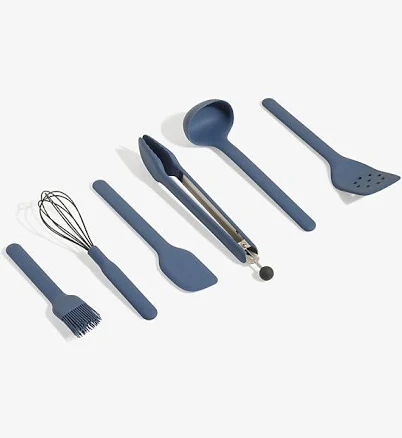
- Silicone utensils, no coating
- The brand calls it PFAS-free, which we have not verified
- Microplastic generation
2 hazards checked on this product, all on its full breakdown.
- Stainless steel utensils
- The brand calls it PFAS-free, which we have not verified
- Nickel leaching from stainless steel
2 hazards checked on this product, all on its full breakdown.
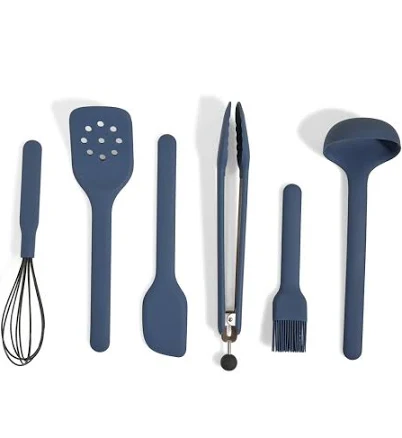
- Stainless steel utensils, material unclear
- The brand calls it PFAS-free, which we have not verified
- Handle material degradation (if present)
2 hazards checked on this product, all on its full breakdown.
More non-stick kitchen gadgets grades
How we score, every product runs through the same public 0-100 rubric based on materials, coatings, brand disclosure, lab findings, and recalls. See the full methodology → Spotted a mistake? Report an error.