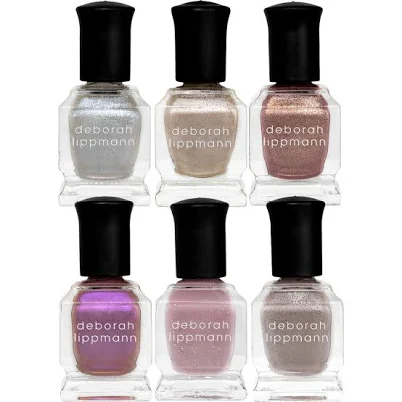
Deborah Lippmann · Nail Polish & Top Coat
Deborah Lippmann Gel Lab Pro Nail Color Set
Gel polish carries low-medium PFAS concern without brand transparency.
This gel nail polish shows no evidence of PFAS use or Teflon-family coating coatings. Gel polishes aren't typical PFAS vectors, though the brand offers no specific testing or free-from certification.
We flunk more products than we pass. This one earned its grade. How we grade
Material
gel nail polish (resin, pigments, solvents)
Brand disclosure
Brand is silent on PFAS
Lab data
No public lab test
Is Deborah Lippmann Gel Lab Pro Nail Color non-toxic? What it is made of
Deborah Lippmann Gel Lab Pro is a UV-cured gel polish system based on oligomeric resins (acrylates), photoinitiators, and organic pigments suspended in volatile solvents. The resin base and pigment chemistry are standard for professional gel polishes and do not require UV light to initiate harmful decomposition during normal application or wear. The product is formulated for curing under UV lamps (not LED), meaning exposure time and wavelength are controlled variables in the application process.
What’s concerning
Category baseline
The starting point for this type of product, before anything specific to this product is counted.
No PFAS disclosure
No public statement from the brand about PFAS in this product.
Volatile organic solvent exposure during application
Gel polishes contain acetone, toluene, or dibutyl phthalate (DBP) solvents; exposure risk depends on ventilation during application and curing. No product-specific solvent composition is disclosed by Deborah Lippmann, so individual formulation cannot be assessed.
UV lamp safety (melanoma/skin damage risk)
UV curing carries cumulative skin exposure risk, particularly with frequent applications. This is a system risk, not unique to Deborah Lippmann, but the brand does not provide UV exposure guidance or recommend protective measures (gloves, sunscreen).
Skin sensitization from uncrosslinked acrylates or additives
Uncrosslinked acrylate monomers and fragrance additives in gel polish can trigger contact dermatitis or allergic reactions in sensitive users. Deborah Lippmann does not disclose fragrance components or monomer purity thresholds.
What’s reassuring
Base material not linked to PFAS
The main material recorded for this product is not one associated with PFAS.
Lead
No public testing or recall data exists for Deborah Lippmann gel polish contamination with heavy metals. Professional gel formulations typically use FD&C or cosmetic-grade colorants, but brand does not certify pigment sourcing or purity limits.
Source, ATSDR ↗Formaldehyde / VOCs
Modern gel polish resins are formaldehyde-free by design; no historical recalls or test results link Deborah Lippmann gel products to formaldehyde. However, brand does not certify the absence of formaldehyde-releasing preservatives.
Source, ATSDR ↗The full breakdown
The brand's record and disclosure
Deborah Lippmann does not publicly disclose detailed ingredient sourcing, third-party testing, or heavy metal/solvent specifications for this line. The brand has no documented recalls or safety violations tied to this product line in FDA or CPSC databases. No certifications (e.g., 3-free, 5-free, vegan) are advertised for Gel Lab Pro, suggesting transparency is not a marketing priority, though this is typical for prestige gel polish brands that rely on formula proprietary claims.
How it compares in its category
Professional gel polish systems (OPI, Shellac, Gelish, etc.) operate within the same resin and solvent chemistry framework. Deborah Lippmann's gel line does not distinguish itself through transparency or certifications; it competes on color range and brand prestige rather than safety positioning. The lack of explicit free-range claims is unremarkable in the gel category but differs from some lower-cost indie brands that highlight non-toxic formulations.
If you buy it
Cure strictly under the specified UV lamp (not LED substitutes unless product is reformulated for LED); exposure times vary by lamp age and bulb type, so follow package guidance. Remove with acetone or brand-recommended remover to minimize skin contact with solvents; use in ventilated space. Replace caps tightly after each use to prevent solvent evaporation and pigment settling. If color shifts, separation occurs, or tacky residue builds up, discard and replace; gel polish degrades over 2-3 years even if unopened.
What we don’t know
- Basis
- Model estimate, 72% confidence, not a lab result
- Lab test
- None on record for this exact product
- Brand statement
- Deborah Lippmann has made none
Formulations change between production runs, so check the current label. How we grade.
Better-graded alternatives in Nail Polish & Top Coat
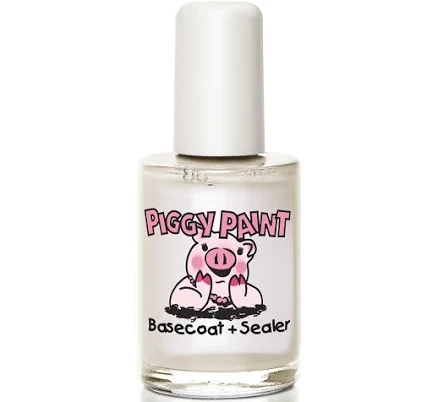
Piggy Paint
Basecoat & Sealer Nail Polish
- Water-based organic pigments and plant-derived resins
- The brand calls it PFAS-free, which we have not verified
- Heavy metals
3 hazards checked on this product. See all of them.
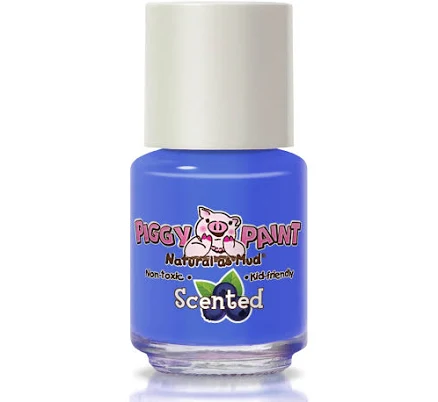
Piggy Paint
Nail Polish Piggy Paint
- water-based pigmented lacquer
- The brand calls it PFAS-free, which we have not verified
- Volatile organic compounds (VOCs) from resins and solvents
3 hazards checked on this product. See all of them.
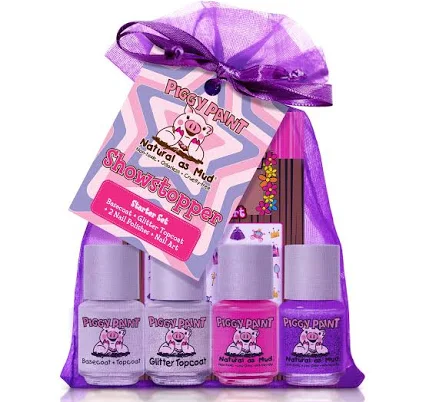
Piggy Paint
Showstopper Nail Polish Set
- organic pigments, plant-based resins, water-based lacquer
- The brand calls it PFAS-free, which we have not verified
- Volatile organic compounds (VOCs)
2 hazards checked on this product. See all of them.
More nail polish & top coat grades
How we score, every product runs through the same public 0-100 rubric based on materials, coatings, brand disclosure, lab findings, and recalls. See the full methodology → Spotted a mistake? Report an error.