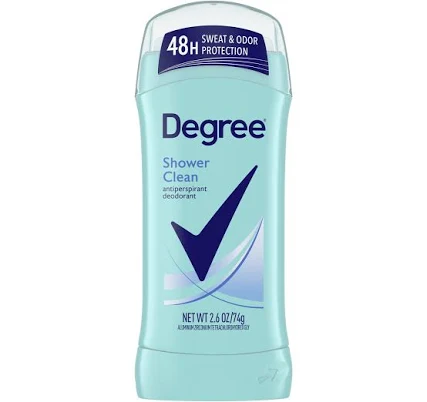
Degree Deodorant Women Shower Clean
Lower concern for a conventional stick deodorant with no PFAS markers.
This standard stick deodorant lacks waterproofing claims or coatings that would normally require PFAS. Degree doesn't publicly state PFAS absence, and full transparency is missing despite typical low-risk ingredients.
We flunk more products than we pass. This one earned its grade. How we grade
Material
Water-based emulsion (typical stick deodorant base, cyclopentasiloxane, stearic acid, talc, fragrance)
Brand disclosure
Brand is silent on PFAS
Lab data
No public lab test
You may also be interested in
Top-graded picks in the categories readers replace first, every one scored on the same rubric.

- polypropylene filter housing, carbon/sediment cartridge
- We found no PFAS statement from the brand
- Bacterial growth in spent cartridges
3 hazards checked on this product, all on its full breakdown.

Aquasure
Premier Series 75 GPD Under Sink Reverse Osmosis Water Filtration System
- RO membrane, carbon filters, stainless steel housing
- We found no PFAS statement from the brand
- Bacterial and microbial growth in housing and filters
4 hazards checked on this product, all on its full breakdown.

Avocado
Vegan Mattress
- organic cotton, natural latex, coconut coir, recycled steel coils
- The brand calls it PFAS-free, which we have not verified
- Heavy metals
2 hazards checked on this product, all on its full breakdown.
What Degree Deodorant Women Shower Clean is made of, ingredients and materials
Degree Shower Clean is a water-based stick deodorant built on cyclopentasiloxane (a volatile silicone that evaporates after application), stearic acid (a thickening wax), talc (absorbent powder), and fragrance. This formulation is standard across the category and does not rely on antimicrobial actives or heavy preservative loads. The talc is the primary ingredient requiring attention, though cosmetic-grade talc in deodorants is used at concentrations typical for the product class.
What’s concerning
Category baseline
The starting point for this type of product, before anything specific to this product is counted.
No PFAS disclosure
No public statement from the brand about PFAS in this product.
Talc contamination (asbestos risk)
Cosmetic-grade talc in deodorants is subject to FDA asbestos testing requirements, but inherent talc mining risks remain. Degree does not publicly disclose talc source or third-party testing. Long-term inhalation exposure in deodorant use is considered low risk due to application method, but dermal and inhalation exposure to talc powder remains a category-level concern for this product class.
Fragrance allergens and sensitizers
Degree lists 'fragrance' as a single ingredient without disclosing specific fragrance components. This is standard industry practice but limits consumer ability to identify potential allergens. Fragrance constituents can include limonene, linalool, and other contact sensitizers; individual susceptibility varies widely.
Bacterial growth if improperly stored or contaminated
Stick deodorants can harbor bacteria if exposed to moisture or touched with contaminated fingers. This is a user-practice issue rather than a formulation defect, but proper storage and application hygiene reduce risk.
What’s reassuring
Base material not linked to PFAS
The main material recorded for this product is not one associated with PFAS.
Cyclopentasiloxane volatility and inhalation
Cyclopentasiloxane is volatile and evaporates rapidly after application. No established acute or chronic inhalation toxicity from deodorant use is documented in public safety databases, but avoid direct inhalation during application.
Stearic acid skin irritation
Stearic acid is a common wax emollient and skin-safe at cosmetic concentrations. No specific irritation reports for Degree Shower Clean are on record, though individual sensitivities to waxy bases exist.
How is this PFAS grade calculated?
The brand's record and disclosure
Degree (owned by Unilever) does not publish detailed ingredient safety documentation or third-party certifications (such as EWG Verified or dermatologist endorsements) on this product line. The brand has faced historical litigation over talc in personal care products, though Degree deodorant itself has not been subject to major recalls or public safety actions. Unilever's transparency on fragrance composition and talc sourcing remains limited relative to peer companies.
How it compares in its category
Among mass-market deodorants, Degree Shower Clean sits in the mainstream safety tier. Talc-free alternatives (e.g., products using arrowroot or silica) are widely available if talc avoidance is a priority. Clinical-strength or aluminum-based antiperspirants carry distinct risk profiles (aluminum absorption debate, higher irritation potential). Degree's water-based, non-antiperspirant formula positions it as gentler than antiperspirant options but less effective for sweat control.
If you buy it
Store the stick away from direct heat or extended sunlight, as cyclopentasiloxane can cause the formulation to soften. Replace every 3 to 6 months or when depleted, as old deodorant can harbor bacterial growth. Test on a small underarm patch first if you have sensitive skin, particularly if prone to fragrance or talc sensitivity. Do not inhale the product during application and avoid contact with eyes or broken skin.
What is not known about PFAS in this product?
- Basis
- Model estimate, 72% confidence, not a lab result
- Lab test
- None on record for this exact product
- Brand statement
- Degree has made none
Formulations change between production runs, so check the current label. How we grade.
What are the PFAS-free alternatives to Degree Deodorant Women Shower Clean?
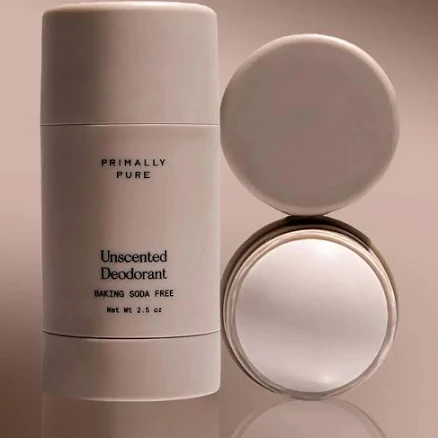
- mineral-based powder blend (arrowroot, magnesium hydroxide, mica)
- We found no PFAS statement from the brand
- Skin irritation from magnesium hydroxide alkalinity
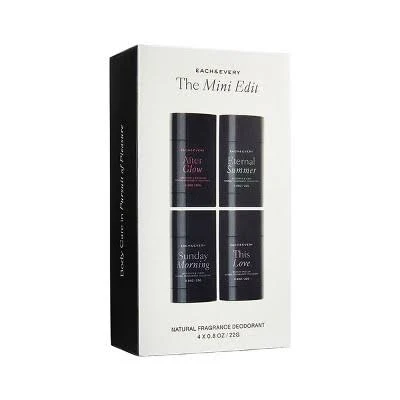
- cosmetic formulations, primary ingredients listed
- A third party reports verifying it as PFAS-free
- Fragrance allergens (natural essential oils)
2 hazards checked on this product, all on its full breakdown.
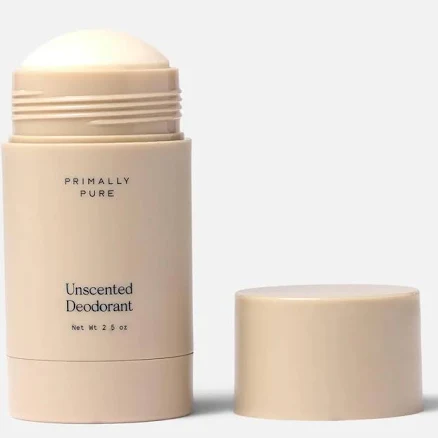
- natural mineral powders, plant-based actives, beeswax
- We found no PFAS statement from the brand
- Beeswax purity and contamination
2 hazards checked on this product, all on its full breakdown.
More deodorant grades
How we score, every product runs through the same public 0-100 rubric based on materials, coatings, brand disclosure, lab findings, and recalls. See the full methodology → Spotted a mistake? Report an error.