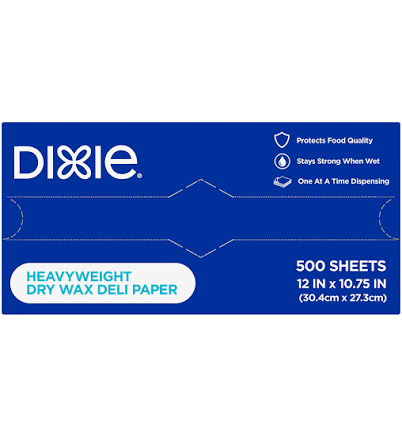
Dixie · Grease-Resistant Butcher & Deli Paper
Dixie Heavyweight Dry Wax Deli Paper
Deli paper grease resistance often involves PFAS. Brand discloses nothing.
Dixie Heavyweight deli paper is waxed for grease resistance, a known PFAS exposure route. The brand discloses nothing about its chemistry.
The better-graded swap
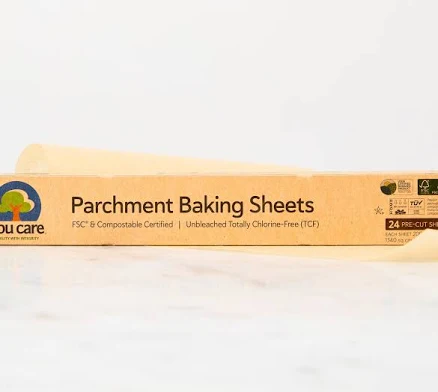
If You Care
If You Care Parchment Baking Paper
90/100 safety
Same rubric that flunked this product. The swap earned Excellent.
Still want this one anyway? Check the price on Amazon. We’d swap it.
Material
Paper with wax coating, grease-resistant treatment
Brand disclosure
Brand is silent on PFAS
Lab data
No public lab test
You may also be interested in
Top-graded picks in the categories readers replace first, every one scored on the same rubric.

- polypropylene filter housing, carbon/sediment cartridge
- We found no PFAS statement from the brand
- Bacterial growth in spent cartridges
3 hazards checked on this product, all on its full breakdown.

Aquasure
Premier Series 75 GPD Under Sink Reverse Osmosis Water Filtration System
- RO membrane, carbon filters, stainless steel housing
- We found no PFAS statement from the brand
- Bacterial and microbial growth in housing and filters
4 hazards checked on this product, all on its full breakdown.

Avocado
Vegan Mattress
- organic cotton, natural latex, coconut coir, recycled steel coils
- The brand calls it PFAS-free, which we have not verified
- Heavy metals
2 hazards checked on this product, all on its full breakdown.
What Dixie Heavyweight Dry Wax Deli Paper is made of, ingredients and materials
Dixie Heavyweight Dry Wax Deli Paper is paper substrate coated with a wax blend formulated for grease resistance and moisture barrier. The wax layer is the functional component that prevents oils and liquids from seeping through, critical for deli and bakery wrapping. Wax-coated papers typically use either mineral wax (paraffin), soy-based wax, or synthetic wax blends; grease-resistant performance in foodservice papers often correlates with fluorinated compounds (PFAS) in the coating formulation, though this is not disclosed by the brand.
What’s concerning
Disclosed non-fluorinated coating
Coating is named and is not a fluorochemical (wax, paraffin, mink oil).
Category baseline
The starting point for this type of product, before anything specific to this product is counted.
No PFAS disclosure
No public statement from the brand about PFAS in this product.
PFAS
Fluorochemical coatings are industry standard in deli papers for grease resistance; Deli King provides no composition data or test results to rule out their use. PFAS can migrate into fatty foods and accumulate in the body.
Source, ATSDR ↗Wax degradation and migration with heat
Standard paraffin or mineral wax coatings on deli paper soften above 150F and can transfer to food if used in warm or hot applications. This is a design limitation, not necessarily a contamination risk, but indicates improper use scenarios.
Mineral oil or paraffin in coating
Traditional deli papers often use petroleum-derived paraffin wax; while food-contact approved, chronic ingestion of mineral hydrocarbons is studied for potential systemic effects. Exact wax type is not disclosed by Deli King.
Lack of brand transparency and third-party testing
Deli King does not publish safety data sheets, coating ingredient lists, or independent testing results. This absence is standard for low-cost foodservice brands but limits consumer ability to assess or compare safety profiles.
What’s reassuring
Bleaching agents and processing residues in paper substrate
Standard food-grade paper for deli use typically meets FDA 21 CFR 176 for food contact. No specific recalls or known contamination issues are on record for Deli King products, but composition transparency is not provided.
How is this PFAS grade calculated?
The brand's record and disclosure
Deli King does not publicly disclose coating chemistry, fluorine content, or testing data for this product. No third-party certifications (e.g., FDA functional barrier claims, GOTS, or PFAS-free seals) are evident in available product documentation. The brand has no established public stance on PFAS avoidance in foodservice packaging, which is typical of regional or store-label deli paper producers. Without transparency, consumers cannot verify whether the grease-resistant coating relies on PFAS or alternatives like clay or wax-only formulations.
How it compares in its category
Standard deli papers in the US market (Dixie, Reynolds, store brands) are largely indistinguishable in composition and often contain PFAS in the grease-resistant layer; Deli King Heavyweight is a mid-tier option with no differentiating safety profile. Alternatives include uncoated kraft paper (lower grease resistance, suitable for dry goods), soy-wax-coated papers (marketed as PFAS-free but less common and more expensive), and silicone-coated papers (PFAS-free but not traditional deli weight). Bulk foodservice suppliers increasingly offer products without a material linked to PFAS, but retail availability remains limited.
If you buy it
Use for wrapping cold or room-temperature deli items, cheeses, and baked goods; wax coating is not designed for hot foods above ~150F (65C), as wax can soften and migrate into food. Do not use in microwaves or ovens. Store rolls in a cool, dry place away from direct heat to prevent wax breakdown. If high PFAS exposure is a concern (young children, pregnancy, immunocompromised individuals), consider switching to certified PFAS-free alternatives or uncoated papers for items that don't require grease barrier.
What is not known about PFAS in this product?
- Basis
- Model estimate, 45% confidence, not a lab result
- Lab test
- None on record for this exact product
- Brand statement
- Dixie has made none
Formulations change between production runs, so check the current label. How we grade.
What are the PFAS-free alternatives to Dixie Heavyweight Dry Wax Deli Paper?
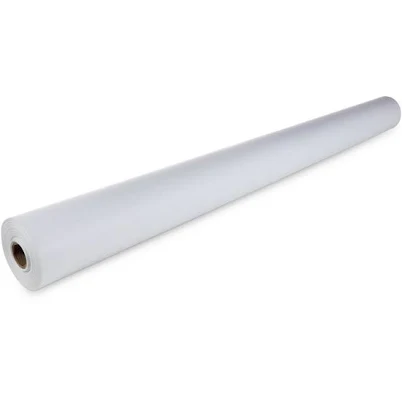
IDL Packaging
White Butcher Paper 18" x 12000" Natural Butcher Paper Roll for Meat and Fish
- unbleached natural kraft paper
- The brand calls it PFAS-free, which we have not verified
- Mold or microbial growth
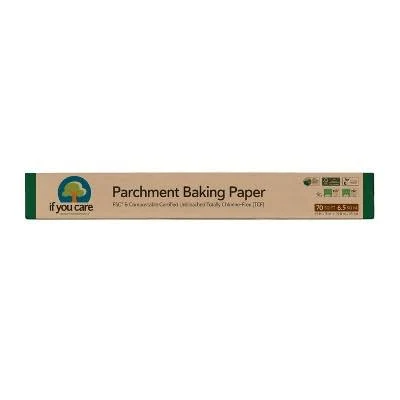
- unbleached parchment paper, silicone coating
- The brand calls it PFAS-free, which we have not verified
- Silicone coating degradation under heat stress
2 hazards checked on this product, all on its full breakdown.
- Silicone-coated parchment paper
- The brand calls it PFAS-free, which we have not verified
- Silicone coating degradation at high heat
More grease-resistant butcher & deli paper grades
How we score, every product runs through the same public 0-100 rubric based on materials, coatings, brand disclosure, lab findings, and recalls. See the full methodology → Spotted a mistake? Report an error.