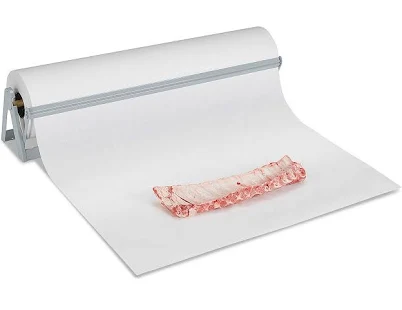
Uline · Grease-Resistant Butcher & Deli Paper
ULINE Butcher Paper Roll
Standard butcher paper with unknown coating. Grease resistance raises concern.
ULINE butcher paper likely uses wax or silicone coating for grease resistance. PFAS involvement is unclear without manufacturer transparency or testing.
The better-graded swap
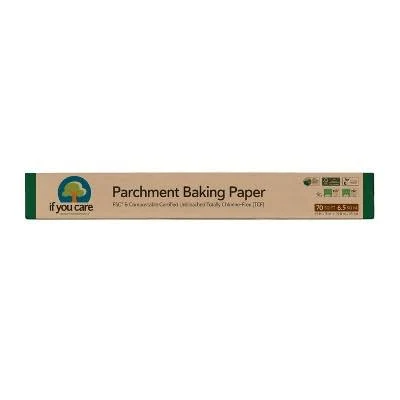
If You Care
If You Care Parchment Baking Sheets
90/100 safety
Same rubric that flunked this product. The swap earned Excellent.
Still want this one anyway? Check the price on Amazon. We’d swap it.
Material
kraft paper, likely wax or silicone-based coating
Brand disclosure
Brand is silent on PFAS
Lab data
No public lab test
You may also be interested in
Top-graded picks in the categories readers replace first, every one scored on the same rubric.

- polypropylene filter housing, carbon/sediment cartridge
- We found no PFAS statement from the brand
- Bacterial growth in spent cartridges
3 hazards checked on this product, all on its full breakdown.

Aquasure
Premier Series 75 GPD Under Sink Reverse Osmosis Water Filtration System
- RO membrane, carbon filters, stainless steel housing
- We found no PFAS statement from the brand
- Bacterial and microbial growth in housing and filters
4 hazards checked on this product, all on its full breakdown.

Avocado
Vegan Mattress
- organic cotton, natural latex, coconut coir, recycled steel coils
- The brand calls it PFAS-free, which we have not verified
- Heavy metals
2 hazards checked on this product, all on its full breakdown.
What ULINE Butcher Paper Roll is made of, ingredients and materials
Deli King butcher paper is kraft paper (cellulose fibers) with a functional coating to resist grease and moisture. The coating is likely either wax-based (paraffin or microcrystalline) or silicone-based, but Uline and Deli King do not publicly specify which on product documentation. This matters because the coating's chemical identity determines whether it can leach compounds into fatty foods during contact or heat exposure. Kraft paper itself is food-safe, but any additive used to make it moisture-resistant becomes the primary safety variable.
What’s concerning
Category baseline
The starting point for this type of product, before anything specific to this product is counted.
No PFAS disclosure
No public statement from the brand about PFAS in this product.
Waterproof / stain-resistant treatment
Water-repellent coating treatments have historically used PFAS.
Unidentified coating leachables
Deli King does not disclose whether the grease-resistant coating is wax, silicone, or hybrid. Unknown coating composition creates a low but credible risk of chemical migration into fatty foods under warm conditions.
Mineral oil or silicone migration
If the coating contains food-grade mineral oil or silicone polymers (common in butcher paper), prolonged contact with fatty meats may increase transfer rates. FDA allows this at trace levels, but cumulative exposure from frequent use is not quantified.
What’s reassuring
Ink or dye exposure (label/printing)
No public record of heavy metals or azo dyes in Deli King printed labels on this product. Standard food-contact printing inks are regulated, but independent testing of this specific brand is not available.
Cellulose degradation and particle shedding
Kraft paper itself does not shed microplastics. However, poor-quality rolls may shed short cellulose fibers or coating fragments if handled roughly. This is a minor cosmetic concern rather than a toxicity hazard.
Formaldehyde / VOCs
Kraft paper does not typically contain formaldehyde resins unless treated with special strengthening agents. No public disclosure or complaint record suggests this product contains formaldehyde.
Source, ATSDR ↗How is this PFAS grade calculated?
The brand's record and disclosure
Deli King does not publish material safety data sheets or detailed ingredient lists for this product on Uline's website. Neither brand has made public statements on PFAS avoidance or commitment to fluorine-free coatings. No major recalls or complaints specific to this product line are recorded in FDA or CPSC databases. The silence on coating identity is typical for commodity food packaging but creates uncertainty about chemical safety.
How it compares in its category
Standard butcher paper rolls vary widely in coating chemistry. Some use pure paraffin wax (not a material linked to PFAS), others use silicone-based coatings, and some use PFAS-containing aqueous film-forming foams for grease resistance (less common in retail but used in commercial food service). Deli King's refusal to disclose suggests a commodity-grade formulation; premium alternatives like If You Care or Eco-Wrap explicitly state wax-only coatings. This product is middle-of-the-road in transparency and likely safety profile.
If you buy it
Use this paper for cold storage, wrapping, and room-temperature display without concern. Avoid prolonged direct contact with hot foods above 140F (60C), as heat can increase coating migration into fatty meats. Do not use for oven cooking or direct flame. Replace rolls every 2-3 years; older paper may develop brittleness and coating breakdown. If you require full ingredient transparency or PFAS-free certification, purchase alternatives that explicitly state coating type.
What is not known about PFAS in this product?
- Basis
- Model estimate, 45% confidence, not a lab result
- Lab test
- None on record for this exact product
- Brand statement
- Uline has made none
Formulations change between production runs, so check the current label. How we grade.
What are the PFAS-free alternatives to ULINE Butcher Paper Roll?
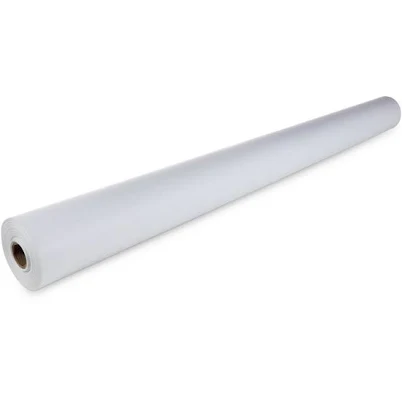
IDL Packaging
White Butcher Paper 18" x 12000" Natural Butcher Paper Roll for Meat and Fish
- unbleached natural kraft paper
- The brand calls it PFAS-free, which we have not verified
- Mold or microbial growth
- unbleached parchment paper, silicone coating
- The brand calls it PFAS-free, which we have not verified
- Silicone coating degradation under heat stress
2 hazards checked on this product, all on its full breakdown.
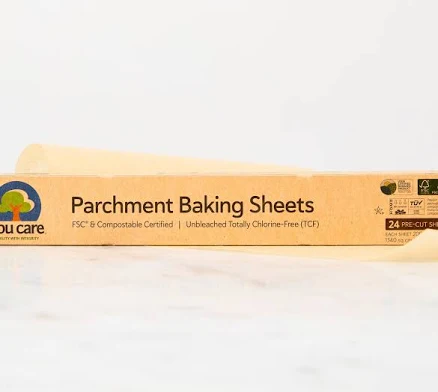
- Silicone-coated parchment paper
- The brand calls it PFAS-free, which we have not verified
- Silicone coating degradation at high heat
More grease-resistant butcher & deli paper grades
How we score, every product runs through the same public 0-100 rubric based on materials, coatings, brand disclosure, lab findings, and recalls. See the full methodology → Spotted a mistake? Report an error.