
Demeyere Proline Frying Pan 24 cm
Plastic with no coating described, and no PFAS statement from the brand.
The product information we reviewed describes stainless steel, multi-ply, uncoated with Silvinox surface treatment, with no applied coating named. A flexible cutting mat does not need a non-stick coating, and the listing does not describe one. The brand has published no PFAS statement for it.
We flunk more products than we pass. This one earned its grade. How we grade
Material
Stainless steel, multi-ply, uncoated with Silvinox surface treatment
Brand disclosure
Brand is silent on PFAS
Lab data
No public lab test
Is Demeyere Proline Frying Pan 24 cm non-toxic? What it is made of
This pan is stainless steel with multiple layers (multi-ply construction) and a Silvinox surface treatment. Silvinox is a proprietary electrochemical surface modification applied to stainless steel; it is not a polymer coating or Teflon-type coating-type non-stick layer. Because there is no applied coating to degrade or flake, there is no mechanism for coating particles or synthetic polymers to transfer into food during normal use. The stainless steel itself is not known to leach problematic levels of metals (iron, chromium, nickel) under typical cooking conditions.
What’s concerning
Category baseline
Cookware is a category where PFAS exposure is more common.
No PFAS disclosure
No public statement about PFAS in this product.
Nickel leaching from stainless steel
Stainless steel cookware can release trace amounts of nickel, particularly if the alloy is of lower grade or if acidic foods are stored long-term in the pan. This pan's material composition is not detailed in publicly available specs, so grade cannot be confirmed. For individuals with nickel sensitivity or dermatitis, this remains a consideration, though levels from cookware are generally below he
What’s reassuring
Bare uncoated material
Recorded as a bare, uncoated material with no surface coating or treatment.
Coating degradation (Silvinox surface treatment)
Silvinox is an electrochemical surface layer, not a polymer or ceramic coating, so it does not flake, peel, or shed particles into food. No reported cases of Silvinox failure or degradation affecting food safety are on record. The treatment is intended to improve corrosion resistance and is not expected to degrade under normal cookware use.
Teflon-type coating fume risk
This pan is explicitly uncoated and contains no Teflon-type coating or non-stick polymer layer, so there is no fume emission risk even if the pan is accidentally heated to high temperatures without food.
Aluminum leaching
The multi-ply construction includes stainless steel as the food-contact surface, so bare aluminum does not contact food. Aluminum in the core or middle layers is shielded and poses no leaching risk.
Lead
This pan is uncoated stainless steel with only the Silvinox electrochemical treatment. No ceramic glaze, enamel, or applied coating is present, so contamination with lead or cadmium in decorative or functional surface layers is not a concern.
Source, ATSDR ↗The full breakdown
The brand's record and disclosure
Demeyere is a Belgian cookware manufacturer with a history in professional and home cookware; no major recalls or contamination incidents are on record for this product line. The brand does not publicly disclose PFAS absence or presence in their product statements, which is a gap in transparency. No third-party certifications (e.g. GOTS, OEKO-TEX equivalent for cookware) are evident in available product documentation.
How it compares in its category
Uncoated or minimally treated stainless steel cookware sits in the lower-hazard segment compared to non-stick Teflon-type coating pans (which carry fume and coating-flaking risk) or ceramic-coated cookware (which may contain lead or cadmium in glazes). Multi-ply construction improves heat distribution and reduces risk of hotspots that might cause food contact with bare aluminum. This design choice avoids the aluminum leaching risk present in single-layer or bare aluminum pans.
If you buy it
Use on medium to medium-high heat; stainless steel does not require the low-heat protection that non-stick coatings do. Clean with non-abrasive sponges and mild detergent to preserve the Silvinox finish, though light scratching will not compromise safety. Stainless steel cookware is durable and unlikely to require replacement due to surface degradation. Avoid prolonged storage of acidic foods (vinegar, tomato-based sauces) in contact with the pan, as stainless steel can develop minor discoloration under extreme conditions, though this is cosmetic rather than a safety issue.
What we don’t know
- Basis
- Model estimate, 45% confidence, not a lab result
- Lab test
- None on record for this exact product
- Brand statement
- Demeyere has made none
Formulations change between production runs, so check the current label. How we grade.
Better-graded alternatives in Cookware
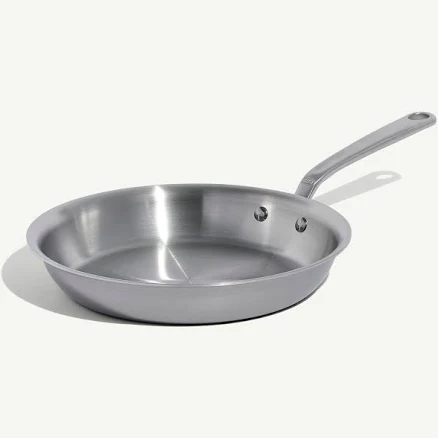
Made In
Stainless Clad Fry Pan
- Stainless steel clad construction, no nonstick coating
- The brand calls it PFAS-free, which we have not verified
- Clad separation or delamination over time
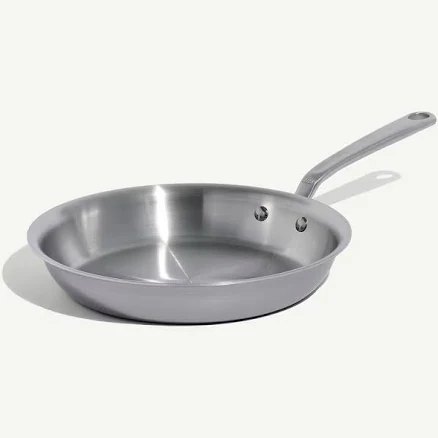
Made In
10' Stainless Clad Frying Pan
- stainless steel clad construction, no nonstick coating
- The brand calls it PFAS-free, which we have not verified
- Nickel leaching from stainless steel
3 hazards checked on this product. See all of them.
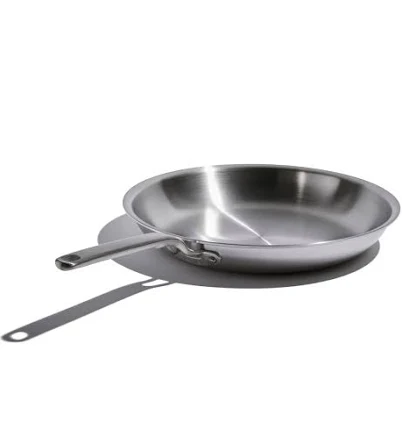
Heritage Steel
Eater Fry Pan
- Clad stainless steel, no coating
- The brand calls it PFAS-free, which we have not verified
- Metal ion release during cooking (iron, nickel, chromium)
More cookware grades
How we score, every product runs through the same public 0-100 rubric based on materials, coatings, brand disclosure, lab findings, and recalls. See the full methodology → Spotted a mistake? Report an error.