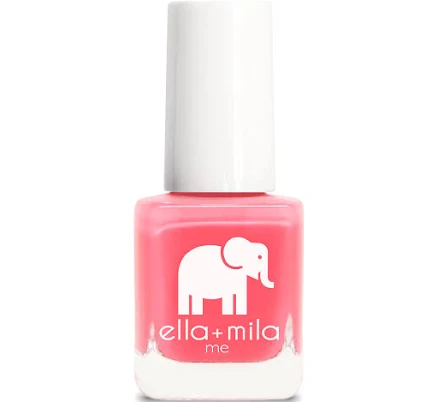
Ella+Mila · Nail Polish & Top Coat
ella+mila Nail Polish
Avoid without PFAS disclosure or third-party lab results.
Ella+Mila promotes organic ingredients but does not address PFAS. While nail polish rarely needs PFAS to function, fluorinated compounds sometimes appear in shine coatings.
The better-graded swap
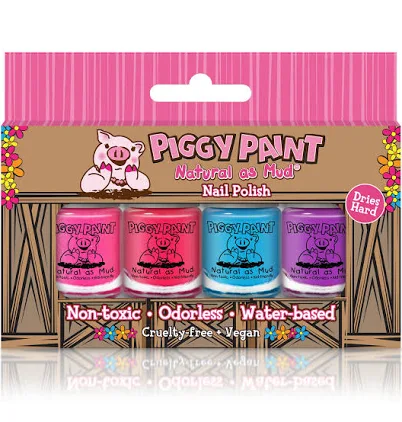
Piggy Paint
Piggy Paint 4-Piece Nail Polish Set
100/100 safety
Same rubric that flunked this product. The swap earned Excellent.
Still want this one anyway? Check the price on Amazon. We’d swap it.
Material
Organic nitrocellulose-based nail lacquer
Brand disclosure
Brand is silent on PFAS
Lab data
No public lab test
Is ella+mila Nail Polish non-toxic? What it is made of
Ella+Mila nail polish is formulated as an organic nitrocellulose-based lacquer, meaning the film-forming agent is derived from cellulose nitrate rather than synthetic polymers. Nitrocellulose is a fast-drying, durable base that's standard across most premium nail polishes. The brand markets this as a cleaner formulation, but nitrocellulose itself is chemically inert once cured; the real safety profile depends on solvent carriers, plasticizers, and colorants used in the suspension.
What’s concerning
Category baseline
The starting point for this type of product, before anything specific to this product is counted.
No PFAS disclosure
No public statement from the brand about PFAS in this product.
Organic solvent volatiles (ethyl acetate, isopropyl alcohol, xylene)
Nitrocellulose lacquers require volatile solvents for suspension and application. While Ella+Mila does not list these publicly, they are inherent to the formulation class. Unventilated use poses acute respiratory and mucous membrane irritation, especially during application.
Plasticizers (diethyl phthalate or unnamed alternatives)
The brand claims DBP removal but does not specify the plasticizer substitute in their formulations. Unnamed alternatives may include other phthalates or non-phthalate plasticizers; absence of full ingredient disclosure prevents confirmation.
PFAS
Given the brand's silent stance on PFAS and a moderate 65/100 safety grade, PFAS presence in the formulation or as a processing residue cannot be ruled out. Competitor transparency in this hazard class has become standard; Ella+Mila's refusal to test or disclose is the primary concern.
Source, ATSDR ↗What’s reassuring
Base material not linked to PFAS
The main material recorded for this product is not one associated with PFAS.
Lead
No recalls or published testing issues for Ella+Mila nail polish involving lead or cadmium in their standard line. Pigments in nail lacquers are typically synthetic iron oxides or FD&C lakes, which are regulated; however, third-party verification is not publicly available for this brand.
Source, ATSDR ↗Formaldehyde / VOCs
Ella+Mila markets their products as formaldehyde-free. Nitrocellulose-based lacquers do not inherently require formaldehyde donors, and no evidence of hidden formaldehyde release has been reported for this brand.
Source, ATSDR ↗The full breakdown
The brand's record and disclosure
Ella+Mila does not publicly disclose PFAS testing results or third-party certifications for PFAS avoidance, despite marketing positioning as having lower concern. The brand emphasizes removal of certain chemicals (notably toluene, dibutyl phthalate, and formaldehyde in their standard line), which aligns with 'three-free' or 'five-free' claims common in the category. However, absence of PFAS disclosure is a notable gap given increasing industry adoption of PFAS alternatives and competitor transparency in this segment.
How it compares in its category
Ella+Mila occupies the mid-to-premium segment marketed as 'cleaner' nail polish. Competitors like Zoya and Butter London explicitly test and publish PFAS results; mass-market brands (Essie, OPI) rarely disclose. Ella+Mila's chemical removal claims (toluene, DBP, formaldehyde) are baseline expectations in the 'clean beauty' space, not differentiators. The lack of PFAS specificity is a competitive weakness against brands with third-party certification or published negative tests.
If you buy it
Apply in a well-ventilated space or outdoors; nail polish fumes (primarily solvent volatiles) are respiratory irritants in enclosed rooms. Use thin, even coats to minimize thick buildup and reduce solvent exposure during application. Replace polish every 12-18 months or if it thickens, becomes gummy, or separates, as degraded formulations may off-gas more readily. Remove with non-acetone removers if sensitive to solvent absorption; acetone accelerates removal but increases dermal and inhalation exposure.
What we don’t know
- Basis
- Model estimate, 35% confidence, not a lab result
- Lab test
- None on record for this exact product
- Brand statement
- Ella+Mila has made none
Formulations change between production runs, so check the current label. How we grade.
Better-graded alternatives in Nail Polish & Top Coat
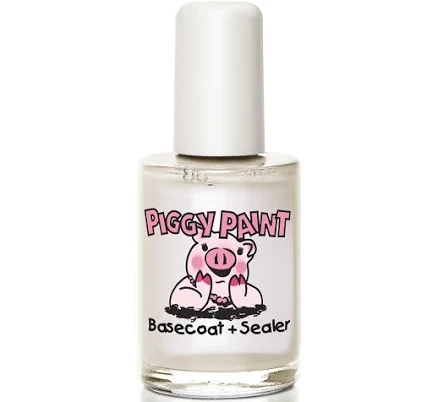
Piggy Paint
Basecoat & Sealer Nail Polish
- Water-based organic pigments and plant-derived resins
- The brand calls it PFAS-free, which we have not verified
- Heavy metals
3 hazards checked on this product. See all of them.
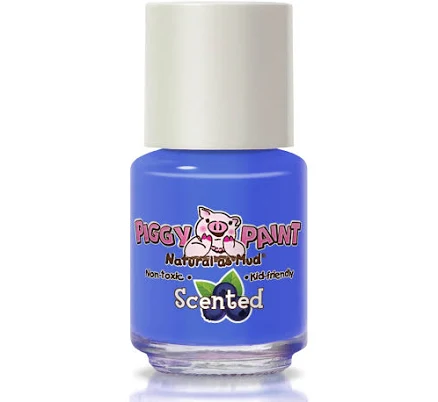
Piggy Paint
Nail Polish Piggy Paint
- water-based pigmented lacquer
- The brand calls it PFAS-free, which we have not verified
- Volatile organic compounds (VOCs) from resins and solvents
3 hazards checked on this product. See all of them.
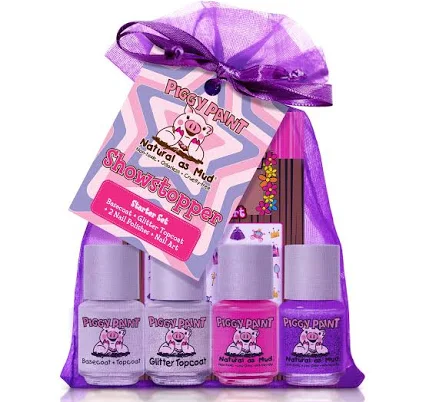
Piggy Paint
Showstopper Nail Polish Set
- organic pigments, plant-based resins, water-based lacquer
- The brand calls it PFAS-free, which we have not verified
- Volatile organic compounds (VOCs)
2 hazards checked on this product. See all of them.
More nail polish & top coat grades
How we score, every product runs through the same public 0-100 rubric based on materials, coatings, brand disclosure, lab findings, and recalls. See the full methodology → Spotted a mistake? Report an error.