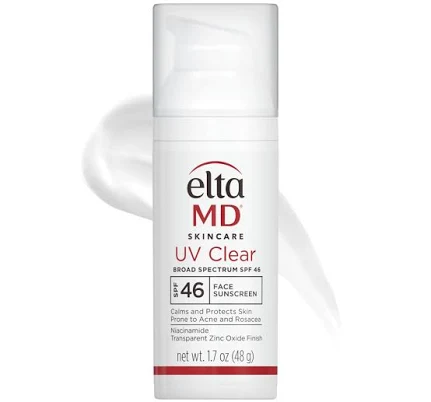
EltaMD UV Clear Broad Spectrum SPF 46
Lower concern; no known PFAS triggers, but sunscreens rarely disclose fluorochemical additives.
This chemical and mineral hybrid sunscreen shows no signs of nonstick coatings, water-repellent treatments, or PFAS components. EltaMD hasn't disclosed any PFAS-related ingredients, and no third-party testing is available.
We flunk more products than we pass. This one earned its grade. How we grade
Material
Water-based sunscreen lotion; primary actives likely zinc oxide/avobenzone
Brand disclosure
Brand is silent on PFAS
Lab data
No public lab test
You may also be interested in
Top-graded picks in the categories readers replace first, every one scored on the same rubric.

- polypropylene filter housing, carbon/sediment cartridge
- We found no PFAS statement from the brand
- Bacterial growth in spent cartridges
3 hazards checked on this product, all on its full breakdown.

Aquasure
Premier Series 75 GPD Under Sink Reverse Osmosis Water Filtration System
- RO membrane, carbon filters, stainless steel housing
- We found no PFAS statement from the brand
- Bacterial and microbial growth in housing and filters
4 hazards checked on this product, all on its full breakdown.

Avocado
Vegan Mattress
- organic cotton, natural latex, coconut coir, recycled steel coils
- The brand calls it PFAS-free, which we have not verified
- Heavy metals
2 hazards checked on this product, all on its full breakdown.
What EltaMD UV Clear Broad Spectrum SPF 46 is made of, ingredients and materials
EltaMD UV Clear is a water-based lotion sunscreen relying on zinc oxide as its primary UV filter, which is a mineral (physical) blocker rather than a chemical absorber. Zinc oxide sits on skin surface and reflects UV rays without systemic absorption, making it a lower concern active ingredient option. The water base means minimal organic solvent load and lower volatility compared to oil-based or alcohol-dominant formulations, reducing inhalation risk during application.
What’s concerning
Category baseline
The starting point for this type of product, before anything specific to this product is counted.
No PFAS disclosure
No public statement from the brand about PFAS in this product.
Fragrance allergens and sensitizers
EltaMD UV Clear contains fragrance compounds and cetyl alcohol, both mild skin sensitizers in some individuals. For people with contact dermatitis or eczema-prone skin, even 'hypoallergenic' sunscreens can trigger flare-ups; patch testing is advisable before full-face use.
Phenoxyethanol preservative safety
Water-based sunscreens often use phenoxyethanol as a preservative to prevent bacterial/fungal growth. At concentrations below 1 percent (typical in cosmetics), the Cosmetic Ingredient Review panel identified no hazard of this kind on record, though sensitive individuals may experience mild contact irritation or dermatitis.
Silicone or dimethicone residue buildup on skin
Many modern sunscreens including water-based formulas contain silicones (dimethicone, cyclomethicone) for spreadability and feel. Repeated daily application without regular cleansing can lead to microbial overgrowth or follicular irritation in acne-prone skin, though this is not a systemic toxicity concern.
What’s reassuring
Base material not linked to PFAS
The main material recorded for this product is not one associated with PFAS.
Zinc oxide nanoparticle inhalation (spray only)
This product is a lotion, not a spray, so inhalation risk of zinc oxide nanoparticles is not applicable. If formulation is ever produced in spray form, inhalation hazard would warrant separate assessment.
Rare allergic reaction to zinc oxide
Zinc oxide is considered hypoallergenic and sensitization is extremely rare. No established recalls or reports of IgE-mediated allergic reactions to EltaMD UV Clear zinc oxide formulation exist in public records.
How is this PFAS grade calculated?
The brand's record and disclosure
EltaMD is a dermatologist-founded and dermatologist-directed brand with a strong reputation for transparency in ingredient lists and clinical validation. The company does not advertise PFAS-free claims but also has no public recalls or safety controversies tied to this product line. Their formulations are regularly recommended by dermatologists for sensitive skin and rosacea, suggesting internal safety vetting; however, like most sunscreen manufacturers, they do not disclose whether silicones or other ancillary additives contain fluorochemicals.
How it compares in its category
Zinc oxide sunscreens are considered a lower concern active-ingredient class by dermatological consensus and regulatory bodies (FDA, EU). UV Clear sits at a standard SPF 46 and is broadly equivalent to other mineral sunscreens like CeraVe Face Lotion or La Roche-Posay Anthelios in safety profile, though EltaMD's water base and lack of common irritants (oxybenzone, avobenzone) gives it a slight edge for reactive skin. Most mainstream chemical sunscreens carry higher potential for allergic sensitization and systemic absorption.
If you buy it
Apply a sufficient amount (approximately one-quarter teaspoon for face) 15 minutes before sun exposure and reapply every 2 hours or after swimming or sweating. Store in a cool, dark place away from direct heat; sunscreen efficacy degrades under prolonged heat above 80F (27C) or in direct sunlight. Discontinue use if rash, itching, or irritation develops and patch-test on inner arm if you have very sensitive skin. Replace annually or when product separates, discolors, or develops an odor, as oxidation can reduce UV protection.
What is not known about PFAS in this product?
- Basis
- Model estimate, 72% confidence, not a lab result
- Lab test
- None on record for this exact product
- Brand statement
- EltaMD has made none
Formulations change between production runs, so check the current label. How we grade.
What are the PFAS-free alternatives to EltaMD UV Clear Broad Spectrum SPF 46?
- Mineral sunscreen, zinc oxide base
- A third party reports verifying it as PFAS-free
- 1,4-dioxane (non-intentional contaminant from surfactants/emulsifiers)
2 hazards checked on this product, all on its full breakdown.
- mineral sunscreen (zinc oxide or titanium dioxide base)
- The brand calls it PFAS-free, which we have not verified
- Synthetic fragrance allergens
More sunscreen grades
How we score, every product runs through the same public 0-100 rubric based on materials, coatings, brand disclosure, lab findings, and recalls. See the full methodology → Spotted a mistake? Report an error.