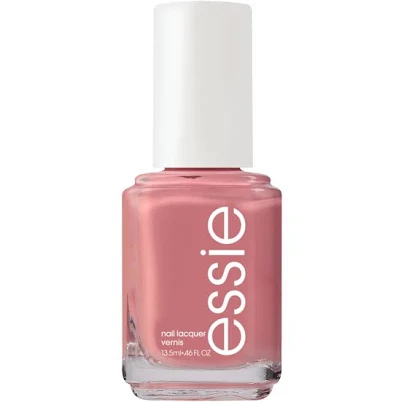
Essie · Nail Polish & Top Coat
ESSIE NAIL POLISH
Skip until brand discloses PFAS status; nail polish formulations are opaque.
Essie nail polish contains typical lacquer-type film-formers and plasticizers, but the brand makes no public disclosure about PFAS in formulation or manufacturing. Nail polish remains under-tested for PFAS historically.
The better-graded swap
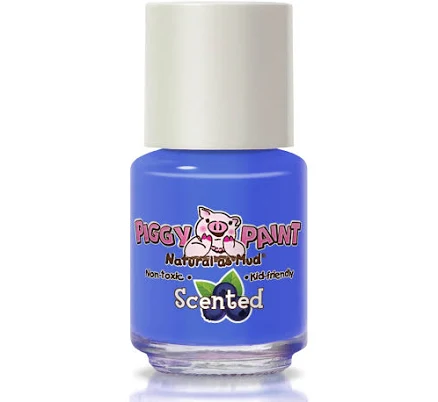
Piggy Paint
Nail Polish Piggy Paint
100/100 safety
Same rubric that flunked this product. The swap earned Excellent.
Still want this one anyway? Check the price on Amazon. We’d swap it.
Material
nitrocellulose, plasticizers, resins, film-formers
Brand disclosure
Brand is silent on PFAS
Lab data
No public lab test
You may also be interested in
Top-graded picks in the categories readers replace first, every one scored on the same rubric.

Aqua Pure
3M Aqua-Pure AP802B Whole House Filter Housing
- polypropylene filter housing, carbon/sediment cartridge
- We found no PFAS statement from the brand
- Bacterial growth in spent cartridges
3 hazards checked on this product. See all of them.

Aquasure
Premier Series 75 GPD Under Sink Reverse Osmosis Water Filtration System
- RO membrane, carbon filters, stainless steel housing
- We found no PFAS statement from the brand
- Bacterial and microbial growth in housing and filters
4 hazards checked on this product. See all of them.

Avocado
Vegan Mattress
- organic cotton, natural latex, coconut coir, recycled steel coils
- The brand calls it PFAS-free, which we have not verified
- Heavy metals
2 hazards checked on this product. See all of them.
Is ESSIE NAIL POLISH non-toxic? What it is made of
Essie nail polish is a nitrocellulose-based lacquer, the industry standard for chip-resistant color and gloss. It contains plasticizers (typically dibutyl phthalate derivatives or alternatives), resins for adhesion, and volatile organic solvents that enable application and drying. The formulation's safety depends heavily on solvent composition and plasticizer type, which Essie does not publicly disclose in detail. During application and drying, inhalation of vapors is the primary exposure route; dermal contact poses minimal risk due to rapid evaporation.
What’s concerning
Category baseline
The starting point for this type of product, before anything specific to this product is counted.
No PFAS disclosure
No public statement from the brand about PFAS in this product.
Volatile organic compounds (VOCs) and solvent inhalation
Nail polish relies on volatile solvents (typically xylene, toluene substitutes, and acetone) for application; their inhalation during and shortly after painting is expected and well-documented. Chronic exposure in poorly ventilated spaces may cause dizziness, respiratory irritation, and headache. Essie's exact solvent blend is not disclosed, limiting assessment of individual risk.
Plasticizer leaching and dermal absorption
Essie formulations contain plasticizers to prevent cracking; while the company claims to avoid dibutyl phthalate (DBP), the specific alternative (diisononyl cyclohexane-1,2-dicarboxylate, triphenyl phosphate, or other) is not publicly stated. Absorption through intact skin is minimal, but nail cuticles and damaged skin may allow limited penetration during application or extended wear.
Formaldehyde / VOCs
Essie markets 'three-free' or 'five-free' formulations claiming to exclude formaldehyde, but this claim is not independently verified and the brand does not publish proof. Some Essie lines may still contain formaldehyde resins (not free formaldehyde) as film-formers, which are generally considered lower-risk but not zero-risk during manufacturing and application.
Source, ATSDR ↗Allergic contact dermatitis from fragrance or resin components
Essie polishes contain resins and may include fragrance to mask solvent odor; these components are known allergens in nail products. Reactions (rash, itching, swelling of nail fold) are uncommon but documented, particularly in individuals with sensitive skin or prior contact sensitization. No ingredient list is available to identify specific allergens.
What’s reassuring
Base material not linked to PFAS
The main material recorded for this product is not one associated with PFAS.
Heavy metals
No published reports or recalls document lead, cadmium, or other heavy metals in Essie polish colorants. Cosmetic-grade pigments are typically regulated by the FDA, but Essie does not provide third-party testing or certificates of analysis for heavy metal content, leaving a data gap.
Source, FDA ↗The full breakdown
The brand's record and disclosure
Essie is owned by Estee Lauder and markets itself as 'three-free' or 'five-free' formulations, excluding toluene, dibutyl phthalate (DBP), and formaldehyde depending on the line. However, the brand provides no public ingredient lists, third-party certifications (such as Clean Beauty Project or Leaping Bunny for animal testing), or disclosure of PFAS presence. No major recalls or regulatory violations are on record. The brand's stance on PFAS is silent, which is typical across the nail polish industry but problematic given emerging evidence of PFAS in cosmetic products.
How it compares in its category
Most conventional nail polishes share Essie's opaque formulation and lack of detailed disclosure. Brands like OPI and Sally Hansen offer similar 'free-from' claims without transparency. Independent brands and niche players (Zoya, Butter London) publish fuller ingredient lists and some pursue Clean Beauty certifications, though they are typically more expensive. Essie's positioning is mid-market; it does not stand out for exceptional safety disclosure relative to peers, nor does it lag significantly behind standard industry practice for volatile organic emissions.
If you buy it
Apply in a well-ventilated space (open window, fan, or dedicated nail station with extraction) to minimize inhalation of solvents during the 5-10 minute drying period. Avoid contact with skin and eyes; wash hands after application. Replace polish every 12-18 months or when separation, thickening, or color shift occurs, as aging formulations can degrade polymer coatings and alter plasticizer behavior. Store in a cool, dark location away from heat to preserve solvent volatility and prevent lid corrosion.
What we don’t know
- Basis
- Model estimate, 35% confidence, not a lab result
- Lab test
- None on record for this exact product
- Brand statement
- Essie has made none
Formulations change between production runs, so check the current label. How we grade.
Better-graded alternatives in Nail Polish & Top Coat
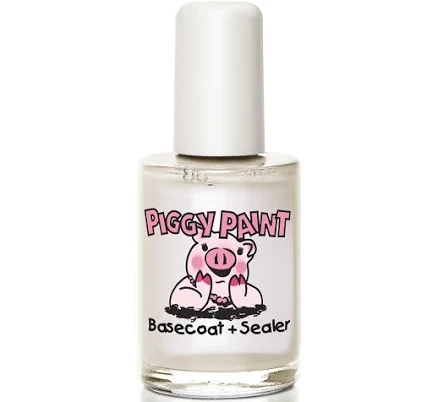
Piggy Paint
Basecoat & Sealer Nail Polish
- Water-based organic pigments and plant-derived resins
- The brand calls it PFAS-free, which we have not verified
- Heavy metals
3 hazards checked on this product. See all of them.
Piggy Paint
Nail Polish Piggy Paint
- water-based pigmented lacquer
- The brand calls it PFAS-free, which we have not verified
- Volatile organic compounds (VOCs) from resins and solvents
3 hazards checked on this product. See all of them.
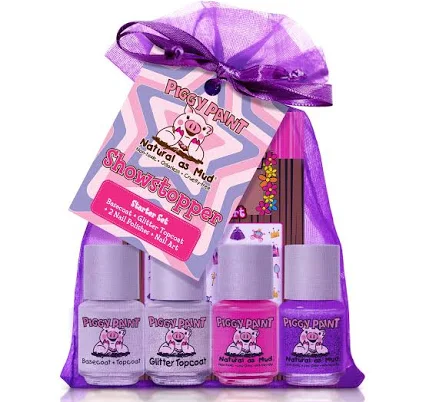
Piggy Paint
Showstopper Nail Polish Set
- organic pigments, plant-based resins, water-based lacquer
- The brand calls it PFAS-free, which we have not verified
- Volatile organic compounds (VOCs)
2 hazards checked on this product. See all of them.
More nail polish & top coat grades
How we score, every product runs through the same public 0-100 rubric based on materials, coatings, brand disclosure, lab findings, and recalls. See the full methodology → Spotted a mistake? Report an error.