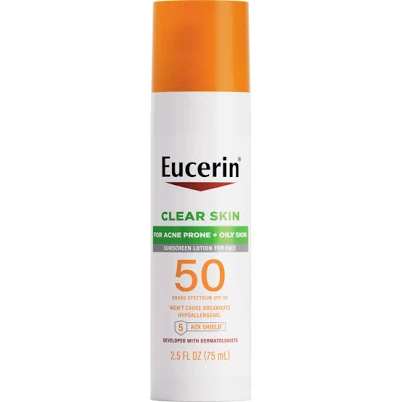
Eucerin Clear Skin Oil Control SPF 50 Face Sunscreen Lotion
Sunscreen with no fluorinated ingredient on record, and no PFAS statement from the brand.
Eucerin has no PFAS statement on record for this sunscreen. Our record does not include an ingredient-level check, so look for fluorinated ingredients such as Teflon-type coating on the label.
We flunk more products than we pass. This one earned its grade. How we grade
Material
Emulsion base with water, silicones, UV filters
Lab data
No public lab test
You may also be interested in
Top-graded picks in the categories readers replace first, every one scored on the same rubric.

- polypropylene filter housing, carbon/sediment cartridge
- We found no PFAS statement from the brand
- Bacterial growth in spent cartridges
3 hazards checked on this product, all on its full breakdown.

Aquasure
Premier Series 75 GPD Under Sink Reverse Osmosis Water Filtration System
- RO membrane, carbon filters, stainless steel housing
- We found no PFAS statement from the brand
- Bacterial and microbial growth in housing and filters
4 hazards checked on this product, all on its full breakdown.

Avocado
Vegan Mattress
- organic cotton, natural latex, coconut coir, recycled steel coils
- The brand calls it PFAS-free, which we have not verified
- Heavy metals
2 hazards checked on this product, all on its full breakdown.
What Eucerin Clear Skin Oil Sunscreen Lotion is made of, ingredients and materials
Eucerin Clear Skin Oil Control SPF 50 is an emulsion (water and oil base) with silicone polymers for texture and UV-absorbing organic filters, likely avobenzone and/or octocrylene based on product class and brand formulation patterns. The silicone base reduces greasiness on oily skin without requiring fluorinated coatings or heavy waxes. No nano particles, titanium dioxide, or zinc oxide are listed as the primary UV filters, meaning lower risk of certain particulate concerns, though the specific UV filter identity matters for individual sensitivities.
What’s concerning
Category baseline
The starting point for this type of product, before anything specific to this product is counted.
No PFAS disclosure
No public statement from the brand about PFAS in this product.
Photoallergy and contact sensitization (organic UV filters)
Avobenzone and octocrylene are known skin sensitizers in a small subset of users, particularly on sun-exposed areas. Reported cases exist but are not common with Eucerin formulations specifically; patch testing before full-face use is advisable for first-time users or those with fragrance/chemical sensitivities.
1,4-dioxane (residual solvent)
Emulsion-based lotions and sunscreens may contain trace 1,4-dioxane as a manufacturing byproduct in humectants or emulsifiers. FDA monitoring and industry limits keep levels well below acute toxicity thresholds, but complete absence is not guaranteed; long-term daily use warrants awareness rather than alarm.
Fragrance allergens
Eucerin sunscreen formulas typically include fragrance compounds. If labeled as 'fragrance' rather than specific essential oils, the exact allergenic components are not disclosed. Individuals with fragrance sensitivity or atopic dermatitis history should confirm unscented versions are available or patch-test first.
UV filter degradation under heat and light
Organic UV filters like avobenzone degrade faster in warm conditions, reducing SPF efficacy. Not a contamination hazard but a potency concern, stored sunscreen may provide less protection than labeled if exposed to bathroom heat or car temperatures.
What’s reassuring
Base material not linked to PFAS
The main material recorded for this product is not one associated with PFAS.
Heavy metals
Clear/untinted version carries no known record of heavy metal contamination. If a tinted variant is purchased, standard dermatological sunscreen regulations in EU and North America require iron oxide and colorant safety screening; no Eucerin-specific incidents are on record.
Source, FDA ↗How is this PFAS grade calculated?
The brand's record and disclosure
Eucerin (Beiersdorf) publishes full ingredient lists on product pages and maintains ingredient transparency on regulatory filings. The brand has no major product safety recalls specific to sunscreen formulations in recent records and is widely recommended by dermatologists. No PFAS statement exists from the company, consistent with absence of fluorinated ingredients in this product line; the brand does not market PFAS-free status, suggesting standard formulation without intentional fluorochemical additives.
How it compares in its category
Oil-control sunscreens in this tier typically use silicone or powder bases to manage shine. Eucerin's version avoids talc (a concern in some competitors) and offers broad-spectrum UV coverage without the heavy feel of mineral-only formulas. Compared to avobenzone-heavy alternatives, this product's formulation (likely with stabilizers) carries lower risk of filter degradation, though still requires reapplication every two hours in sun exposure.
If you buy it
Store away from direct heat and sunlight to preserve UV filter stability; most sunscreens degrade faster in hot cars or bathroom cabinets. Apply generously (quarter teaspoon for face) and reapply every 2 hours or after water contact. Patch-test on inner arm or behind ear first, as avobenzone and octocrylene can trigger contact dermatitis in sensitive skin. Discard and replace yearly or if separation, discoloration, or rancid smell develops, signaling filter breakdown.
What is not known about PFAS in this product?
- Basis
- Model estimate, 45% confidence, not a lab result
- Lab test
- None on record for this exact product
- Brand statement
- Eucerin has made a specific claim
Formulations change between production runs, so check the current label. How we grade.
What are the PFAS-free alternatives to Eucerin Clear Skin Oil Control SPF 50 Face Sunscreen Lotion?
- Mineral sunscreen, zinc oxide base
- A third party reports verifying it as PFAS-free
- 1,4-dioxane (non-intentional contaminant from surfactants/emulsifiers)
2 hazards checked on this product, all on its full breakdown.
- mineral sunscreen (zinc oxide or titanium dioxide base)
- The brand calls it PFAS-free, which we have not verified
- Synthetic fragrance allergens
More sunscreen grades
How we score, every product runs through the same public 0-100 rubric based on materials, coatings, brand disclosure, lab findings, and recalls. See the full methodology → Spotted a mistake? Report an error.