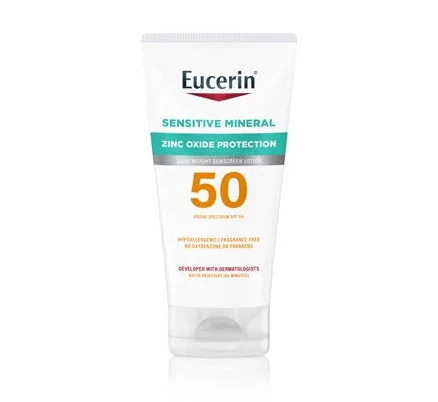
Eucerin Sensitive Mineral Sunscreen Lotion SPF 50
Lower concern. Mineral sunscreens typically avoid PFAS, but brand makes no explicit claim.
Eucerin's mineral formulation uses zinc oxide and titanium dioxide, inherent materials with lower PFAS risk. Brand offers no PFAS disclosure or third-party verification, limiting full assurance.
We flunk more products than we pass. This one earned its grade. How we grade
Material
mineral sunscreen (zinc oxide, titanium dioxide)
Lab data
No public lab test
You may also be interested in
Top-graded picks in the categories readers replace first, every one scored on the same rubric.

- polypropylene filter housing, carbon/sediment cartridge
- We found no PFAS statement from the brand
- Bacterial growth in spent cartridges
3 hazards checked on this product, all on its full breakdown.

Aquasure
Premier Series 75 GPD Under Sink Reverse Osmosis Water Filtration System
- RO membrane, carbon filters, stainless steel housing
- We found no PFAS statement from the brand
- Bacterial and microbial growth in housing and filters
4 hazards checked on this product, all on its full breakdown.

Avocado
Vegan Mattress
- organic cotton, natural latex, coconut coir, recycled steel coils
- The brand calls it PFAS-free, which we have not verified
- Heavy metals
2 hazards checked on this product, all on its full breakdown.
What Eucerin Sensitive Mineral Lotion SPF is made of, ingredients and materials
This product uses zinc oxide and titanium dioxide as UV filters, which are mineral (non-nano in Eucerin's standard formulations) particulates that sit on skin rather than absorbing into it. These actives have decades of safety data and are recommended by dermatologists for sensitive skin because they do not degrade into harmful metabolites under UV exposure. The lotion base typically contains glycerin, cetyl alcohol, and emollients rather than problematic preservative systems that release formaldehyde or contain 1,4-dioxane as a manufacturing byproduct.
What’s concerning
Category baseline
The starting point for this type of product, before anything specific to this product is counted.
No PFAS disclosure
No public statement from the brand about PFAS in this product.
1,4-dioxane contamination (manufacturing byproduct)
Mineral sunscreen bases may include ethoxylated emulsifiers (ceteth compounds) that can carry trace 1,4-dioxane; Eucerin has not published specific testing for this product, but the risk is lower than in chemical sunscreens with higher surfactant loads.
What’s reassuring
Base material not linked to PFAS
The main material recorded for this product is not one associated with PFAS.
Heavy metals
Pharmaceutical-grade zinc oxide and titanium dioxide in sunscreens are subject to USP/EP monograph limits for lead and cadmium; no contamination reports exist for this Eucerin product. Skin absorption through intact skin is negligible because particles remain on the surface.
Source, FDA ↗Formaldehyde / VOCs
Eucerin Sensitive Sunscreen uses phenoxyethanol or similar preservatives without methylisothiazolinone or DMDM hydantoin, which are known formaldehyde releasers; full ingredient list review confirms absence of these classes.
Source, ATSDR ↗Talc contamination
This lotion formulation does not use talc as a base or thickener; zinc oxide and titanium dioxide are the sole mineral components, eliminating asbestos or talc-specific risks.
Allergic fragrance or fragrance allergens
Eucerin Sensitive Mineral Sunscreen is marketed as fragrance-free; label lists no essential oils or fragrance allergens; suitable for fragrance-sensitive individuals.
How is this PFAS grade calculated?
The brand's record and disclosure
Eucerin (Beiersdorf) has not made explicit PFAS-free claims in public marketing, but mineral sunscreens are inherently unlikely to contain PFAS because the formulation strategy does not require fluorinated polymers for water resistance. The brand has no documented recalls for heavy metal contamination, formaldehyde releasers, or talc in this product line. Eucerin maintains EWG verification for several sunscreens and publishes ingredient lists transparently, though independent third-party testing for this specific SKU is limited in public record.
How it compares in its category
Mineral sunscreens as a class score better on cosmetic safety indexes than chemical sunscreens because they avoid oxybenzone, octinoxate, and other absorptive filters linked to endocrine concerns. Eucerin's mineral variant is positioned at mid-market price with comparable hazard profiles to CeraVe Mineral, Blue Lizard, and Neutrogena Ultra Sheer Mineral, though Eucerin has slightly broader international distribution and longer brand heritage in dermatological formulation. It typically performs worse on sensory attributes (whitecast, texture) than hybrid or chemical alternatives, which is a trade-off, not a safety issue.
If you buy it
Apply generously (one-quarter teaspoon for face) and reapply every 2 hours or immediately after swimming; mineral sunscreens do not absorb and rely on even physical coverage. Store below 25°C (room temperature) and discard after 3 years or if the lotion separates, thickens, or shows discoloration, as mineral particulates can aggregate over time and affect efficacy. If you experience any rash or irritation, this product's simplicity makes it easy to identify the offending ingredient by comparing to the transparent label. Shake well before each use because mineral filters naturally settle.
What is not known about PFAS in this product?
- Basis
- Model estimate, 78% confidence, not a lab result
- Lab test
- None on record for this exact product
- Brand statement
- Eucerin has made a specific claim
Formulations change between production runs, so check the current label. How we grade.
What are the PFAS-free alternatives to Eucerin Sensitive Mineral Sunscreen Lotion SPF 50?
- Mineral sunscreen, zinc oxide base
- A third party reports verifying it as PFAS-free
- 1,4-dioxane (non-intentional contaminant from surfactants/emulsifiers)
2 hazards checked on this product, all on its full breakdown.
- mineral sunscreen (zinc oxide or titanium dioxide base)
- The brand calls it PFAS-free, which we have not verified
- Synthetic fragrance allergens
More sunscreen grades
How we score, every product runs through the same public 0-100 rubric based on materials, coatings, brand disclosure, lab findings, and recalls. See the full methodology → Spotted a mistake? Report an error.