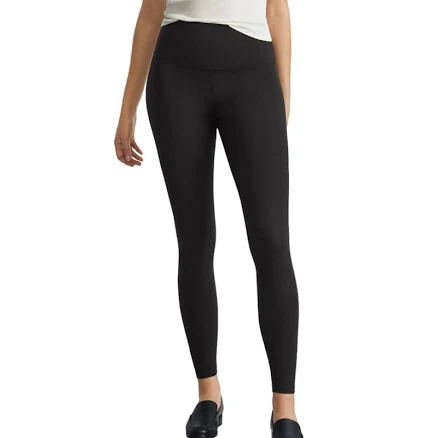
Everlane Renew The Perform Legging Ankle Length Leggings Solid Black
Lower concern. Uncoated stretch knit with no water-repellent coating or treatment disclosed.
Everlane's Renew leggings use nylon and spandex without disclosed water-resistant or stain-resistant coatings. No PFAS claim made; material itself poses lower PFAS risk than treated activewear.
Still want this one anyway? Check the price on Amazon. We’d swap it.
Material
nylon/spandex blend, no specified coating
Brand disclosure
Brand is silent on PFAS
Lab data
No public lab test
You may also be interested in
Top-graded picks in the categories readers replace first, every one scored on the same rubric.

- polypropylene filter housing, carbon/sediment cartridge
- We found no PFAS statement from the brand
- Bacterial growth in spent cartridges
3 hazards checked on this product, all on its full breakdown.

Aquasure
Premier Series 75 GPD Under Sink Reverse Osmosis Water Filtration System
- RO membrane, carbon filters, stainless steel housing
- We found no PFAS statement from the brand
- Bacterial and microbial growth in housing and filters
4 hazards checked on this product, all on its full breakdown.

Avocado
Vegan Mattress
- organic cotton, natural latex, coconut coir, recycled steel coils
- The brand calls it PFAS-free, which we have not verified
- Heavy metals
2 hazards checked on this product, all on its full breakdown.
What Everlane Renew The Perform Solid Black is made of, ingredients and materials
This legging is a nylon-spandex (elastane) blend, a common performance-wear construction chosen for stretch, durability, and moisture management. Nylon itself is a synthetic polymer with low inherent toxicity, but the yarn dyes and any finishing agents applied during manufacture are the primary chemical exposure points. The spandex component provides elasticity but is often dyed with azo dyes during production, which can release aromatic amines if poorly manufactured. No water-repellent (water-repellent coating) coating is disclosed, which eliminates one major source of PFAS in activewear.
What’s concerning
Category baseline
The starting point for this type of product, before anything specific to this product is counted.
No PFAS disclosure
No public statement from the brand about PFAS in this product.
Azo dyes and aromatic amine leaching
Nylon and spandex are typically dyed with azo dyes during manufacturing. While restricted azo dyes are banned in EU and many US supply chains, disclosure for this specific product is absent. Risk is low if dyes meet legal standards, but migration during washing or perspiration cannot be ruled out without testing.
Spandex degradation and chemical release
Spandex breaks down over time when exposed to heat, UV, sweat, and chlorine. Degradation can release oligomers and residual monomers (dimethyl formamide, for example) used in spandex synthesis. This is a long-term concern for frequently washed or sun-exposed garments, not an immediate hazard.
Residual dye and finish volatiles (off-gassing)
New textiles commonly emit volatile organic compounds from dyes, finishes, and packaging. Off-gassing is usually minimal after one wash and ventilation but can be more pronounced in sealed packaging or warm storage. Washing before first wear significantly reduces this.
What’s reassuring
Base material not linked to PFAS
The main material recorded for this product is not one associated with PFAS.
Formaldehyde / VOCs
No wrinkle-resist or durable-press finish is disclosed for this legging. Standard nylon-spandex knits do not require formaldehyde treatment, so risk is minimal unless proprietary finishes were applied without disclosure.
Source, ATSDR ↗Antimony in polyester
This product is nylon-spandex, not polyester, so antimony catalyst residues are not a concern. Antimony is relevant only to polyester-based activewear.
How is this PFAS grade calculated?
The brand's record and disclosure
Everlane markets itself as a transparency-focused brand, but detailed chemical disclosure for individual garments remains limited; the brand has not published comprehensive restricted-substance lists or third-party certifications (OEKO-TEX, GOTS) for this line. The Renew collection emphasizes recycled content in some items, but chemical safety certifications are not uniformly applied across the range. Everlane has faced criticism for vague sustainability claims, though no major chemical recalls or safety violations have been widely documented for this product line. The silent PFAS stance reflects broader industry practice rather than a red flag specific to Everlane.
How it compares in its category
Performance leggings in this price range typically use nylon-spandex blends; Everlane's offering is unremarkable chemically and lacks certifications that premium competitors (Allbirds, Patagonia) offer. Most mass-market activewear at this tier does not disclose dye or finish specifications, making this product typical rather than exceptional. Absence of a water-repellent coating is actually favorable compared to competing leggings marketed for water resistance, which often contain PFAS. For uncoated stretch knit, chemical hazard profile is relatively standard and lower than treated or coated performance wear.
If you buy it
Wash in cool water with mild detergent before first wear to reduce any residual dye or finish chemicals; this is standard practice for all new textiles. Avoid high heat (tumble dry on low or air dry) to prevent spandex degradation and reduce any off-gassing. Replace when elastic loses recovery or seams fray, typically after 1-2 years of regular wear depending on frequency. Store in a cool, dry place; spandex degrades faster in heat and direct sunlight, which can also accelerate any residual chemical volatilization.
What is not known about PFAS in this product?
- Basis
- Model estimate, 72% confidence, not a lab result
- Lab test
- None on record for this exact product
- Brand statement
- Everlane has made none
Formulations change between production runs, so check the current label. How we grade.
More activewear grades
How we score, every product runs through the same public 0-100 rubric based on materials, coatings, brand disclosure, lab findings, and recalls. See the full methodology → Spotted a mistake? Report an error.