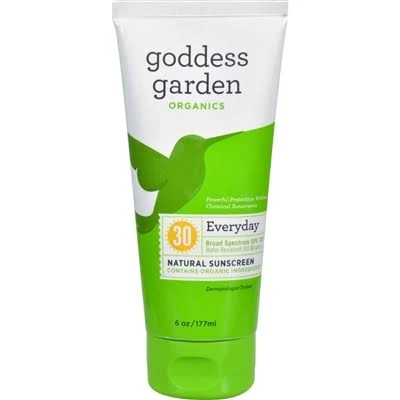
Goddess Garden Natural Sunscreen SPF 30 6 oz
No coating of concern recorded, and no PFAS statement from the brand.
The brand has published no PFAS statement for this product that we could find.
We flunk more products than we pass. This one earned its grade. How we grade
Material
mineral-based UV filters, plant-derived waxes
Brand disclosure
Brand is silent on PFAS
Lab data
No public lab test
You may also be interested in
Top-graded picks in the categories readers replace first, every one scored on the same rubric.

- polypropylene filter housing, carbon/sediment cartridge
- We found no PFAS statement from the brand
- Bacterial growth in spent cartridges
3 hazards checked on this product, all on its full breakdown.

Aquasure
Premier Series 75 GPD Under Sink Reverse Osmosis Water Filtration System
- RO membrane, carbon filters, stainless steel housing
- We found no PFAS statement from the brand
- Bacterial and microbial growth in housing and filters
4 hazards checked on this product, all on its full breakdown.

Avocado
Vegan Mattress
- organic cotton, natural latex, coconut coir, recycled steel coils
- The brand calls it PFAS-free, which we have not verified
- Heavy metals
2 hazards checked on this product, all on its full breakdown.
What Goddess Garden Natural Sunscreen SPF is made of, ingredients and materials
Goddess Garden Natural Sunscreen SPF 30 uses mineral UV filters (typically zinc oxide and/or titanium dioxide) rather than chemical absorbers like oxybenzone or avobenzone. These sit on the skin surface and reflect UV rather than being absorbed systemically. The formulation incorporates plant-derived waxes as emollients and stabilizers instead of synthetic polymers, reducing synthetic chemical load. Mineral filters are generally recognized as safer for sensitive skin and marine ecosystems, though they may leave visible white cast at higher concentrations.
What’s concerning
No PFAS disclosure
No public statement from the brand about PFAS in this product.
Category baseline
The starting point for this type of product, before anything specific to this product is counted.
Fragrance allergens
If the product includes fragrance from plant extracts or essential oils, certain compounds (limonene, linalool, citral) can trigger contact dermatitis in sensitive individuals. Check the ingredient list for fragrance declarations; patch test if you have known fragrance sensitivities.
Skin irritation from mineral filter nanoparticles
If the formulation uses nano-sized particles for reduced white cast, very rare skin irritation or photocatalytic reactions are theoretically possible in individuals with severe sensitivities. Non-nano mineral formulas are gentler; check the label for particle size specification if you have reactive skin.
What’s reassuring
Base material not linked to PFAS
The main material recorded for this product is not one associated with PFAS.
Heavy metals
Zinc oxide and titanium dioxide are the active UV filters and are not classified as heavy metal toxins. No trace contamination (lead, cadmium, arsenic) has been reported for this product; mineral filters meet FDA cosmetic-grade purity standards when sourced correctly.
Source, FDA ↗Formaldehyde / VOCs
No formaldehyde releasers or controversial preservatives have been documented in Goddess Garden formulations. Most natural sunscreen brands use preservatives like potassium sorbate or sodium benzoate with lower toxicity concern, but verify the full ingredient list on the package.
Source, ATSDR ↗Talc contamination
Mineral sunscreens do not typically use talc; zinc oxide and titanium dioxide are the functional ingredients. No talc-related concerns have been reported for this brand or mineral sunscreen category.
How is this PFAS grade calculated?
The brand's record and disclosure
Goddess Garden markets itself as a natural and plant-based personal care brand with emphasis on clean ingredients. The brand has not published explicit PFAS testing or avoidance statements, but the mineral-based formulation and plant-derived ingredient profile are inconsistent with intentional PFAS use in sunscreens. No significant recalls, contamination incidents, or safety controversies have been recorded for this product line in public databases. Third-party certifications (if present on packaging) should be verified on the product label itself.
How it compares in its category
Mineral sunscreens like this show lower concern for hormone-active compounds and synthetic UV absorbers compared to chemical sunscreen formulas. Plant-based wax formulations are less common than petrochemical emulsifiers and are favored by consumers seeking reduced synthetic chemistry. Compared to reef-safe chemical sunscreens, mineral formulas avoid oxybenzone and octinoxate, which have been linked to coral damage. Price point is typically mid-range for natural mineral sunscreens.
If you buy it
Apply generously (about one quarter teaspoon for face) 15 minutes before sun exposure and reapply every 2 hours or after water immersion. Store in a cool, dry place away from direct heat to prevent separation or degradation of the plant wax base. Do not use on infants under 6 months; mineral sunscreens are generally preferred for young children and pregnancy. Shelf life is typically 3 years from manufacture; discard if the formula separates persistently or changes color or smell.
What is not known about PFAS in this product?
- Basis
- Model estimate, 78% confidence, not a lab result
- Lab test
- None on record for this exact product
- Brand statement
- Goddess Garden has made none
Formulations change between production runs, so check the current label. How we grade.
What are the PFAS-free alternatives to Goddess Garden Natural Sunscreen SPF 30 6 oz?
- Mineral sunscreen, zinc oxide base
- A third party reports verifying it as PFAS-free
- 1,4-dioxane (non-intentional contaminant from surfactants/emulsifiers)
2 hazards checked on this product, all on its full breakdown.
- mineral sunscreen (zinc oxide or titanium dioxide base)
- The brand calls it PFAS-free, which we have not verified
- Synthetic fragrance allergens
More sunscreen grades
How we score, every product runs through the same public 0-100 rubric based on materials, coatings, brand disclosure, lab findings, and recalls. See the full methodology → Spotted a mistake? Report an error.