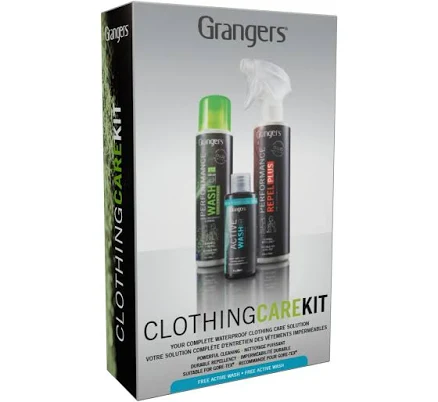
Granger's · Fabric Stain Guard Sprays
Granger's Clothing Care Kit
Wait for better transparency; fabric protectants commonly hold PFAS, and Granger's says nothing.
Granger's Clothing Care Kit waterproofs textiles, the exact job where PFAS-based water-repellent coating coatings dominate the industry. The brand stays silent on PFAS.
Still want this one anyway? Check the price on Amazon. We’d swap it.
Material
Textile care solutions (cleaners, protectants)
Brand disclosure
Brand is silent on PFAS
Lab data
No public lab test
What Granger's Clothing Care Kit is made of, ingredients and materials
Granger's Clothing Care Kit contains fabric protectant sprays designed to repel water and stains from outdoor textiles (jackets, tents, technical fabrics). Water-repellent finishes in this category typically rely on fluorinated compounds (PFAS family) or silicone-based chemistry to achieve durability. The sprays are formulated for synthetic fabrics common in outdoor wear (polyester, nylon), which can absorb and retain chemical residues. Once applied and dried, the product remains on fabric fibers and transfers onto skin or into washwater over repeated use.
What’s concerning
Category baseline
The starting point for this type of product, before anything specific to this product is counted.
No PFAS disclosure
No public statement from the brand about PFAS in this product.
Waterproof / stain-resistant treatment
Water-repellent coating treatments have historically used PFAS.
PFAS
Fabric protectants in this class almost universally contain fluorinated PFAS compounds (C6, C8, or polyfluorinated analogs). Granger's silence on ingredients strongly suggests standard PFAS chemistry; no public commitment to PFAS alternatives has been documented.
Source, ATSDR ↗Volatile organic compounds (VOCs) in spray formulation
Aerosol fabric sprays typically contain solvents (hydrocarbons or alcohols) to deliver the active coating. Inhalation during application or in poorly ventilated spaces may cause respiratory irritation, headache, or dizziness; long-term indoor exposure is not recommended.
Skin irritation and sensitization from residual coatings
Treated fabrics in direct contact with skin may cause irritation, especially in individuals with sensitive skin or eczema. PFAS and silicone residues can accumulate on cloth and are not fully removed by standard washing, prolonging exposure.
What’s reassuring
Azo dyes in treated textiles
The spray itself is a clear or whitish liquid and does not introduce dyes. However, if applied to already-dyed garments with non-compliant azo dyes, no additional hazard is created by the product itself.
Formaldehyde / VOCs
Granger's protectants are water/stain repellents, not wrinkle-resist or crease finishes; formaldehyde-releasing resins are not a typical ingredient in this product category.
Source, ATSDR ↗The full breakdown
The brand's record and disclosure
Granger's has not published transparent ingredient lists or PFAS content disclosures for this product line, despite being a major UK outdoor-care brand. No third-party certifications (such as Bluesign, GOTS, or OEKO-TEX) are documented for this kit. The brand has faced no major public recalls or established safety controversies in widely available sources, but the lack of proactive chemical transparency is a red flag in a product category where PFAS is industry-standard.
How it compares in its category
Fabric protectant sprays are nearly universally formulated with PFAS or similar persistent coatings. Granger's positioning as a premium outdoor-care brand suggests higher build quality than budget alternatives, but offers no competitive advantage in chemical safety. Genuinely PFAS-free options exist (notably from brands using wax-based or plant-derived repellents), though they offer shorter durability. Granger's lack of transparency places it below brands that openly disclose PFAS content and phase-out timelines.
If you buy it
Apply outdoors or in well-ventilated spaces to minimize inhalation of spray particles and solvents. Allow treated garments to air-dry fully before wearing (minimum 2-4 hours). Wash hands thoroughly after application. Treat items only as needed rather than every laundry cycle to limit cumulative chemical burden. Store in a cool, dark place away from heat sources. Consider rotating treated and untreated garments to reduce lifetime skin contact.
What we don’t know
- Basis
- Model estimate, 45% confidence, not a lab result
- Lab test
- None on record for this exact product
- Brand statement
- Granger's has made none
Formulations change between production runs, so check the current label. How we grade.
Better-graded alternatives in Fabric Stain Guard Sprays
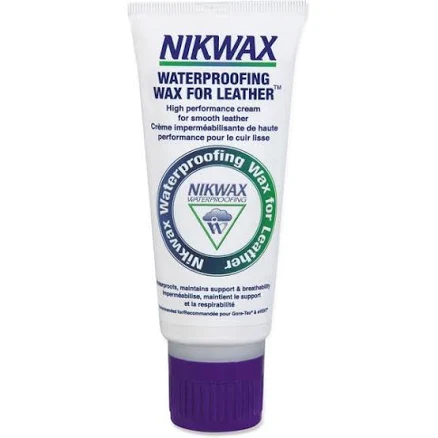
Nikwax
Waterproofing Wax for Leather
- wax-based waterproofing
- The brand calls it PFAS-free, which we have not verified
- Respiratory irritation or fume inhalation during application
2 hazards checked on this product. See all of them.
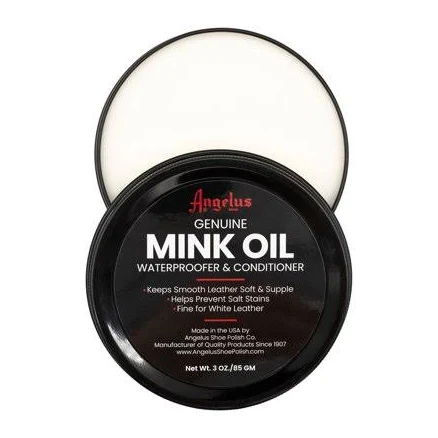
Angelus
Mink Oil Paste Leather Waterproofer and Contitioner 3 oz
- mink oil paste, natural oil-based conditioner
- We found no PFAS statement from the brand
- Microbial growth (natural oil rancidity)
2 hazards checked on this product. See all of them.
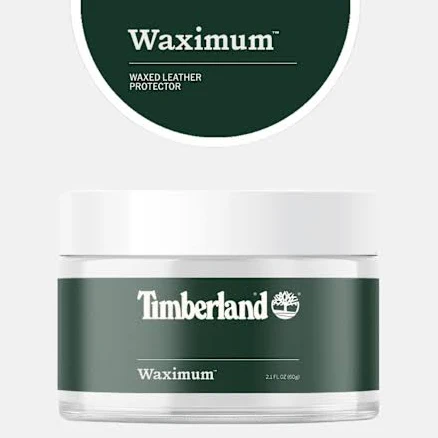
Timberland
Waximum Waxed Leather Protector
- Wax-based leather protector
- We found no PFAS statement from the brand
- Volatile organic compounds (VOCs) from solvents
3 hazards checked on this product. See all of them.
More fabric stain guard sprays grades
How we score, every product runs through the same public 0-100 rubric based on materials, coatings, brand disclosure, lab findings, and recalls. See the full methodology → Spotted a mistake? Report an error.