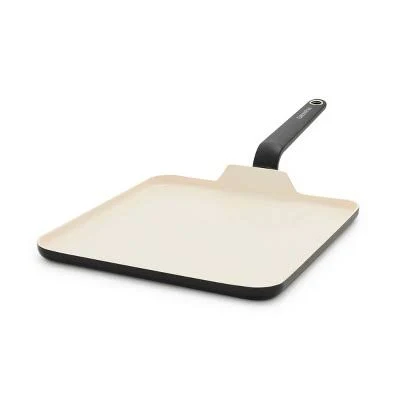
GreenPan Rio Advanced Ceramic Nonstick Griddle, Is It Non-Toxic?
Named ceramic non-stick coating, with a brand PFAS statement we have not verified.
GreenPan says its Thermolon coated food contact surface is free of PFAS, including Teflon-type coating and PFOA. We record that as an unverified brand claim.
Brand says: “GreenPan says its Thermolon coated food contact surface is free of PFAS, including PTFE and PFOA.”
We flunk more products than we pass. This one earned its grade. How we grade
Material
Ceramic-based nonstick coating
Brand disclosure
Brand claims PFAS-free
Lab data
No public lab test
You may also be interested in
Top-graded picks in the categories readers replace first, every one scored on the same rubric.

- polypropylene filter housing, carbon/sediment cartridge
- We found no PFAS statement from the brand
- Bacterial growth in spent cartridges
3 hazards checked on this product, all on its full breakdown.

Aquasure
Premier Series 75 GPD Under Sink Reverse Osmosis Water Filtration System
- RO membrane, carbon filters, stainless steel housing
- We found no PFAS statement from the brand
- Bacterial and microbial growth in housing and filters
4 hazards checked on this product, all on its full breakdown.

Avocado
Vegan Mattress
- organic cotton, natural latex, coconut coir, recycled steel coils
- The brand calls it PFAS-free, which we have not verified
- Heavy metals
2 hazards checked on this product, all on its full breakdown.
Is GreenPan Rio Advanced Nonstick Griddle non-toxic? What it is made of
GreenPan Rio uses a ceramic-based nonstick coating applied to typically aluminum or steel cookware base. Ceramic coatings are inorganic mineral layers that bond to the substrate without traditional Teflon-family coating chemistry, making them inherently free of Teflon-type coating and related compounds. The durability and safety of ceramic coatings depend heavily on manufacturing quality and user care, as they can chip or degrade if scratched or exposed to rapid temperature swings.
What’s concerning
Disclosed non-fluorinated coating
Coating is named and the brand states it is made without PFAS.
Category baseline
The starting point for this type of product, before anything specific to this product is counted.
Coating degradation and substrate exposure
Ceramic coatings are less durable than Teflon-type coating and can chip, scratch, or peel with normal wear. Once compromised, the underlying aluminum or steel base may come into contact with food; aluminum can leach in acidic foods (tomatoes, vinegar, citrus) if the ceramic barrier is breached.
Aluminum leaching
If the griddle base is aluminum (common for this category), intact ceramic coating provides a barrier. However, manufacturing defects, damage during shipping, or coating failure can expose aluminum to food. Risk increases with acidic cooking and storage.
Manufacturing consistency and third-party verification
GreenPan makes PFAS-free claims but does not routinely publish independent lab testing results for this product. Consumer reports and reviews generally indicate good performance early in life, but long-term durability and consistency across production batches are not independently audited in widely accessible sources.
What’s reassuring
Brand-stated PFAS-free
The brand states this product is PFAS-free. We have not verified the claim.
Teflon-type coating/fume risk
Ceramic coatings do not contain Teflon-type coating and do not release Teflon-type coating fumes at normal cooking temperatures. Overheating any nonstick pan can degrade the coating, but ceramic does not have the specific thermal signature of traditional Teflon decomposition.
Lead
No public recalls or testing reports have identified lead or cadmium in GreenPan Rio ceramic coatings. Ceramic coatings used in consumer cookware are generally manufactured to avoid heavy metal content, though independent verification is limited for this specific product.
Source, ATSDR ↗How is this PFAS grade calculated?
The brand's record and disclosure
GreenPan has made public commitments to avoiding PFAS chemicals in their nonstick coatings and markets this as a key differentiator. The brand does not appear to have major documented recalls or safety controversies related to this product line. However, the specific ceramic formulation and any metal content in the base are not independently verified in widely available public sources; GreenPan's claims rest on the company's own testing and statements.
How it compares in its category
Ceramic nonstick griddles occupy a middle ground, they avoid traditional Teflon-type coating concerns but generally have shorter nonstick life than well-maintained Teflon-type coating pans. They perform comparably to other ceramic-coated brands (Our Place, Caraway, GreenLife) in durability reports. Aluminum-based ceramic pans carry a small theoretical risk of aluminum leaching under acidic conditions, though the ceramic barrier reduces direct contact.
If you buy it
Keep heat at medium or below to preserve the ceramic layer and avoid fume risk; rapid heating can shorten coating life. Use silicone or wooden utensils only to prevent scratching and chipping. Replace the griddle if the coating shows visible wear, peeling, or bare spots, as exposed substrate may leach metals. Hand-wash when possible; dishwasher exposure accelerates wear over time.
What is not known about PFAS in this product?
- Basis
- Model estimate, 72% confidence, not a lab result
- Lab test
- None on record for this exact product
- Brand statement
- GreenPan has made a specific claim
Formulations change between production runs, so check the current label. How we grade.
More griddle pans grades
How we score, every product runs through the same public 0-100 rubric based on materials, coatings, brand disclosure, lab findings, and recalls. See the full methodology → Spotted a mistake? Report an error.