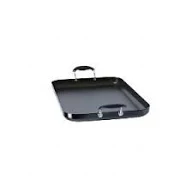
T-fal Double Burner Griddle Pan, Is It Non-Toxic?
Avoid if PFAS exposure concerns you; standard Teflon-type coating nonstick carries PFAS risk.
This griddle features conventional Teflon-type coating nonstick coating, a Teflon-family coating that contains or releases PFAS, with no brand testing data or safer-alternative certification. Cast iron, stainless steel, or ceramic cookware minimize PFAS exposure more effectively.
The better-graded swap
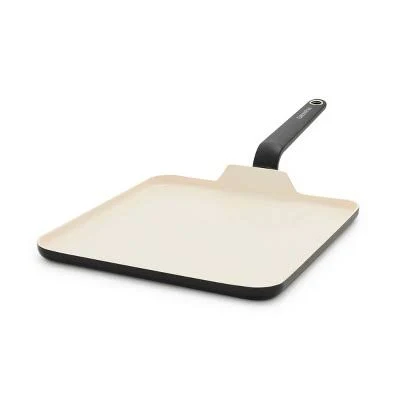
GreenPan
GreenPan Rio Advanced Ceramic Nonstick Griddle
70/100 safety
Same rubric that flunked this product. The swap earned Good.
Still want this one anyway? Check the price on Amazon. We’d swap it.
Material
Teflon-type coating nonstick coating (Teflon-family coating)
Lab data
No public lab test
You may also be interested in
Top-graded picks in the categories readers replace first, every one scored on the same rubric.

- polypropylene filter housing, carbon/sediment cartridge
- We found no PFAS statement from the brand
- Bacterial growth in spent cartridges
3 hazards checked on this product, all on its full breakdown.

Aquasure
Premier Series 75 GPD Under Sink Reverse Osmosis Water Filtration System
- RO membrane, carbon filters, stainless steel housing
- We found no PFAS statement from the brand
- Bacterial and microbial growth in housing and filters
4 hazards checked on this product, all on its full breakdown.

Avocado
Vegan Mattress
- organic cotton, natural latex, coconut coir, recycled steel coils
- The brand calls it PFAS-free, which we have not verified
- Heavy metals
2 hazards checked on this product, all on its full breakdown.
Is T-fal Double Burner Griddle Pan non-toxic? What it is made of
This griddle uses Teflon-type coating (polytetrafluoroethylene), a Teflon-family coating nonstick coating bonded to what is typically aluminum or steel base. Teflon-type coating itself is stable at normal cooking temperatures but degrades at high heat, releasing fluorinated compounds. The double-burner design means larger surface area and longer heating time, increasing thermal stress on the coating. Durability of the nonstick layer depends critically on manufacturing quality and user maintenance.
What’s concerning
Category baseline
The starting point for this type of product, before anything specific to this product is counted.
No PFAS disclosure
No public statement from the brand about PFAS in this product.
PTFE / Teflon confirmed
Uses Teflon-type coating (Teflon), a Teflon-family coating in the PFAS family.
Teflon-type coating thermal degradation and fume release
Teflon-type coating is stable at normal cooking temperatures but can release volatile fluorinated compounds above 500 degrees Fahrenheit. Double-burner griddles are often used for higher-heat cooking (pancakes, searing); user behavior increases risk if temperature not monitored.
Coating degradation and particle ingestion
Teflon-type coating coatings degrade over time with use, especially if scratched or scoured. Flaked or peeling nonstick can be ingested; no long-term toxicity data exists for Teflon-type coating particle consumption, but visible damage warrants replacement.
Aluminum leaching from base
If base is aluminum and coating degrades or has pinholes, acidic or salt-heavy foods may cause minor leaching. T-fal does not specify base material publicly; risk is low at typical dietary aluminum intake but increases with coating loss.
PFAS
Teflon-type coating production historically involves PFOA and other long-chain PFAS as processing aids. Residual PFAS in cookware coatings has been documented in independent testing; T-fal's lack of disclosure makes residue levels unknowable for this product.
Source, ATSDR ↗What’s reassuring
Handle and housing material unknowns
T-fal does not detail handle material or any secondary coatings; typical cookware uses phenolic or silicone handles and painted steel housings, which are low-risk if not subjected to high heat or mechanical damage.
How is this PFAS grade calculated?
The brand's record and disclosure
T-fal (Groupe SEB) does not publicly disclose PFAS content, alternatives considered, or phaseout timelines for cookware products. The brand has no high-profile certifications (e.g., PFOA-free labeling) or third-party safety audits on record for this category. T-fal markets cookware without disclosing Teflon-family coating sourcing or manufacturing controls. This silence is common among major cookware makers but leaves consumers without independent verification.
How it compares in its category
Teflon-type coating griddles are standard mass-market offerings; T-fal's double-burner is competitively priced but not differentiated by safety features. Ceramic-coated and cast-iron alternatives avoid Teflon-type coating entirely but trade ease-of-use and require different maintenance. Stainless steel griddles eliminate Teflon-family coating risk but perform worse for nonstick function. If Teflon-type coating exposure is a concern, this product offers no advantage over other Teflon-type coating cookware.
If you buy it
Keep heat below medium-high; Teflon-type coating breaks down faster above 500 degrees Fahrenheit. Inspect coating monthly for chips, scratches, or peeling; discard if damage is visible. Hand-wash with soft sponges; avoid abrasive scouring and metal utensils. Replace every 3-5 years or sooner if coating degrades, as flaked Teflon-type coating particles may be ingested. Never preheat empty for more than a minute or two.
What is not known about PFAS in this product?
- Basis
- Model estimate, 78% confidence, not a lab result
- Lab test
- None on record for this exact product
- Brand statement
- T-fal has made a specific claim
Formulations change between production runs, so check the current label. How we grade.
What are the PFAS-free alternatives to T-fal Double Burner Griddle Pan?
- Ceramic-based nonstick coating
- The brand calls it PFAS-free, which we have not verified
- Coating degradation and substrate exposure
3 hazards checked on this product, all on its full breakdown.
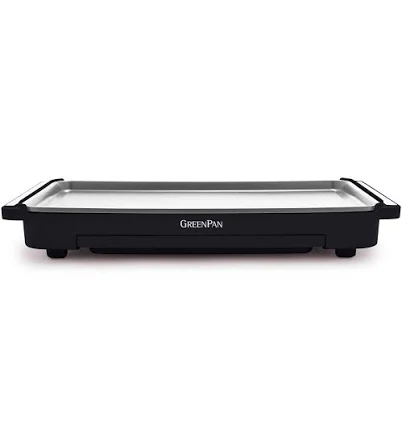
- Non-stick coating (type unspecified)
- The brand calls it PFAS-free, which we have not verified
- Non-stick coating degradation and leaching
4 hazards checked on this product, all on its full breakdown.
Find an alternative on Amazon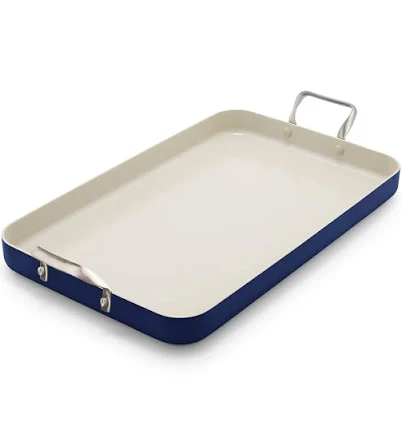
- Nonstick coating (composition not disclosed)
- The brand calls it PFAS-free, which we have not verified
- Nonstick coating composition (unknown chemistry)
4 hazards checked on this product, all on its full breakdown.
Find an alternative on AmazonMore griddle pans grades
How we score, every product runs through the same public 0-100 rubric based on materials, coatings, brand disclosure, lab findings, and recalls. See the full methodology → Spotted a mistake? Report an error.