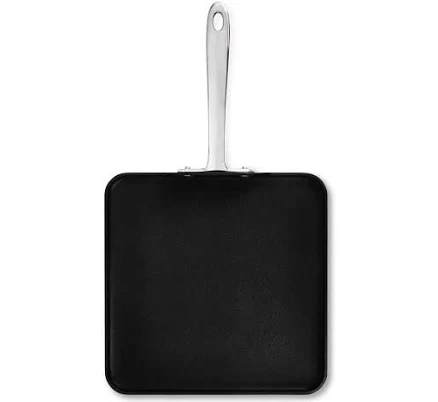
NS Pro Nonstick Cookware Square Griddle, Is It Non-Toxic?
Teflon-type coating nonstick coating on this griddle is a Teflon-family coating in the PFAS family.
The NS Pro griddle has a Teflon-type coating-based nonstick coating, a Teflon-family coating material. All-Clad has no PFAS statement on record for this product.
The better-graded swap
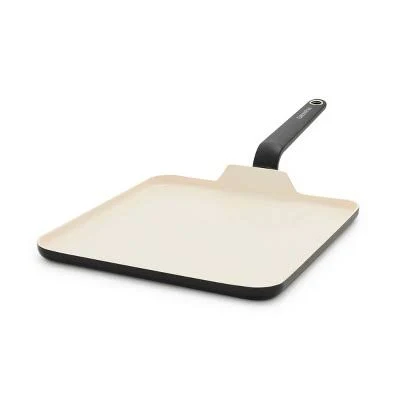
GreenPan
GreenPan Rio Advanced Ceramic Nonstick Griddle
70/100 safety
Same rubric that flunked this product. The swap earned Good.
Still want this one anyway? Check the price on Amazon. We’d swap it.
Material
Teflon-type coating-based nonstick coating (Teflon-family coating)
Lab data
No public lab test
You may also be interested in
Top-graded picks in the categories readers replace first, every one scored on the same rubric.

- polypropylene filter housing, carbon/sediment cartridge
- We found no PFAS statement from the brand
- Bacterial growth in spent cartridges
3 hazards checked on this product, all on its full breakdown.

Aquasure
Premier Series 75 GPD Under Sink Reverse Osmosis Water Filtration System
- RO membrane, carbon filters, stainless steel housing
- We found no PFAS statement from the brand
- Bacterial and microbial growth in housing and filters
4 hazards checked on this product, all on its full breakdown.

Avocado
Vegan Mattress
- organic cotton, natural latex, coconut coir, recycled steel coils
- The brand calls it PFAS-free, which we have not verified
- Heavy metals
2 hazards checked on this product, all on its full breakdown.
Is NS Pro Nonstick Cookware Square Griddle non-toxic? What it is made of
The NS Pro griddle uses a Teflon-type coating-based Teflon-family coating nonstick coating bonded to an aluminum or steel substrate. Teflon-type coating (polytetrafluoroethylene, also known as Teflon) is stable at normal cooking temperatures but can decompose when exposed to high heat, releasing fluorine-containing fumes. All-Clad's specific formulation details are not publicly disclosed, so the exact thermal stability profile and any additives remain unknown. This opacity matters because older Teflon-type coating coatings and some modern variants carry higher risks of fume release.
What’s concerning
Category baseline
The starting point for this type of product, before anything specific to this product is counted.
No PFAS disclosure
No public statement from the brand about PFAS in this product.
PTFE / Teflon confirmed
Uses Teflon-type coating (Teflon), a Teflon-family coating in the PFAS family.
Teflon-type coating thermal decomposition and fume release
Teflon-type coating-coated cookware is documented to release fluorine-containing fumes (including carbonyl fluoride) above 500°F. While acute polymer fume fever is rare in home kitchens, it can occur with careless overheating or preheating on high. All-Clad does not provide thermal limits or fume-test data for the NS Pro.
Coating degradation and flaking
Teflon-type coating coatings degrade with age, mechanical abrasion (metal utensils, dishwashers), and thermal cycling. Once flaking begins, ingestion of microcoatings and increased fume risk on reheating become concerns. No durability or wear-life data is published for the NS Pro griddle.
Aluminum leaching from substrate
If the aluminum substrate is exposed (through coating damage or at edges), acidic or alkaline foods may promote aluminum leaching. The exact substrate construction and coating adhesion strength for the NS Pro are not disclosed, making risk assessment difficult.
Off-gassing and odor during early use
New Teflon-type coating cookware sometimes releases odors during initial heating, attributed to residual processing chemicals or coating stabilizers. This is typically mild but indicates volatile emissions and should prompt ventilation and lower heat settings until odor ceases.
Lack of independent safety certification
The NS Pro griddle carries no third-party certification (e.g., GREENGUARD) for low-emission or PFAS-free claims. All-Clad's compliance relies on FDA food-contact regulations, which do not mandate PFAS disclosure or thermal-stability testing.
How is this PFAS grade calculated?
The brand's record and disclosure
All-Clad does not publicly disclose PFAS content, coating composition, or testing protocols for its nonstick cookware. The brand has not issued statements about PFOA phase-out timelines or alternative formulations. No major recalls specific to Teflon-type coating fume hazards or coating degradation have been widely documented for this product line, but the absence of disclosure leaves consumers without assurance of safety improvements. All-Clad's silence contrasts with competitors who now market PFOA-free or ceramic alternatives.
How it compares in its category
Traditional Teflon-type coating griddles remain common in the mid-to-premium market but face growing competition from ceramic, anodized aluminum, and stainless steel alternatives. All-Clad's nonstick offering is positioned as a professional-grade product, implying durability, but does not differentiate itself via PFAS or thermal-safety transparency. Competitors like GreenPan and Caraway now emphasize ceramic coatings or coatings not a material linked to Teflon-type coating; All-Clad has not repositioned the NS Pro line toward these alternatives.
If you buy it
Never heat above 500°F; use medium heat for most tasks and always ensure adequate ventilation (range hood on). Replace the griddle immediately if the nonstick coating chips, flakes, or shows visible wear, as damaged Teflon-type coating increases fume risk. Hand-wash only; avoid metal utensils and high-temperature dishwashers, which accelerate coating degradation. Preseason on low heat and monitor it closely during the first few uses for any off-gassing odor, which indicates thermal stress.
What is not known about PFAS in this product?
- Basis
- Model estimate, 75% confidence, not a lab result
- Lab test
- None on record for this exact product
- Brand statement
- All-Clad has made a specific claim
Formulations change between production runs, so check the current label. How we grade.
What are the PFAS-free alternatives to NS Pro Nonstick Cookware Square Griddle?
- Ceramic-based nonstick coating
- The brand calls it PFAS-free, which we have not verified
- Coating degradation and substrate exposure
3 hazards checked on this product, all on its full breakdown.
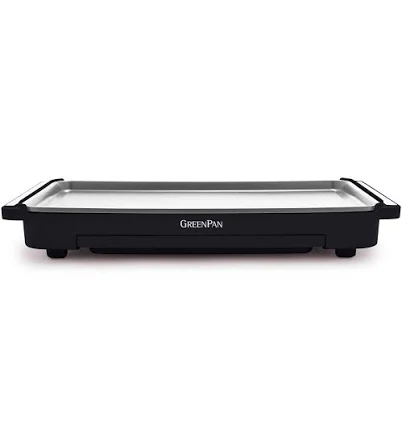
- Non-stick coating (type unspecified)
- The brand calls it PFAS-free, which we have not verified
- Non-stick coating degradation and leaching
4 hazards checked on this product, all on its full breakdown.
Find an alternative on Amazon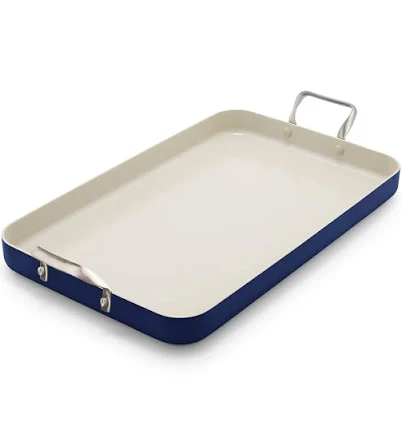
- Nonstick coating (composition not disclosed)
- The brand calls it PFAS-free, which we have not verified
- Nonstick coating composition (unknown chemistry)
4 hazards checked on this product, all on its full breakdown.
Find an alternative on AmazonMore griddle pans grades
How we score, every product runs through the same public 0-100 rubric based on materials, coatings, brand disclosure, lab findings, and recalls. See the full methodology → Spotted a mistake? Report an error.