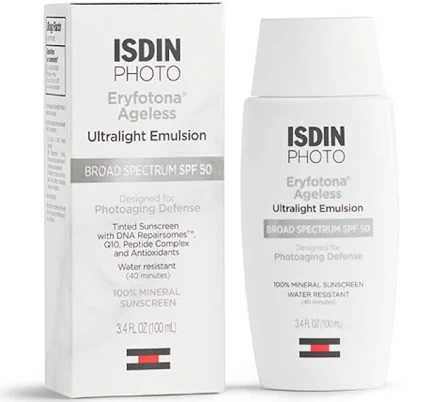
Ageless 3.4 fl oz
Lower concern; standard anti-aging cream shows no known PFAS red flags.
This anti-aging cream uses a typical cosmetic emulsion without waterproofing or stain-resistant treatments that trigger PFAS use. Isdin makes no PFAS claims, and no public lab data exists.
We flunk more products than we pass. This one earned its grade. How we grade
Material
typical cosmetic emulsion/cream base (water, glycerin, oils, emulsifiers)
Brand disclosure
Brand is silent on PFAS
Lab data
No public lab test
You may also be interested in
Top-graded picks in the categories readers replace first, every one scored on the same rubric.

- polypropylene filter housing, carbon/sediment cartridge
- We found no PFAS statement from the brand
- Bacterial growth in spent cartridges
3 hazards checked on this product, all on its full breakdown.

Aquasure
Premier Series 75 GPD Under Sink Reverse Osmosis Water Filtration System
- RO membrane, carbon filters, stainless steel housing
- We found no PFAS statement from the brand
- Bacterial and microbial growth in housing and filters
4 hazards checked on this product, all on its full breakdown.

Avocado
Vegan Mattress
- organic cotton, natural latex, coconut coir, recycled steel coils
- The brand calls it PFAS-free, which we have not verified
- Heavy metals
2 hazards checked on this product, all on its full breakdown.
What Ageless 3.4 fl oz is made of, ingredients and materials
Ageless 3.4 fl oz is a water-in-oil or oil-in-water emulsion typical of anti-aging creams, combining water, glycerin, plant oils, and synthetic emulsifiers to stabilize the formula. This material class avoids high-risk polymers like Teflon-type coating but does rely on preservatives and fragrance compounds common to cosmetics. The cream base itself poses minimal chemical leaching risk under normal storage and use conditions, since it remains topical and is not heated or mechanically stressed like cookware.
What’s concerning
Category baseline
The starting point for this type of product, before anything specific to this product is counted.
No PFAS disclosure
No public statement from the brand about PFAS in this product.
Fragrance allergens and undisclosed fragrance chemicals
Anti-aging creams routinely include fragrance compounds; Isdin does not publicly disclose fragrance sourcing or specific allergens. While no recall exists, fragrance is a common irritant in cosmetics and may trigger contact dermatitis or respiratory sensitivity in susceptible users.
Parabens
Emulsion-based creams require preservatives to prevent bacterial and fungal growth; common preservatives in this class can cause contact sensitization in a minority of users. No specific formulation data for Ageless is publicly available, so individual sensitivity risk cannot be ruled out.
Source, FDA ↗Organic UV filter photostability and skin absorption
If Ageless contains chemical sunscreen actives (common in anti-aging sunscreens), some organic UV filters (e.g., oxybenzone, avobenzone) can degrade under UV exposure and may be absorbed systemically in small amounts. The long-term safety of chronic dermal absorption remains under study but is not considered a high acute risk at labelled use rates.
Emulsion separation and microbial growth if stored improperly
Cosmetic emulsions can separate if exposed to temperature extremes and may support bacterial or mold growth if preservative efficacy declines; this is a storage and handling risk, not an inherent formulation defect, but users should discard products showing visible separation or odor changes.
What’s reassuring
Base material not linked to PFAS
The main material recorded for this product is not one associated with PFAS.
Heavy metals
No recalls or disclosed heavy metal contamination for Isdin Ageless. If the product contains iron oxides for tint, these are not materials linked to PFAS, though independent testing is not publicly available for this specific formulation.
Source, FDA ↗How is this PFAS grade calculated?
The brand's record and disclosure
Isdin is a Spanish dermatology-focused cosmetics brand with no major recalls or safety controversies on public record for this product line. The company does not publish detailed ingredient sourcing or independent third-party certifications (e.g., EWG, NSF) for Ageless, which limits transparency but does not indicate hidden hazards. No established pattern of formaldehyde releasers, banned azo dyes, or talc contamination has been documented for Isdin sunscreen or anti-aging products.
How it compares in its category
Ageless sits in the mid-to-premium anti-aging cosmetic segment; its emulsion-based chemistry is standard for this category and carries no higher intrinsic risk than drugstore or luxury alternatives. Compared to mineral sunscreens (which avoid organic UV filters), Ageless likely contains chemical UV absorbers and would benefit from confirmation of fragrance allergen content, but no known safety edge or deficit exists versus peer products. It lacks third-party certification common in higher-end clean beauty brands, though this reflects marketing positioning rather than actual safety gaps.
If you buy it
Apply as directed on package and store below 25C (77F) away from direct sunlight to preserve emulsion stability; heat and light can degrade preservative efficacy over 12-18 months of use. Discontinue if signs of separation, odor change, or skin irritation appear. If you have fragrance sensitivity or known reactions to common preservatives (parabens, phenoxyethanol), verify full ingredient list with retailer or manufacturer before purchase, as Isdin does not prominently disclose these on public-facing marketing.
What is not known about PFAS in this product?
- Basis
- Model estimate, 72% confidence, not a lab result
- Lab test
- None on record for this exact product
- Brand statement
- Isdin has made none
Formulations change between production runs, so check the current label. How we grade.
What are the PFAS-free alternatives to Ageless 3.4 fl oz?
- Mineral sunscreen, zinc oxide base
- A third party reports verifying it as PFAS-free
- 1,4-dioxane (non-intentional contaminant from surfactants/emulsifiers)
2 hazards checked on this product, all on its full breakdown.
- mineral sunscreen (zinc oxide or titanium dioxide base)
- The brand calls it PFAS-free, which we have not verified
- Synthetic fragrance allergens
More sunscreen grades
How we score, every product runs through the same public 0-100 rubric based on materials, coatings, brand disclosure, lab findings, and recalls. See the full methodology → Spotted a mistake? Report an error.