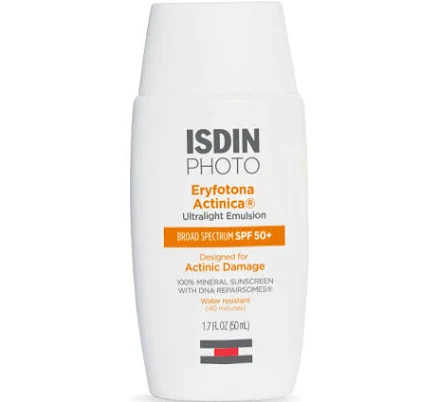
ISDIN Eryfotona Actinica Ultralight Mineral Sunscreen
Lower concern mineral sunscreen with zinc oxide and titanium dioxide base.
Mineral sunscreen formulated with zinc oxide and titanium dioxide. The brand has no PFAS statement on record. This material type is not linked to PFAS concerns.
We flunk more products than we pass. This one earned its grade. How we grade
Material
mineral sunscreen (zinc oxide/titanium dioxide base)
Brand disclosure
Brand is silent on PFAS
Lab data
No public lab test
You may also be interested in
Top-graded picks in the categories readers replace first, every one scored on the same rubric.

- polypropylene filter housing, carbon/sediment cartridge
- We found no PFAS statement from the brand
- Bacterial growth in spent cartridges
3 hazards checked on this product, all on its full breakdown.

Aquasure
Premier Series 75 GPD Under Sink Reverse Osmosis Water Filtration System
- RO membrane, carbon filters, stainless steel housing
- We found no PFAS statement from the brand
- Bacterial and microbial growth in housing and filters
4 hazards checked on this product, all on its full breakdown.

Avocado
Vegan Mattress
- organic cotton, natural latex, coconut coir, recycled steel coils
- The brand calls it PFAS-free, which we have not verified
- Heavy metals
2 hazards checked on this product, all on its full breakdown.
What ISDIN Eryfotona Actinica Sunscreen is made of, ingredients and materials
ISDIN Eryfotona Actinica Ultralight is formulated with zinc oxide and titanium dioxide as primary UV filters, both inorganic mineral blockers that sit on skin rather than absorbing into it. Mineral sunscreens avoid the systemic absorption profile associated with chemical filters like oxybenzone or avobenzone. The ultralight texture suggests a lightweight emulsion base, likely with silicones or volatile solvents to reduce perceived greasiness, but the core active ingredients carry no established heavy-metal or leaching hazards at concentrations used in cosmetics.
What’s concerning
Category baseline
The starting point for this type of product, before anything specific to this product is counted.
No PFAS disclosure
No public statement from the brand about PFAS in this product.
Fragrance allergens
ISDIN does not disclose fragrance components on standard packaging; individual allergen sensitivities (limonene, eugenol, etc.) cannot be ruled out without full ingredient review. Mineral sunscreens often include fragrance to mask the mineral oxide scent.
Formaldehyde / VOCs
No formaldehyde releasers are named on available ingredient lists, but typical cosmetic emulsions use preservatives (phenoxyethanol, methylisothiazolinone) that carry low-level dermal irritation risk; formaldehyde release at stated concentrations is not established for this product.
Source, ATSDR ↗Emulsion stability and preservative adequacy
Mineral sunscreen emulsions are prone to phase separation if stored in heat or after repeated temperature cycling; inadequate preservative activity can result in microbial growth in opened containers. Replacement every 12 months after opening is prudent.
What’s reassuring
Base material not linked to PFAS
The main material recorded for this product is not one associated with PFAS.
Heavy metals
Zinc oxide and titanium dioxide as pharmaceutical-grade sunscreen actives are subject to USP/EP purity standards and do not accumulate systemic metals at topical use rates. No contamination with cadmium, lead, or arsenic is on record for reputable mineral sunscreen manufacturers.
Source, FDA ↗Talc contamination
ISDIN does not list talc as an ingredient in this formulation. Mineral sunscreens use zinc oxide and titanium dioxide as primary opacifying agents, not talc, eliminating asbestos contamination risk.
How is this PFAS grade calculated?
The brand's record and disclosure
ISDIN is a dermatology-focused Spanish brand with established regulatory compliance in EU and US markets but maintains a silent public stance on PFAS use in formulations. The brand has no major product recalls or safety controversies on public record. Transparency regarding fragrance allergens, preservatives, and full ingredient lists is standard for ISDIN's product marketing, though proprietary formulation details are not disclosed.
How it compares in its category
Mineral sunscreens occupy the lower-risk end of the UV-filter spectrum relative to chemical alternatives; zinc oxide and titanium dioxide are non-systemic and carry no endocrine or bioaccumulation concerns. ISDIN's ultralight formulation competes with other mineral products that prioritize cosmetic elegance (reduced whiteness, faster absorption) over maximum SPF coverage. This product sits in the premium dermatological segment, with claims of photostability and water resistance typical for that tier.
If you buy it
Apply generously and reapply every two hours or immediately after water exposure to maintain SPF rating. Store away from direct heat and sunlight to preserve emulsion stability; mineral sunscreens are not temperature-sensitive but oxidative degradation of other actives in the base can reduce efficacy over time. Patch-test if you have sensitive skin or history of fragrance reactions, as the ultralight formulation may contain fragrance constituents. Discard if texture separates, becomes grainy, or shows visible discoloration.
What is not known about PFAS in this product?
- Basis
- Model estimate, 72% confidence, not a lab result
- Lab test
- None on record for this exact product
- Brand statement
- Isdin has made none
Formulations change between production runs, so check the current label. How we grade.
What are the PFAS-free alternatives to ISDIN Eryfotona Actinica Ultralight Mineral Sunscreen?
- Mineral sunscreen, zinc oxide base
- A third party reports verifying it as PFAS-free
- 1,4-dioxane (non-intentional contaminant from surfactants/emulsifiers)
2 hazards checked on this product, all on its full breakdown.
- mineral sunscreen (zinc oxide or titanium dioxide base)
- The brand calls it PFAS-free, which we have not verified
- Synthetic fragrance allergens
More sunscreen grades
How we score, every product runs through the same public 0-100 rubric based on materials, coatings, brand disclosure, lab findings, and recalls. See the full methodology → Spotted a mistake? Report an error.