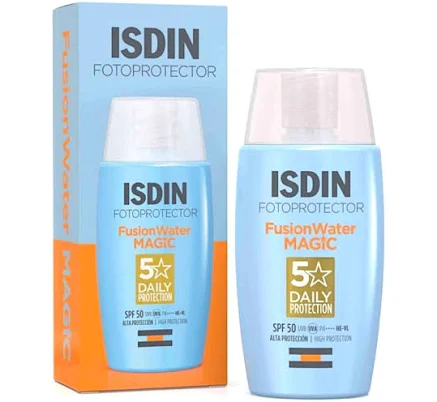
Isdin FotoProtector Fusion Water SPF50+
Sunscreen with no fluorinated ingredient on record, and no PFAS statement from the brand.
Isdin has no PFAS statement on record for this sunscreen. Our record does not include an ingredient-level check, so look for fluorinated ingredients such as Teflon-type coating on the label.
We flunk more products than we pass. This one earned its grade. How we grade
Material
Water-based emulsion, water-resistant sunscreen formula
Brand disclosure
Brand is silent on PFAS
Lab data
No public lab test
You may also be interested in
Top-graded picks in the categories readers replace first, every one scored on the same rubric.

- polypropylene filter housing, carbon/sediment cartridge
- We found no PFAS statement from the brand
- Bacterial growth in spent cartridges
3 hazards checked on this product, all on its full breakdown.

Aquasure
Premier Series 75 GPD Under Sink Reverse Osmosis Water Filtration System
- RO membrane, carbon filters, stainless steel housing
- We found no PFAS statement from the brand
- Bacterial and microbial growth in housing and filters
4 hazards checked on this product, all on its full breakdown.

Avocado
Vegan Mattress
- organic cotton, natural latex, coconut coir, recycled steel coils
- The brand calls it PFAS-free, which we have not verified
- Heavy metals
2 hazards checked on this product, all on its full breakdown.
What Isdin FotoProtector Fusion Water SPF50+ is made of, ingredients and materials
Isdin FotoProtector Fusion Water is a water-based emulsion sunscreen, meaning its active UV filters are suspended in a water and oil blend rather than silicone or heavy cream base. Water-based formulas typically carry lower concentrations of volatile organic compounds (VOCs) and are less likely to harbor volatile coalescent solvents that some oil-based sunscreens use. The 'water-resistant' claim implies the emulsion is engineered to repel water penetration while maintaining UV protection; this is achieved through the emulsion chemistry itself, not a separate surface coating.
What’s concerning
Category baseline
The starting point for this type of product, before anything specific to this product is counted.
No PFAS disclosure
No public statement from the brand about PFAS in this product.
Fragrance allergens
Water-based sunscreens commonly contain fragrance to mask oily or mineral notes. No specific fragrance allergen report is on record for this product, but fragrance is a known sensitizer in cosmetics; individuals with contact dermatitis or fragrance sensitivity should check the full ingredient list or seek unscented alternatives.
Preservative sensitivity
Water-based emulsions require preservatives to prevent bacterial and mold growth; common preservatives (parabens, phenoxyethanol) occasionally trigger contact reactions in sensitive individuals. No specific preservative allergy data is on record for this formula, but history of cosmetic preservative reactions warrants ingredient review before purchase.
Emulsion destabilization and efficacy loss
Water-based emulsions are inherently less stable than oil-only or heavy cream formulas and can separate, stratify, or degrade under heat, freezing, or prolonged storage. Once emulsion structure breaks down, UV filter distribution becomes uneven and sun protection cannot be guaranteed, even if the product appears unchanged. Proper storage and regular inspection are necessary to maintain advertised
What’s reassuring
Base material not linked to PFAS
The main material recorded for this product is not one associated with PFAS.
Heavy metals
Zinc oxide and titanium dioxide (common mineral UV filters) can contain trace heavy metals (lead, cadmium) if sourced from low-grade ore or unrefined. Isdin does not disclose heavy metal testing results for this product; EU cosmetic standards require safety assessment but do not mandate public disclosure of trace contaminants. Risk is low under EU manufacturing oversight but unverified for this sp
Source, FDA ↗1,4-dioxane (process contaminant in emulsifiers)
1,4-dioxane is a trace contaminant sometimes found in cosmetics using ethoxylated emulsifiers or surfactants; it is not an intentional ingredient. Isdin does not publish 1,4-dioxane testing data for this product. Under EU standards, residual solvent limits are enforced, but contamination is not publicly disclosed for individual products; risk is considered low for regulated EU brands but unverifie
How is this PFAS grade calculated?
The brand's record and disclosure
Isdin is a Spanish pharmaceutical-grade skincare brand with established safety certifications (CE marking, dermatological testing) in EU markets. The brand does not publicly disclose PFAS avoidance or use statements, nor is there public record of PFAS-related recalls or warnings for this product. Isdin generally markets products under strict cosmetic regulation standards (EU Cosmetics Regulation 1223/2009), which restricts many hazardous substances but does not mandate PFAS transparency. No major controversies regarding heavy metals, formaldehyde releasers, or microplastics are on record for this product line.
How it compares in its category
Water-based sunscreens occupy a moderate safety tier relative to heavy silicone or mineral oil sunscreens; they tend to have fewer reported skin sensitization events and lower occlusion risk. Fusion Water sits below premium 'clean' branded sunscreens in marketing positioning but above generic budget sunscreens in disclosed testing. Most mass-market water-based SPF50+ sunscreens share similar risk profiles (fragrance allergen potential, occasional preservative sensitivity), so this product is categorically unremarkable in hazard scope.
If you buy it
Apply sunscreen generously (at least 1/4 teaspoon per face application) and reapply every 2 hours or immediately after water exposure, despite the water-resistant label. Store in a cool, dry place away from direct sunlight; do not leave in hot vehicles or exposed to prolonged heat, as emulsion destabilization can affect UV filter efficacy. Discontinue use if rash, burning, or persistent irritation develops; water-based formulas occasionally trigger sensitivity in acne-prone skin. Check expiration date before use; most sunscreens degrade after 3 years or as labeled.
What is not known about PFAS in this product?
- Basis
- Model estimate, 45% confidence, not a lab result
- Lab test
- None on record for this exact product
- Brand statement
- Isdin has made none
Formulations change between production runs, so check the current label. How we grade.
What are the PFAS-free alternatives to Isdin FotoProtector Fusion Water SPF50+?
- Mineral sunscreen, zinc oxide base
- A third party reports verifying it as PFAS-free
- 1,4-dioxane (non-intentional contaminant from surfactants/emulsifiers)
2 hazards checked on this product, all on its full breakdown.
- mineral sunscreen (zinc oxide or titanium dioxide base)
- The brand calls it PFAS-free, which we have not verified
- Synthetic fragrance allergens
More sunscreen grades
How we score, every product runs through the same public 0-100 rubric based on materials, coatings, brand disclosure, lab findings, and recalls. See the full methodology → Spotted a mistake? Report an error.