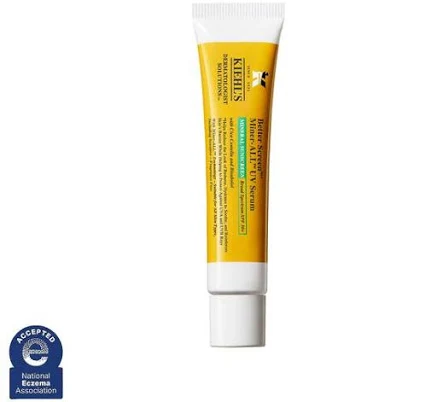
Kiehl's Better Screen Miner-all UV Serum Mineral Sunscreen SPF 50
Lower concern; mineral sunscreen is PFAS-unlikely by formulation.
Mineral sunscreen using zinc oxide and titanium dioxide has no documented PFAS association and needs no fluorinated additives. Kiehl's offers no public testing or PFAS commitment.
We flunk more products than we pass. This one earned its grade. How we grade
Material
mineral sunscreen (zinc oxide, titanium dioxide)
Brand disclosure
Brand is silent on PFAS
Lab data
No public lab test
You may also be interested in
Top-graded picks in the categories readers replace first, every one scored on the same rubric.

- polypropylene filter housing, carbon/sediment cartridge
- We found no PFAS statement from the brand
- Bacterial growth in spent cartridges
3 hazards checked on this product, all on its full breakdown.

Aquasure
Premier Series 75 GPD Under Sink Reverse Osmosis Water Filtration System
- RO membrane, carbon filters, stainless steel housing
- We found no PFAS statement from the brand
- Bacterial and microbial growth in housing and filters
4 hazards checked on this product, all on its full breakdown.

Avocado
Vegan Mattress
- organic cotton, natural latex, coconut coir, recycled steel coils
- The brand calls it PFAS-free, which we have not verified
- Heavy metals
2 hazards checked on this product, all on its full breakdown.
What Kiehl's Better Screen Sunscreen SPF is made of, ingredients and materials
This product uses zinc oxide and titanium dioxide as its active UV filters, both minerals that sit on skin and reflect/scatter UV rather than absorb it chemically. Mineral sunscreens avoid the absorption and systemic circulation concerns of chemical filters like oxybenzone or avobenzone. The serum base is likely a blend of glycerin, silicones, or lightweight oils designed to reduce the typical white cast of mineral sunscreens, but these carrier ingredients carry no established toxicity at cosmetic use levels.
What’s concerning
Category baseline
The starting point for this type of product, before anything specific to this product is counted.
No PFAS disclosure
No public statement from the brand about PFAS in this product.
Fragrance allergens and irritants
Product formulation details do not specify fragrance components on readily available labels. If fragrance is present, common allergens like limonene or linalool could trigger reactions in sensitive users; perform a patch test if prone to fragrance sensitivities.
Nanoparticle size in mineral filters
Modern mineral sunscreens often use micronized or nano-scale zinc oxide and titanium dioxide to improve cosmetic elegance. Regulatory evidence suggests these do not penetrate intact skin; however, use on abraded or compromised skin and inhalation of powder formulations warrant caution. This serum is not a powder, reducing inhalation risk.
What’s reassuring
Base material not linked to PFAS
The main material recorded for this product is not one associated with PFAS.
Heavy metals
Zinc oxide and titanium dioxide are not heavy metals and are approved FDA active ingredients in sunscreen. No reports of lead or cadmium contamination in commercial Kiehl's sunscreen batches.
Source, FDA ↗Formaldehyde / VOCs
Kiehl's typically uses standard cosmetic preservatives; no documented 1,4-dioxane contamination or formaldehyde-releaser use in this product line is on public record. Mineral sunscreens require minimal preservative load due to their physical (non-absorbing) nature.
Source, ATSDR ↗Skin irritation or photosensitivity from mineral filters
Zinc oxide and titanium dioxide are non-irritating and non-photosensitizing at sunscreen concentrations. Serum carriers (silicones, glycerin) are well-tolerated; rare irritation is more likely from texture preference than toxicity.
How is this PFAS grade calculated?
The brand's record and disclosure
Kiehl's (owned by Estee Lauder) does not publicly disclose detailed PFAS-testing data or commit to PFAS phase-out, despite being part of a major beauty conglomerate. The brand has no major product recalls or documented safety breaches in sunscreen formulations on public record. Kiehl's markets this product as dermatologist-tested and notes its mineral formulation, but transparency on raw material sourcing or third-party safety certification is not prominent.
How it compares in its category
Mineral sunscreens are generally considered lower-risk than chemical alternatives because zinc oxide and titanium dioxide do not penetrate skin or enter the bloodstream. This product sits in the mainstream mineral segment alongside brands like La Roche-Posay Anthelios and CeraVe Face Lotion SPF 50. It is more premium-priced and serum-textured compared to budget mineral options, which may reflect formulation refinement but not meaningfully different safety profiles.
If you buy it
Apply generously (about 1/4 teaspoon for face) 15 minutes before sun exposure and reapply every 2 hours or after swimming. Store in a cool, dry place away from direct heat or sunlight to preserve UV filter stability. Mineral sunscreens can feel heavier or whiter than chemical alternatives; this serum texture is designed to mitigate that, but results vary by skin type. Discontinue use if irritation occurs, though zinc oxide and titanium dioxide are non-sensitizing for most users.
What is not known about PFAS in this product?
- Basis
- Model estimate, 72% confidence, not a lab result
- Lab test
- None on record for this exact product
- Brand statement
- Kiehl's has made none
Formulations change between production runs, so check the current label. How we grade.
What are the PFAS-free alternatives to Kiehl's Better Screen Miner-all UV Serum Mineral Sunscreen SPF 50?
- Mineral sunscreen, zinc oxide base
- A third party reports verifying it as PFAS-free
- 1,4-dioxane (non-intentional contaminant from surfactants/emulsifiers)
2 hazards checked on this product, all on its full breakdown.
- mineral sunscreen (zinc oxide or titanium dioxide base)
- The brand calls it PFAS-free, which we have not verified
- Synthetic fragrance allergens
More sunscreen grades
How we score, every product runs through the same public 0-100 rubric based on materials, coatings, brand disclosure, lab findings, and recalls. See the full methodology → Spotted a mistake? Report an error.