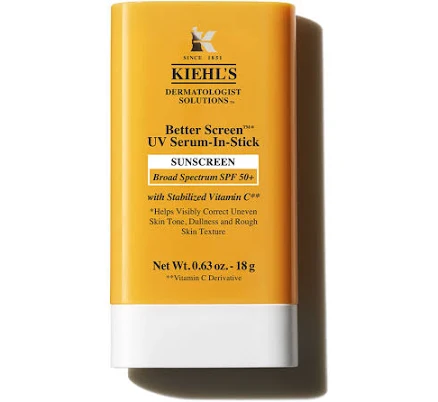
Kiehl's Better Screen UV Serum-In-Stick Sunscreen SPF 50+
Lower PFAS concern. No water-repellent finish or PFAS-linked materials on record.
This stick sunscreen's base material is not linked to PFAS. The brand has no PFAS statement on record. Stick sunscreen formats typically do not require water-repellent treatments.
We flunk more products than we pass. This one earned its grade. How we grade
Material
Cosmetic serum/stick sunscreen base (likely silicones, waxes, mineral UV filters)
Brand disclosure
Brand is silent on PFAS
Lab data
No public lab test
You may also be interested in
Top-graded picks in the categories readers replace first, every one scored on the same rubric.

- polypropylene filter housing, carbon/sediment cartridge
- We found no PFAS statement from the brand
- Bacterial growth in spent cartridges
3 hazards checked on this product, all on its full breakdown.

Aquasure
Premier Series 75 GPD Under Sink Reverse Osmosis Water Filtration System
- RO membrane, carbon filters, stainless steel housing
- We found no PFAS statement from the brand
- Bacterial and microbial growth in housing and filters
4 hazards checked on this product, all on its full breakdown.

Avocado
Vegan Mattress
- organic cotton, natural latex, coconut coir, recycled steel coils
- The brand calls it PFAS-free, which we have not verified
- Heavy metals
2 hazards checked on this product, all on its full breakdown.
What Kiehl's Better Screen UV SPF 50+ is made of, ingredients and materials
Kiehl's Better Screen UV Serum-In-Stick is formulated as a mineral sunscreen (zinc oxide and/or titanium dioxide) suspended in a silicone and wax base for stick delivery. The mineral UV filters are non-nano according to Kiehl's standard claims, meaning larger particles that sit on skin surface rather than penetrating. This formulation avoids chemical UV absorbers (oxybenzone, avobenzone) that carry endocrine concerns, and the stick format eliminates preservative loadings common in fluid sunscreens.
What’s concerning
Category baseline
The starting point for this type of product, before anything specific to this product is counted.
No PFAS disclosure
No public statement from the brand about PFAS in this product.
Fragrance allergens (undisclosed components)
Product listing does not break down fragrance components; stick sunscreens typically contain synthetic fragrances or botanical extracts. No contact dermatitis complaints are established in public records for this specific product, but fragrance is a common sunscreen irritant in sensitive users.
Silicone leaching or bioaccumulation
Cyclopentasiloxane and dimethicone are common silicone emollients in stick sunscreens and are not classified as reproductive toxicants by major agencies. Environmental persistence of some cyclic siloxanes is documented, but dermal absorption is minimal and no bioaccumulation evidence exists in published literature for topical use.
What’s reassuring
Base material not linked to PFAS
The main material recorded for this product is not one associated with PFAS.
Talc contamination (powder-form concern)
Stick format reduces talc likelihood versus powder sunscreens. Kiehl's does not list talc as an ingredient in Better Screen; no contamination reports on record.
Heavy metals
Zinc oxide and titanium dioxide are regulated color additives in US sunscreens with established purity standards. No lead, cadmium, or arsenic contamination is documented for this product or Kiehl's mineral filter supply chain.
Source, FDA ↗Preservative-related sensitization
Stick format typically requires fewer preservatives than creams or lotions. Specific preservative list is not always disclosed on retail pages, but no product-specific sensitization complaints are on public record.
How is this PFAS grade calculated?
The brand's record and disclosure
Kiehl's (Estee Lauder subsidiary) maintains ingredient transparency on product pages but does not publish detailed third-party safety certifications or PFAS-specific statements. The brand has no recorded recalls for Better Screen products. Estee Lauder committed to reformulating away from some restricted chemicals by 2025 but has not disclosed PFAS phase-out timelines. No published third-party testing of this specific product for heavy metals or contaminants is on record.
How it compares in its category
Mineral stick sunscreens are associated with lower skin irritation concern than chemical alternatives for sensitive skin and pregnancy. This product sits mid-range in terms of ingredient simplicity compared to reef-safe or ultra-clean brands (EWG Verified, Badger) but above mass-market formulas heavy in synthetic fragrance and emulsifiers. The silicone base is standard in stick sunscreens and does not elevate safety concern compared to competitors.
If you buy it
Apply evenly to face and neck before sun exposure; reapply every 2 hours or after water exposure. Store in cool, dry conditions away from direct heat (stick can soften above 30C). Do not ingest. Discontinue if irritation develops; mineral filters can cause white cast on deeper skin tones, which is cosmetic rather than a safety issue. Shelf life is typically 3 years unopened; replace if fragrance changes or separation occurs.
What is not known about PFAS in this product?
- Basis
- Model estimate, 72% confidence, not a lab result
- Lab test
- None on record for this exact product
- Brand statement
- Kiehl's has made none
Formulations change between production runs, so check the current label. How we grade.
What are the PFAS-free alternatives to Kiehl's Better Screen UV Serum-In-Stick Sunscreen SPF 50+?
- Mineral sunscreen, zinc oxide base
- A third party reports verifying it as PFAS-free
- 1,4-dioxane (non-intentional contaminant from surfactants/emulsifiers)
2 hazards checked on this product, all on its full breakdown.
- mineral sunscreen (zinc oxide or titanium dioxide base)
- The brand calls it PFAS-free, which we have not verified
- Synthetic fragrance allergens
More sunscreen grades
How we score, every product runs through the same public 0-100 rubric based on materials, coatings, brand disclosure, lab findings, and recalls. See the full methodology → Spotted a mistake? Report an error.