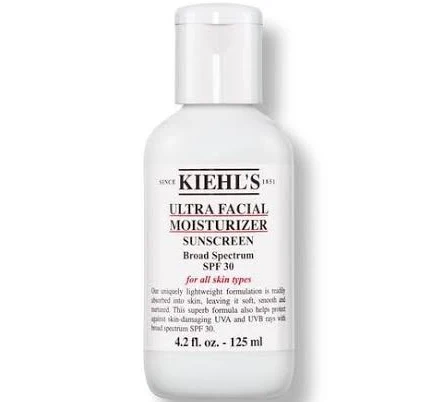
Kiehl's Ultra Facial Moisturizer SPF 30
Lower PFAS concern for typical facial moisturizer; brand does not disclose policy.
This water-based facial moisturizer with mineral sunscreen contains no aqueous film-forming foams, fluorinated polymers, or heavy water-repellency treatments. The brand has not publicly disclosed PFAS content or manufacturing practices.
We flunk more products than we pass. This one earned its grade. How we grade
Material
Water-based emulsion, glycerin, squalane, mineral sunscreen (titanium dioxide/zinc oxide)
Brand disclosure
Brand is silent on PFAS
Lab data
No public lab test
You may also be interested in
Top-graded picks in the categories readers replace first, every one scored on the same rubric.

- polypropylene filter housing, carbon/sediment cartridge
- We found no PFAS statement from the brand
- Bacterial growth in spent cartridges
3 hazards checked on this product, all on its full breakdown.

Aquasure
Premier Series 75 GPD Under Sink Reverse Osmosis Water Filtration System
- RO membrane, carbon filters, stainless steel housing
- We found no PFAS statement from the brand
- Bacterial and microbial growth in housing and filters
4 hazards checked on this product, all on its full breakdown.

Avocado
Vegan Mattress
- organic cotton, natural latex, coconut coir, recycled steel coils
- The brand calls it PFAS-free, which we have not verified
- Heavy metals
2 hazards checked on this product, all on its full breakdown.
What Kiehl's Ultra Facial Moisturizer SPF 30 is made of, ingredients and materials
This is a water-based emulsion using mineral (inorganic) UV filters, titanium dioxide and zinc oxide, which sit on skin rather than absorb into it, making them generally recognized as safe by FDA. The base includes glycerin (humectant) and squalane (plant-derived emollient), both well-tolerated and non-toxic. Water-based formulas like this one carry minimal leaching risk compared to oil-based or silicone-heavy alternatives, and mineral filters do not require metabolic breakdown by the body.
What’s concerning
Category baseline
The starting point for this type of product, before anything specific to this product is counted.
No PFAS disclosure
No public statement from the brand about PFAS in this product.
Fragrance allergens
Kiehl's typically includes fragrance in most moisturizers; this product likely contains fragrance or essential oils not itemized on labels. Undisclosed fragrance components can trigger contact dermatitis or photosensitivity in sensitive individuals, especially under UV exposure.
Emulsion destabilization and separation over time
Water-based emulsions can separate into layers if stored improperly or if formulation includes unstable thickeners. This does not create a health hazard but renders the product less effective and may promote bacterial growth in the separated aqueous phase if left open.
1,4-dioxane (synthetic contaminant)
Water-based emulsions sometimes contain low-level 1,4-dioxane as a byproduct of ethoxylated surfactants used for emulsification. Kiehl's does not disclose whether they use dioxane-removal steps (vacuum stripping). Trace levels in rinse-off or leave-on topical products are not classified as carcinogenic at exposure rates typical of cosmetics, but exposure is not zero.
What’s reassuring
Base material not linked to PFAS
The main material recorded for this product is not one associated with PFAS.
Titanium dioxide nano-inhalation (rare)
No recalls or adverse reports specific to this product. Titanium dioxide in solid topical sunscreens poses minimal inhalation risk unless applied as powder; this emulsion format eliminates that concern entirely.
Contact sensitization to mineral oxides
Titanium dioxide and zinc oxide are hypoallergenic for the vast majority of users. No documented sensitization incidents tied to this specific product; mineral filters are recommended for reactive and sensitive skin types.
How is this PFAS grade calculated?
The brand's record and disclosure
Kiehl's, owned by L'Oreal, has not published a formal PFAS elimination commitment or ingredient transparency policy specific to their product lines. The brand does not disclose PFAS testing results on product labels or websites. No major recalls or safety controversies involving this moisturizer have been documented in public records. Kiehl's maintains general cosmetic compliance with FDA and EU regulations but does not exceed them with voluntary third-party certifications like EWG Verified or Leaping Bunny.
How it compares in its category
Mineral sunscreen moisturizers are generally considered a lower-hazard category than chemical (organic) sunscreens because the UV filters do not penetrate or bioaccumulate. This product sits in the mainstream middle tier, with lower concern than unregulated or counterfeit sunscreens, but less transparent than brands like Beautycounter or Blue Lizard that voluntarily restrict PFAS and publish ingredient lists. Price and efficacy are competitive; the SPF 30 is adequate for daily facial use but not high-protection for extended outdoor exposure.
If you buy it
Store at room temperature away from direct sunlight to preserve emulsion stability; mineral filters are photostable but the glycerin-based carrier can separate if exposed to heat extremes. Reapply every two hours if swimming or sweating heavily, as mineral filters sit on skin and wash off more easily than chemical ones. Do not apply to broken skin; mineral oxides can irritate open wounds. Replace after 12 months of regular use to prevent oxidation of squalane and potential rancidity.
What is not known about PFAS in this product?
- Basis
- Model estimate, 72% confidence, not a lab result
- Lab test
- None on record for this exact product
- Brand statement
- Kiehl's has made none
Formulations change between production runs, so check the current label. How we grade.
What are the PFAS-free alternatives to Kiehl's Ultra Facial Moisturizer SPF 30?
- Mineral sunscreen, zinc oxide base
- A third party reports verifying it as PFAS-free
- 1,4-dioxane (non-intentional contaminant from surfactants/emulsifiers)
2 hazards checked on this product, all on its full breakdown.
- mineral sunscreen (zinc oxide or titanium dioxide base)
- The brand calls it PFAS-free, which we have not verified
- Synthetic fragrance allergens
More sunscreen grades
How we score, every product runs through the same public 0-100 rubric based on materials, coatings, brand disclosure, lab findings, and recalls. See the full methodology → Spotted a mistake? Report an error.