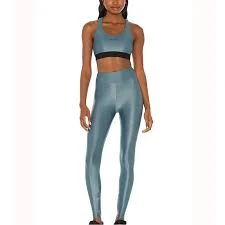
NWT Koral Lustrous Infinity High Rise Legging
No coating described, and no PFAS statement from the brand.
The product information we reviewed describes nylon blend, with no water-repellent coating named. Water resistance on products like this usually comes from the material and its seals rather than a surface treatment. The brand has published no PFAS statement for it.
Still want this one anyway? Check the price on Amazon. We’d swap it.
Material
Nylon blend
Brand disclosure
Brand is silent on PFAS
Lab data
No public lab test
You may also be interested in
Top-graded picks in the categories readers replace first, every one scored on the same rubric.

- polypropylene filter housing, carbon/sediment cartridge
- We found no PFAS statement from the brand
- Bacterial growth in spent cartridges
3 hazards checked on this product, all on its full breakdown.

Aquasure
Premier Series 75 GPD Under Sink Reverse Osmosis Water Filtration System
- RO membrane, carbon filters, stainless steel housing
- We found no PFAS statement from the brand
- Bacterial and microbial growth in housing and filters
4 hazards checked on this product, all on its full breakdown.

Avocado
Vegan Mattress
- organic cotton, natural latex, coconut coir, recycled steel coils
- The brand calls it PFAS-free, which we have not verified
- Heavy metals
2 hazards checked on this product, all on its full breakdown.
What NWT Koral Lustrous Infinity Rise Legging is made of, ingredients and materials
This legging is a nylon blend, a synthetic polymer commonly used in stretch activewear for durability and moisture-wicking. Nylon itself is chemically stable in normal wear, but the production process, spinning, dyeing, and finishing, introduces potential hazards through chemical residues. The 'Lustrous Infinity' line suggests a treated or coated surface for sheen and compression, but Koral's public materials do not specify what finish is applied or whether it contains functional coatings that could degrade or leach.
What’s concerning
Category baseline
The starting point for this type of product, before anything specific to this product is counted.
No PFAS disclosure
No public statement from the brand about PFAS in this product.
Heavy metals
Nylon is traditionally dyed with azo and metal-complex dyes; Koral does not publicly disclose whether suppliers use safe-harbor azo dyes or conduct heavy metal (cadmium, lead) testing. Risk is moderate because dye is typically fixed to fiber, but surface residue on new garments can transfer to skin.
Source, FDA ↗Formaldehyde / VOCs
The 'Lustrous' sheen and high-rise fit suggest applied finishing treatments; formaldehyde-based resins are common in nylon finishing for wrinkle resistance and shape-holding. Koral does not state whether finishes are formaldehyde-free. Residual formaldehyde off-gases minimally at room temperature but can irritate sensitive skin in new garments.
Source, ATSDR ↗Antimony in polyester blend component
If this nylon blend includes polyester (common in nylon-blend activewear for durability), antimony trioxide catalyst residue may be present. Antimony is classified as a possible carcinogen; migration is low under normal wear but increases with heat or abrasion. Koral does not disclose polyester antimony testing.
Microfiber shedding during wash and wear
All synthetic textiles shed microfibers; nylon does so at moderate rates comparable to polyester. This is a direct consequence of the material class, not a manufacturing defect, but accumulates with wear and washing. No specific data on Koral leggings, but inherent to the product category.
Coating or finish degradation over time
If a gloss or compression coating is present (suggested by 'Lustrous Infinity' branding), repeated washing and UV exposure may cause flaking or peeling, releasing coating particles. Koral does not specify finish composition or durability claims, making long-term safety predictability low.
What’s reassuring
Base material not linked to PFAS
The main material recorded for this product is not one associated with PFAS.
How is this PFAS grade calculated?
The brand's record and disclosure
Koral markets premium activewear and does not publicly disclose supply chain certifications (e.g., OEKO-TEX, GOTS, Bluesign) or chemical management standards in readily available materials. The brand has not issued statements about azo dyes, formaldehyde resins, heavy metal dyes, or antimony use in polyester blends. No major safety recalls or substantiated hazard reports specific to Koral apparel are on record in public databases, but the lack of transparency limits independent verification of manufacturing practices.
How it compares in its category
Premium activewear brands span a wide spectrum, some (e.g., Allbirds, Patagonia) publish third-party test results and use certified low-chemical suppliers; others (including many direct-to-consumer and luxury brands) rely on implicit trust without public certification. Koral sits in the latter category, positioning itself by aesthetics and fit rather than chemical safety disclosure. Nylon-blend leggings are inherently lower-risk than cotton-blend or polyester-dominant pieces because nylon resists dye penetration and typically requires fewer chemical finishes, but individual processing matters more than fiber choice alone.
If you buy it
Wash inside out in cool water before first wear to remove surface dyes and residues; use mild detergent and avoid bleach or high heat, which can degrade nylon elasticity and any applied finish. Do not machine dry; air dry to prevent thermal stress on fibers and coatings. If any unusual odor, skin irritation, or color bleeding persists after two washes, discontinue use. Replace when elastic fails, seams fray, or fabric thins, as worn-out synthetics may shed microfibers more readily.
What is not known about PFAS in this product?
- Basis
- Model estimate, 42% confidence, not a lab result
- Lab test
- None on record for this exact product
- Brand statement
- Koral has made none
Formulations change between production runs, so check the current label. How we grade.
More activewear grades
How we score, every product runs through the same public 0-100 rubric based on materials, coatings, brand disclosure, lab findings, and recalls. See the full methodology → Spotted a mistake? Report an error.